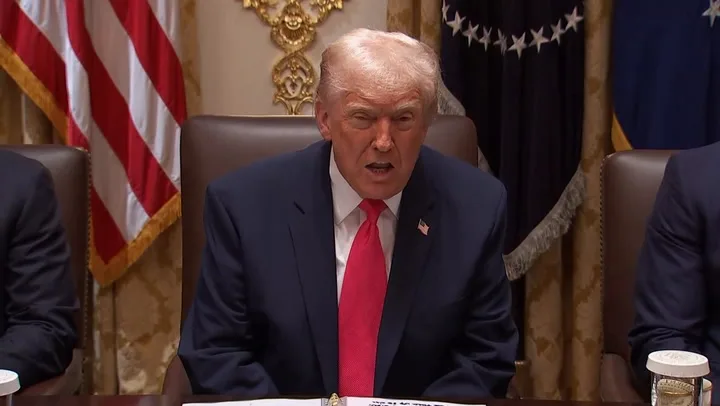
Former President Donald Trump has sparked controversy by dismissing widespread concerns over the cost of living, branding the very notion of an affordability crisis a political ploy by his rivals.
Cabinet Meeting Remarks Ignite Debate
During a White House Cabinet meeting on Tuesday, Trump opened his comments by touting his administration's record on lowering prices for energy and gasoline. He asserted that as electricity costs decrease, "everything comes down." The president then launched a direct attack on his political opponents for highlighting the financial pressures facing ordinary Americans.
"The word affordability is a Democrat scam," Trump stated emphatically. He argued that Democrats use the term to create a false impression that they presided over lower prices, before moving swiftly to another topic. "They say it, and then they go into the next subject, and everyone thinks, 'oh, they had lower prices.'"
Polling Data Contradicts Presidential Claims
Trump's dismissal of affordability issues stands in direct opposition to the latest voter sentiment. A Daily Mail/J.L. Partners poll released last week identified rising prices as the paramount concern for American voters. The survey pinpointed the top three nationwide worries as:
- Cost of living and inflation
- Healthcare costs
- Economic growth and job creation
Trump countered by claiming inflation was worse under President Joe Biden, calling it "the worst inflation in the history of our country." He did, however, acknowledge potential corrections on the historical timeframe, quipping, "some people will correct me... and they say, '48 years.'"
A Winning Message for Democrats
The affordability message appears to be a potent political tool for Democrats. This follows a series of successful liberal victories in November, where candidates campaigned heavily on plans to tackle rising costs. Notable wins include Democratic socialist Zohran Mamdani, who was elected as New York Mayor-elect, and Democratic gubernatorial successes in both Virginia and New Jersey.
These electoral results demonstrate that focusing on inflation and the cost of living resonates strongly with the electorate, creating a clear dividing line between the two parties' economic narratives as the political cycle intensifies.




