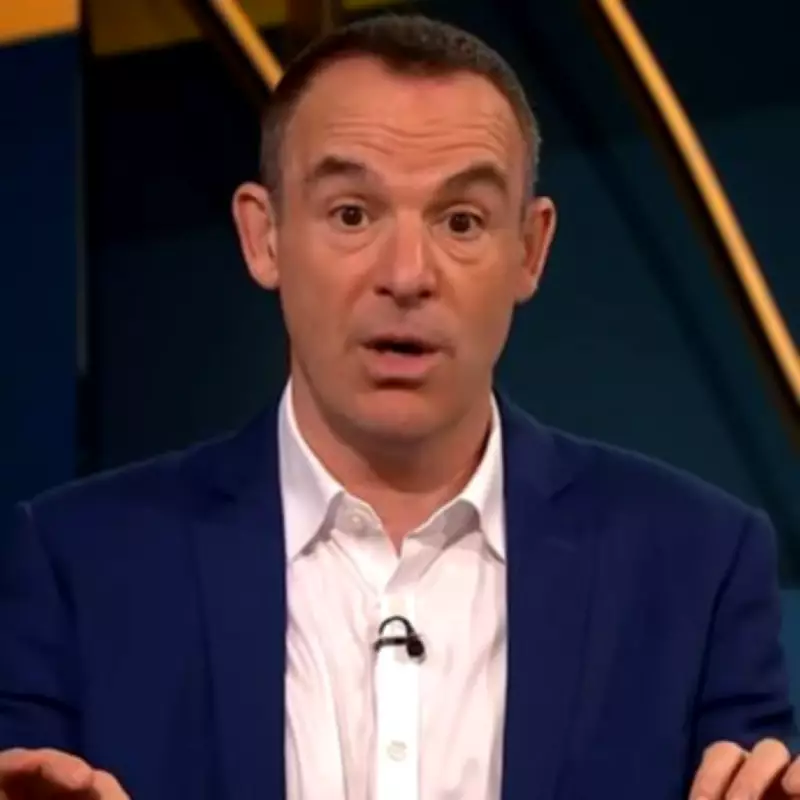
Financial guru Martin Lewis has issued a stark warning to unmarried couples living together, revealing they could face inheritance tax bills of up to £240,000 that married partners would avoid entirely. The consumer champion detailed this significant financial disparity during his latest ITV programme, The Martin Lewis Money Show Live.
The Crucial Marriage Allowance
Lewis explained that inheritance tax rules provide substantial benefits exclusively to legally married couples and civil partners. "If you are married or in a civil partnership, you can leave your entire estate to your spouse without paying any inheritance tax whatsoever," he emphasised. "This fundamental rule creates a dramatic financial difference between married and cohabiting couples, even those who have been together for decades."
Understanding the Inheritance Tax Thresholds
The standard inheritance tax rate stands at 40%, applying to estates valued above £325,000. Individuals can claim an additional £175,000 allowance when leaving their main residence to children or grandchildren, creating a potential £500,000 tax-free threshold for single people. However, Lewis demonstrated how marriage dramatically expands these allowances through transferable provisions.

A Tale of Two Scenarios
Using a fictional couple named Hal and Lou with combined assets of £1 million, Lewis illustrated the contrasting outcomes. "When married, Hal and Lou can transfer unused allowances between them," he explained. "If Hal passes away first and leaves everything to Lou, no inheritance tax is due, and his unused allowance transfers to her."
This creates a combined allowance of £650,000 in standard thresholds plus £350,000 in property allowances when leaving assets to direct descendants. "Their entire £1 million estate passes to their children completely free of inheritance tax," Lewis confirmed.
The Cohabiting Couple's Financial Penalty
Lewis then altered the scenario, imagining Hal and Lou as an unmarried couple who had lived together for thirty years. "The financial consequences are severe," he warned. "Hal cannot claim the £175,000 property allowance because he's leaving his home to Lou, who continues living there. His estate immediately pays approximately £70,000 in inheritance tax on that amount."
After Hal's passing, Lou inherits £930,000 (after the £70,000 tax payment). When she subsequently leaves everything to their children, £440,000 of her estate exceeds her individual allowances. "Adding the tax on that amount to what Hal already paid creates a total inheritance tax liability of £240,000," Lewis calculated. "This substantial sum represents money that never reaches their children."
The Transferable Allowance Advantage
Lewis highlighted two crucial marriage-specific inheritance tax rules that create this disparity:
- Spousal exemption: No inheritance tax applies to assets transferred between married partners or civil partners.
- Allowance transfer: Unused inheritance tax allowances can be passed to surviving spouses, effectively doubling available thresholds.
"These provisions mean married couples can potentially shield up to £1 million from inheritance tax when leaving assets to direct descendants," Lewis noted. "Cohabiting couples, regardless of relationship duration, cannot access these benefits and face standard individual thresholds."
A Warning for Long-Term Partners
The money expert specifically addressed couples in long-term relationships who haven't formalised their partnership. "Many people believe common-law marriage provides similar protections, but this is a dangerous misconception," he cautioned. "The inheritance tax system makes no provision for relationship duration outside legal marriage or civil partnership."
Lewis urged cohabiting couples to consider this financial reality when planning their estates. "This isn't about promoting marriage but ensuring people understand the financial implications of their relationship status," he concluded. "A £240,000 difference in potential inheritance tax liability represents a significant consideration for any couple's financial planning."