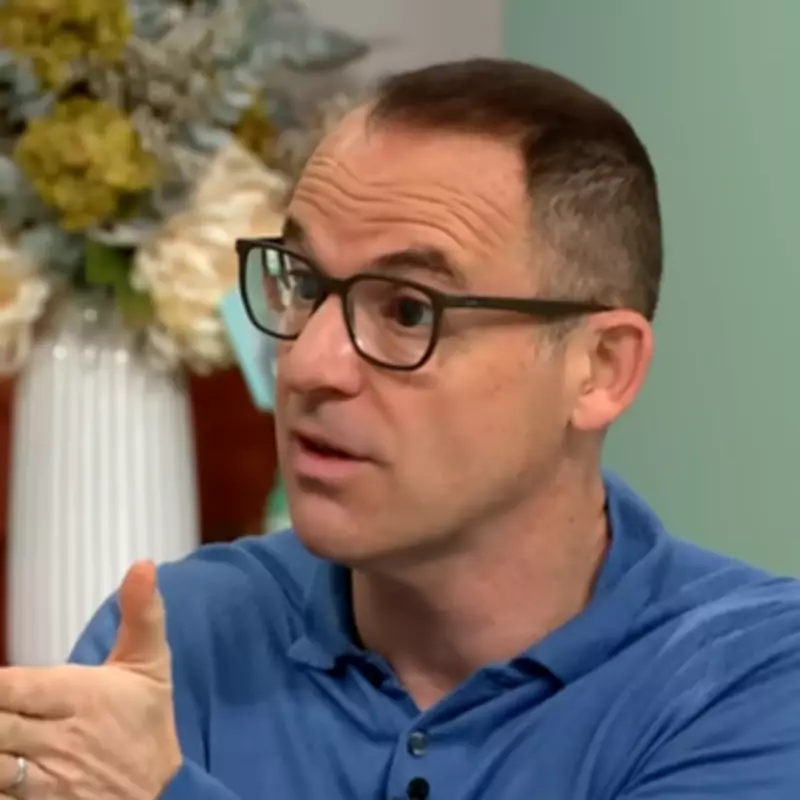
Financial guru Martin Lewis has delivered a stark and crucial warning to unmarried couples who live together, emphasising a significant financial disadvantage they face within the UK's inheritance tax system. His advice centres on a "widely misunderstood" tax that, while primarily affecting the affluent, carries critical implications for cohabiting partners regardless of wealth.
The Core Inheritance Tax Exemption
Mr Lewis, speaking via his platform on X, clarified that inheritance tax is levied on only the top four per cent of estates, typically those valued over £1 million. However, he stressed a fundamental rule: any assets bequeathed to a spouse or civil partner are entirely exempt from this levy. This exemption does not extend to unmarried cohabiting partners.
"Now, that definition is strict, married partner or civil partner, not someone you are cohabiting with," Lewis explained. "Even if you've lived together for 20 years and have children. You do not get the exemption. So, within the financial system, one of the big benefits of marriage is this inheritance tax exemption."

Understanding the Allowances and Thresholds
He detailed the basic inheritance tax framework for individuals. There is no tax on the first £325,000 of an estate. This threshold increases to £500,000 if the main residence is left to direct descendants, such as children.
A pivotal advantage for married couples is the ability to transfer unused inheritance tax allowances. "You can also leave them any of your unused inheritance tax allowance," Lewis noted. He provided a clear example: if one spouse leaves everything to the other, who then plans to leave assets to their offspring, the surviving partner can combine both allowances.
- The surviving spouse has their own £500,000 allowance (including the main residence boost).
- They also inherit the deceased spouse's £500,000 allowance.
- This creates a combined £1 million tax-free threshold for passing on wealth.
"That is a very large amount which covers what the vast majority of households in the UK are worth," he added. For estates exceeding these allowances, the inheritance tax rate is 40%, equivalent to the higher rate of income tax.
Contrasting Marriage Allowance Reminder
In related financial advice, Martin Lewis also recently urged married couples to claim the Marriage Allowance, a separate tax benefit. This scheme allows a non-taxpaying spouse to transfer 10% of their personal tax-free allowance to their basic-rate taxpayer partner, providing a tax reduction of up to £1,260 annually.
- One partner must be a non-taxpayer (not using their full £12,570 personal allowance).
- The claiming partner must be a basic-rate taxpayer only.
- The couple must be legally married or in a civil partnership.
This transfer adjusts the allowances: the non-taxpayer retains £11,310, while the taxpayer's allowance increases to £13,830. Lewis highlighted that around 2.1 million eligible people are missing out, with backdated claims possible for up to four previous years plus the current year.
The Financial Reality for Unmarried Couples
Lewis's overarching message underscores a clear financial distinction in UK law. While the Marriage Allowance provides active yearly savings for eligible married couples, the inheritance tax exemption represents a critical long-term protection for passing on wealth. For cohabiting couples without a legal union, neither of these valuable benefits is accessible, regardless of the length or commitment of their relationship.
"One way to avoid inheritance tax is to get married. I'm not suggesting you do just saying that's how the system works," Lewis concluded, directing those seeking more detailed guidance to the comprehensive resources on his MoneySavingExpert.com website. His warnings serve as a crucial prompt for couples to understand the legal and financial implications of their relationship status.