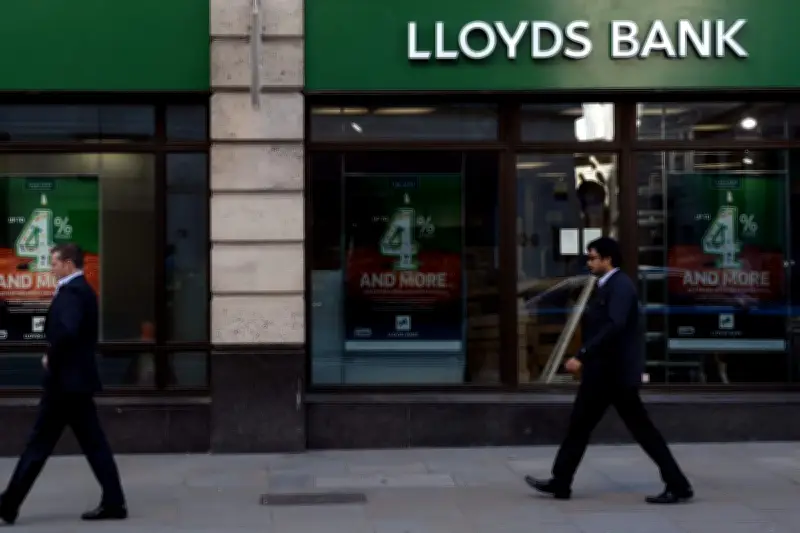
Lloyds Banking Group chief financial officer William Chalmers has described a hike to bank taxes as “unhelpful” to achieving UK economic growth, urging the Government to ensure the increase remains temporary.
The remarks came in reaction to a planned doubling of the bank’s corporation tax surcharge, announced in Wednesday’s autumn Budget statement. They were made on the day Lloyds reported a near-doubling of its profits for the third quarter of 2026.
Concerns over lending costs
Mr Chalmers said the bank “recognises the fiscal constraints” facing the Government, but stressed it is “ultimately important that we do what we can to reduce the cost of lending in order for the economy to grow, and of course that travels through to the cost of borrowing”.
He said: “Additional taxes are unhelpful to achieving both of those objectives: UK growth or international competitiveness. We take it for what it is, but we do sincerely hope that it is indeed limited.”
Budget measure details
Chancellor John Healey said on Wednesday that banks will pay an extra 3% on their corporation tax surcharge from January, bringing the rate to 6%. He described the measure as temporary, in place for 15 months, marking a less severe change than some in the industry had feared.
Mr Healey said he was asking “a bit more of our banks to support ordinary people”, with the extra money raised set to help fund support for household energy bills. According to the Office for Budget Responsibility, the measure is expected to raise an extra £1.5 billion for the Treasury over the 15 months it is in place.
No link to energy bills
Asked whether the link to energy bills support leaves the door open for an extension to the tax change, Mr Chalmers said he did not see an “obvious linkage between energy prices and bank taxes”.
He added: “In fact, if anything, it makes it even more important that we’re able to lend into the real economy and secure growth, which is the best defence against energy price impact that might otherwise prevail in the UK economy.”
Strong quarterly results
The group’s financial results, which include brands Lloyds and Bank of Scotland, unveiled a pre-tax profit of £2.3 billion for the third quarter, almost double the £1.2 billion it made the same period a year ago.
Last year’s profit figure was affected by the group setting aside an extra £800 million provision to cover costs related to the UK watchdog’s motor finance scheme, to compensate people mis-sold a car loan. The scheme is currently on hold while it faces legal challenges in court.
Stripping out that impact, earnings still strengthened year-on-year, with Lloyds generating more income during the quarter. Underlying net interest income, which shows the difference between what banks make from loans and what they pay out on deposits, jumped by 10% year-on-year.
Across the year, the bank reported growth on its balance sheet with lending and customer deposits increasing. It said it had helped more than 50,000 first-time buyers purchase a home this year with more than £1.25 billion of lending.