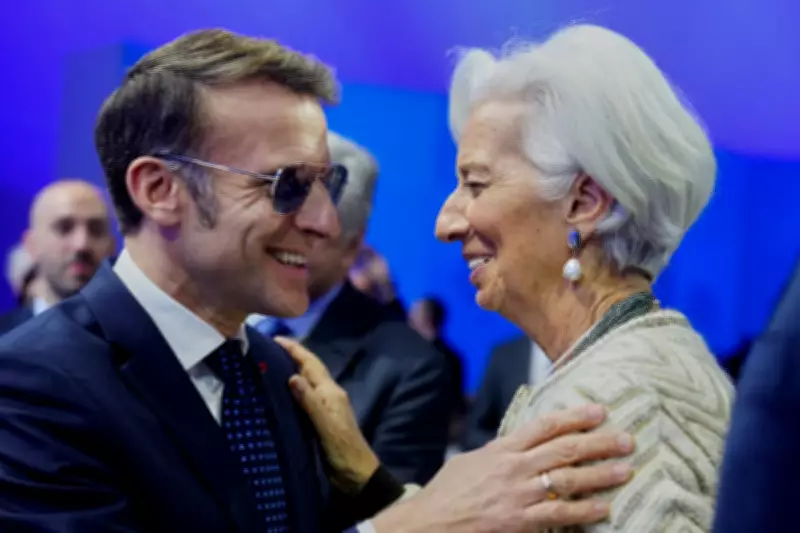
Christine Lagarde to Depart ECB Early, Enabling Macron Successor Influence
Christine Lagarde, the President of the European Central Bank, is reportedly planning an early exit from her role, strategically timed before France's presidential election in 2027. This move aims to allow outgoing French President Emmanuel Macron to have a significant say in selecting her successor, according to a report from the Financial Times.
Political Timing and Succession Concerns
Lagarde's current term is officially scheduled to conclude in October 2027. However, the looming possibility of a far-right victory in France's spring 2027 presidential election has raised substantial concerns within European financial circles. Such an outcome could potentially complicate the appointment process for the new head of the ECB, a pivotal institution for the euro zone's economic stability.
Citing a source familiar with the internal discussions, the Financial Times indicated that while the precise timing of her departure remains undecided, Lagarde desires for Macron and German Chancellor Friedrich Merz to play key roles in determining her successor. Notably, Macron is constitutionally barred from seeking a third term, adding urgency to his involvement in the succession planning.

ECB's Official Stance and Market Reaction
In response to these reports, an ECB spokesperson stated, "President Lagarde is totally focused on her mission and has not taken any decision regarding the end of her term." This statement marks a departure from previous guidance. Last year, when similar speculation emerged, the ECB asserted that Lagarde was "determined to complete her term."
Initial market reactions to the possibility of Lagarde's early departure have been notably muted. Bond yields and the euro exhibited minimal changes in early trading, suggesting that investors do not anticipate a personnel shift to signal any major policy alterations at the ECB.
Precedent and Candidate Landscape
The Financial Times report follows closely on the heels of another significant resignation. Bank of France Governor Francois Villeroy de Galhau announced he would step down in June this year, over a year before his term's end, thereby enabling Macron to appoint his replacement prior to the presidential election.
While the formal selection of Lagarde's successor will ultimately involve leaders from all 21 euro zone nations, historical precedent strongly suggests that any viable candidate must secure both German and French support to secure the role.
No formal candidates have yet emerged, but several names are circulating within ECB circles as potential successors:
- Klaas Knot, former Dutch central bank chief
- Pablo Hernandez de Cos, General Manager of the Bank for International Settlements
- Joachim Nagel, Bundesbank chief
ECB board member Isabel Schnabel has expressed interest in the role, but EU regulations may preclude her candidacy, as board members typically serve non-renewable terms. The succession race remains unpredictable, reminiscent of Lagarde's own nomination seven years ago, which surfaced only shortly before her appointment.
Economic Context and Policy Continuity
Lagarde would be departing the ECB during a period of relative economic tranquility. Inflation has reached target levels, interest rates are in a neutral setting, and the euro zone's economic growth is aligning with its potential—a rare combination some analysts describe as a central banker's nirvana.
Given that most, if not all, major ECB decisions are made by consensus without formal voting, a change in leadership is unlikely to precipitate a significant policy shift. Markets currently expect the ECB to maintain interest rates for the remainder of the year, though exceptional global uncertainties could rapidly alter this outlook.
Christine Lagarde's term as ECB President runs until October 31, 2027. Prior to leading the ECB, she served as Managing Director of the International Monetary Fund from 2011 to 2019 and was the French Finance Minister before that.