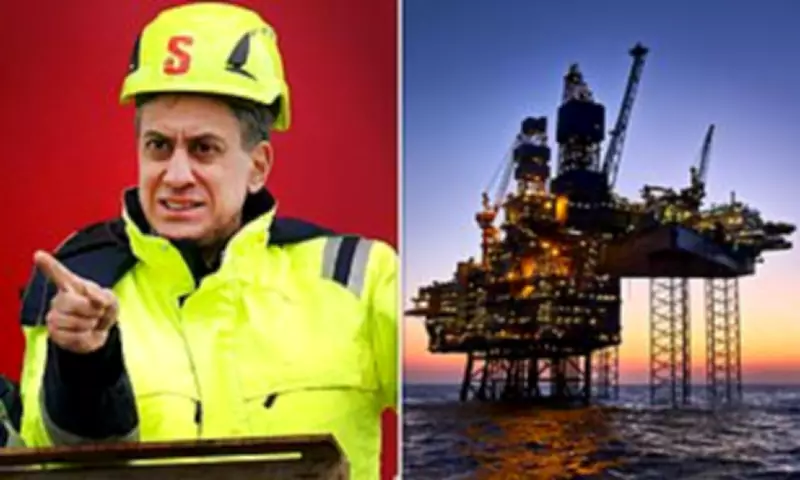
Voters are demanding that the Labour government immediately lift its ban on drilling in the North Sea to protect households from being hammered by soaring energy costs linked to the Iran crisis. The call comes as global energy prices skyrocket following Iran's blockade of the Strait of Hormuz, with diesel prices in the UK approaching £2 per litre.
Poll Shows Strong Public Support for Drilling
Research conducted by former Conservative deputy chairman Lord Ashcroft has revealed that half of all voters believe Energy Secretary Ed Miliband should abandon Net Zero dogma and release the estimated £165 billion worth of oil and gas beneath British waters. The poll, shared with The Mail on Sunday, indicates growing public frustration with current energy policies.
Political Landscape in Flux
The survey also shows an unprecedented three-way split in political support, with the Conservatives, Reform UK, and the Greens all polling at 21 percent, while Labour trails in fourth place at 17 percent. This marks the first time in nearly a year that Reform UK has not led in a poll, raising concerns within the party about momentum ahead of next month's local elections.

Global Energy Crisis Intensifies
Since Iran began its blockade of the Strait of Hormuz following US and Israeli attacks, global energy markets have been thrown into turmoil. The strategic waterway typically carries about one-fifth of the world's oil, and its closure has placed intense pressure on the global economy.
The situation has prompted urgent responses from world leaders. US President Donald Trump issued a stark warning to Iran to reopen the strait, stating on social media that "time is running out" before consequences would follow. Meanwhile, an elite team of Royal Navy divers remains on standby to help defuse Iranian sea mines blocking shipping lanes.
Cabinet Split Emerges
The poll findings come amid a growing Cabinet split on energy policy. While Mr Miliband has maintained his Net Zero-driven opposition to new fossil fuel extraction, insisting that approving new drilling licences would not lower bills for UK consumers, Chancellor Rachel Reeves has expressed support for exploration at the Rosebank oilfield and Jackdaw gas field in the North Sea.
Mr Miliband recently stated that "people who say new exploration licences will somehow create huge amounts of energy for us" were "just wrong." This position contrasts sharply with that of Ms Reeves, who has said she is "very happy" to back exploration projects.
Political Pressure Mounts
The Conservatives and Reform UK have both called for the Energy Secretary to reverse what they describe as his "ideological" opposition to accessing the three billion barrels of oil and gas worth approximately £165 billion. Tory leader Kemi Badenoch has labeled the current policy "economic insanity."
Reform's deputy leader Richard Tice told The Mail on Sunday: "This poll proves that the British people have far more common sense than the political class. We've got hundreds of billions of pounds worth of energy treasure sitting under our feet. It's our patriotic duty to maximise British gas production, create jobs, boost growth, and achieve true energy independence."
Historical Context and Current Realities
Britain's North Sea oil reserves played a central role in Margaret Thatcher's administration during the 1980s, with £70 billion in revenues helping to fund industrial restructuring and tax cuts. Today, the debate over these resources has taken on new urgency as energy prices continue to climb.
The average price of a litre of diesel at UK forecourts has increased by 30 percent since the start of the conflict to 185.2p and could breach £2 within weeks, according to experts. Petrol prices have risen 16 percent to an average of 154.5p per litre over the same period.
Tax Policy Adds to Burden
Adding to household pressures, Chancellor Rachel Reeves is planning to end the current 5p per litre fuel duty relief in September. This move is expected to add approximately £3 to the cost of filling an average tank. The Chancellor is currently raking in more than £100 million in extra VAT receipts each month due to higher fuel prices.

This approach contrasts with actions taken by other governments worldwide. Australian Prime Minister Anthony Albanese has already halved fuel duty to ease the burden on households from soaring petrol and diesel prices.
Broadening Support for Policy Change
Support for increased North Sea exploration extends beyond political parties. Scottish Labour leader Anas Sarwar, the SNP, Tony Blair's think tank, and the Labour-supporting GMB Union have all expressed their backing for reconsidering the drilling ban.
Even US President Donald Trump has weighed in, describing the North Sea as a "treasure chest" for the UK and urging Prime Minister Sir Keir Starmer to take advantage of it.
Security Concerns Compound Economic Pressures
The ongoing crisis has highlighted security concerns alongside economic ones. The desperate hunt for an American airman downed in Iran intensified over the weekend as US special forces raced against armed nomads to find the missing crewman. Former RAF pilot John Peters, who was shot down and captured in Iraq in 1991, warned that the downed airman would be involved in a desperate bid to evade capture.
In his analysis for The Mail on Sunday, Lord Ashcroft writes: "Having seen how precarious our supplies from the Middle East can be, more think the Government should end its absurd ban on new oil and gas exploration in the North Sea than keep it. For worried families, household bills and security of supply tend to win out over Net Zero targets."
As the Iran crisis continues with no end in sight, the pressure on UK policymakers to address both energy security and household affordability concerns continues to mount, creating one of the most significant challenges for the new government's energy and economic policies.