Plug-in solar panels are expected to officially go on sale in the UK in the next few months for around £500. However, there are several obstacles for the government and householders to overcome before this becomes the easy-to-use option that is popular in other European countries.
How Plug-in Solar Works
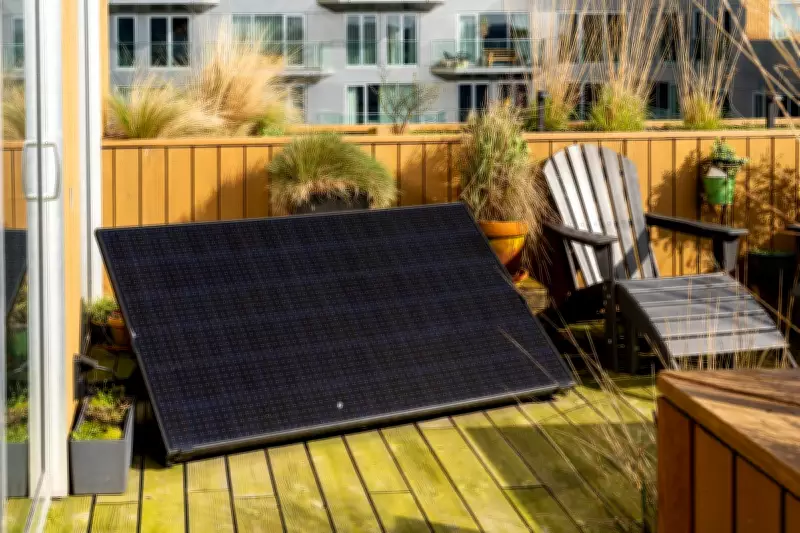
Plug-in solar typically consists of one or more panels, which can be mounted on the sides of a balcony or in the garden, and then connects to the house via an inverter. The inverter converts the electricity generated by the panels to the voltage and frequency used by the grid. In theory, this power can be fed into a home via a standard plug. This has not been possible in the UK for safety and regulatory reasons, but these regulations are now being amended to allow this, provided the panels meet new safety standards.
Government Actions Needed
The government's plans will allow plug-in installations of up to 800W, subject to several guidelines. But it is still not clear if there will be any changes to planning laws that might be needed. Tenants would also need to check with their landlord in a shared development, as balcony solar could affect the building insurance, which is often shared across the block. There may also be restrictions under planning law for people living in a conservation area. To get optimum power, you would want to tilt the solar panels, but this may also be contrary to existing planning rules. Without this angle, performance could be cut by 30-45 per cent.

The government is promising new safety standards and anti-islanding measures for these kits. Anti-islanding refers to the danger that the plug prongs are live for a short time after being unplugged or if the grid goes down and the panels continue to feed power into the house with no way to use it. Some form of safety mechanism is needed to stop the flow of electricity in these cases.
Industry Concerns
The professional body, the Institute of Engineering and Technology, and trade association the Electrical Contractors Association have already raised some concerns about the use of this type of solar panels. It is clear that some UK homes have older electrical systems that will not cope with plug-in solar. Previous UK building standards have not factored in power being fed into houses via a plug in this way. While some of these plug-in devices available online are good quality, others are cheaply made, which is another concern. There needs to be an industry standard and enforcement.
What Householders Need to Think About
For most people living in houses rather than flats, it is going to be fairly straightforward, but some, including those in conservation areas, may need planning permission. Most people should also check with their insurers. Balcony solar is not ideal for everyone. If your balcony is shaded part of the day or north facing, you may gain little benefit. It is worth checking this.
You will still have to notify your local district network operator, who maintain and fix your network. This is different from your energy company. You will also need to fill in a G98 notification. This online form tells your electricity supplier that you have a solar system that will be feeding power into the grid. These forms are usually filled out by electricians. It is not clear yet if householders or tenants will be able to handle these applications themselves.
You will need a weatherised external plug for a unit on your balcony and to connect to your house. If you are calling out an electrician to install that, it might be safer to just have the system wired into the mains directly. But you cannot just run a cable in through an open window as that would not be safe. Also, having an open window would let heat escape, and homes typically use more energy on heating than on electricity, potentially wiping out any benefits from the solar kit.

Another consideration is what to do with the power itself. The price paid by the grid for householders supplying excess energy is often a lot less than the price of buying electricity from the grid, so householders really want to use as much of that power themselves as possible. One solution is to buy a battery. While these can cost several hundred pounds, it means you can charge the battery during the day and then use the power at night. So, a battery improves flexibility, but it also increases costs and shortens the payback period.
The government hopes that plug-in solar could encourage more people to start using solar, which might then encourage investment in larger installations such as on rooftops, which can produce far more power. However, it is worth remembering that in Germany it worked in reverse: first came rooftop solar, supported by government subsidies, and then balcony systems filled in the gaps. By quickly addressing some of these practical issues, the government can encourage a wider shift to solar power.