TV Interview Erupts Over Fuel Shortages as Regional Australia Faces Dry Pumps
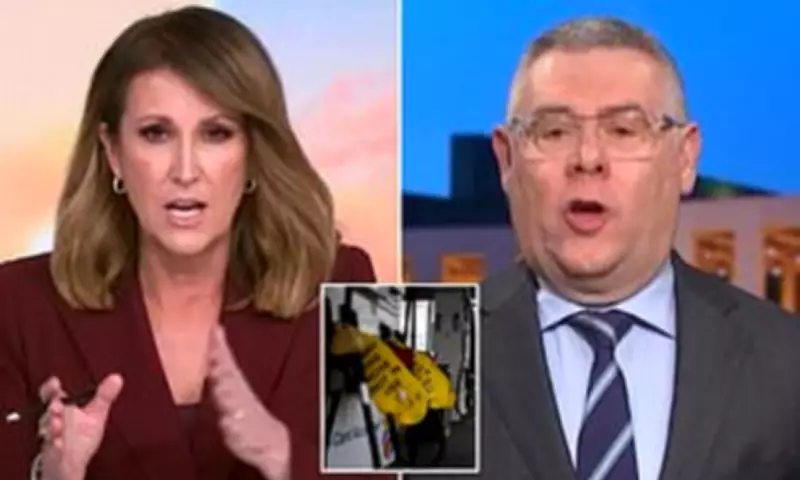
Television host Nat Barr engaged in a heated exchange with Environment Minister Murray Watt during a live broadcast, as mounting tensions over fuel shortages leave parts of regional Australia without petrol. The Albanese Government recently announced a temporary relaxation of fuel quality standards, permitting petrol with higher sulphur content to enter the domestic market for a sixty-day period.
Government Measures and Delayed Implementation
This emergency decision, made in response to shortages exacerbated by ongoing Middle East conflicts that may persist for weeks, still awaits full formal approval. Official paperwork is not expected to be finalised until the end of the week, potentially prolonging the crisis for regional towns where petrol stations have already exhausted their supplies.
'When will farmers finally get this extra fuel?' Barr demanded of Minister Watt during the interview. Watt defended the government's actions, stating they were 'working around the clock' to restore supply. He pointed to national reserves, noting Australia currently holds 37 days' worth of petrol and 30 days of diesel, figures he claimed are significantly higher than under the previous Coalition administration.
Structural Failures and Political Blame
While acknowledging the acute shortages, Watt attributed the underlying issue to long-term structural failures within the fuel sector. He specifically criticised the reduction in domestic refining capacity, highlighting that Australia now operates only two oil refineries compared to six when Barnaby Joyce served as Deputy Prime Minister.
'We're making do with what we've got… I recognise there are parts of the country experiencing shortages,' Watt conceded. 'Things would be a lot better if we still had the six oil refineries Australia had when Barnaby was in power.'
Real-World Impact and Escalating Criticism
Barr countered with tangible examples from affected communities, citing service stations like the Happy Valley Store in northwest Victoria, which has completely run out of fuel and is forced to ration customers to $50 each. 'He's run out of fuel, he's not happy at the Happy Valley Store,' she remarked pointedly.
The panel discussion intensified with the presence of One Nation MP and former Deputy Prime Minister Barnaby Joyce. Joyce acknowledged the refineries should not have closed but shifted blame to the current Labor government, arguing its climate policies and the safeguard mechanism were responsible for the current chaos.
'We need to clearly define where that fuel can be used… but this is happening because of a mad climate policy agenda,' Joyce asserted. 'We're hurting because of this. There's been no plan.'
Broader Supply Concerns and Government Defence
Joyce warned of a wider supply crunch extending beyond fuel, including critical shortages of plastics necessary for farming and water infrastructure. 'This is going to smack us between the eyes,' he cautioned. 'We're heading towards drought, and we can't get polythene pipe.'
Barr pressed Watt further on government preparedness, asking if disruptions were anticipated when conflict in Iran escalated and threatened the Strait of Hormuz, a vital global supply route. Watt maintained the government had prepared early by increasing reserves and rebutted Joyce's criticisms.
'We've got more fuel in the country now than when we came to office,' he insisted. Barr retorted sharply: 'It doesn't matter whose problem it is. We have towns with no fuel.'
Political Recriminations and Historical Context
The Albanese Government continues to attribute the current crisis to policies enacted under the former Coalition government. In response, Coalition sources argue their actions prevented a more severe collapse in fuel security. They point to the $2.4 billion Fuel Security Services Payment, an underwriting scheme designed to keep the Lytton and Geelong refineries operational, claiming both facilities were at serious risk of closure without this intervention.
Furthermore, the Coalition highlights that the same legislation established the Minimum Stockholding Obligation, which mandated Australia maintain minimum onshore fuel reserves—a measure that received bipartisan support at the time of its implementation.