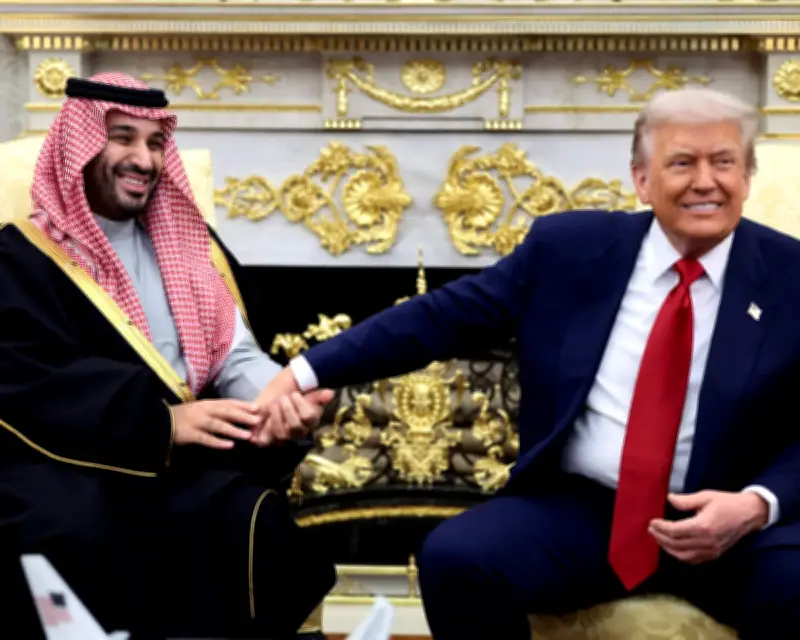
The United States has signed a nuclear cooperation agreement with Saudi Arabia that permits uranium enrichment and weakens inspection standards, alarming proliferation experts. The deal, announced by President Donald Trump, allows Riyadh to potentially develop a civilian nuclear program that could provide a pathway to atomic weapons.
Deal Details and Precedents
Mohammed bin Salman, the Saudi crown prince, has stated that if Iran obtains a nuclear weapon, 'we will have to get one.' The agreement departs from the 'gold standard' set by the United Arab Emirates, which permanently forswore enrichment and accepted full IAEA monitoring. Weakening this standard could be cited by Russia or China in future nuclear deals.
The turmoil created by Trump in the Middle East is prompting governments to hedge bets and increase military capabilities. The US paused attacks on Iran after 13 days of strikes, reportedly due to declining interceptor stockpiles, but no exit is in sight. UN Secretary General António Guterres warned that the region 'is teetering on the edge of [the] unimaginable … One crisis feeds another. One escalation triggers the next.'
Regional Security and Proliferation Risks
Gulf states have relied on US security guarantees, but Israel's strike on Hamas leaders in Qatar demonstrated that the US shield does not protect them from Israel, itself an undeclared nuclear power. The war on Iran has made US military presence a liability. The crumbling regional architecture, including the UAE's departure from Opec, adds to proliferation dangers.
Trump made the deal contingent on Saudi recognition of Israel, a longstanding precondition. However, Israel's war in Gaza has strengthened Saudi demands for a Palestinian state first. Even if no reactors are built, the announcement legitimizes the pursuit of nuclear capabilities by other nations.
The Obama-era nuclear deal with Iran, which Tehran complied with, was scrapped by Trump. His military actions have produced a more aggressive Iranian regime. The prospect of a nuclear-armed Saudi Arabia encourages further proliferation. The last US-Russia arms control treaty expired in February, and China is expanding its arsenal. Allies previously under the US nuclear umbrella are now considering their own capabilities.
Upholding international safeguards would benefit US interests in a new age of proliferation. However, Trump's deal signals a rejection of multilateralism and global standards.