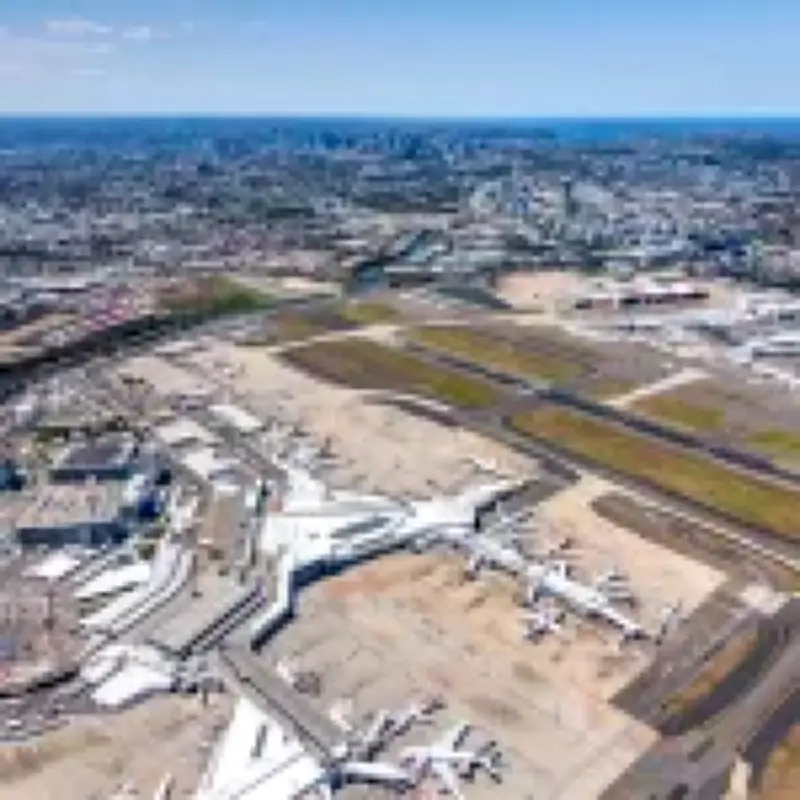
Sydney Airport, Australia's busiest, has received official approval for a £3.1 billion expansion project that will nearly double its annual flight capacity. The 'Master Plan 2045' will increase flights from 75,000 to 130,000 per year and allow the airport to welcome more than 72 million passengers annually by 2045.
Approval and Timeline
The plan, first released as a draft in September 2025, has now been approved by the Federal Minister for Infrastructure, Transport, Regional Development and Local Government. The project is expected to take 20 years to complete.
Sydney Kingsford Smith Airport, which opened in 1919, is one of the world's oldest international airports. It currently serves around 16 million passengers per year and is the official base for Qantas, Australia's largest airline.
Terminal Upgrades and Technology
The expansion includes enlarging the international terminal and redeveloping two domestic terminals (T1, T2, and T3). Improvements will feature better inter-terminal connections, additional parking stands, advanced security screening, and modern amenities.
Some upgrades will be completed by the end of this year, including a £104 million update to the T2 terminal with new security scanners and self-service bag drops. While the Master Plan does not explicitly mention facial recognition, recent industry data shows growing passenger adoption of biometric technology.
Economic Impact and Future Growth
International passenger numbers are forecast to reach 36.4 million annually, with domestic and regional passengers rising to 36.2 million. The expansion is expected to generate around £51 billion in annual economic activity and increase direct airport employment to more than 105,000 jobs.
Sydney Airport CEO Scott Charlton said: 'Approval of Sydney Airport Master Plan 2045 provides a clear pathway to plan for future demand and invest in the infrastructure Sydney will need over the next two decades.' He added: 'As Australia's international gateway, this plan ensures we can continue supporting tourism, trade, investment and jobs while delivering the capacity needed for future generations.'