

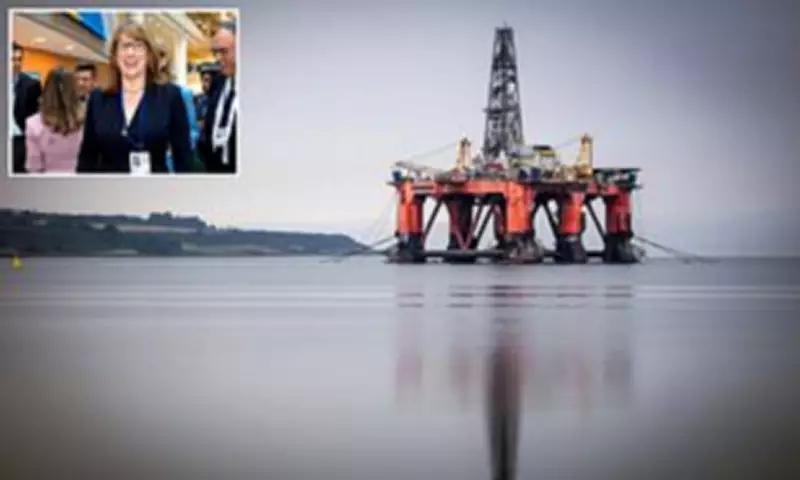
Chancellor Rachel Reeves has publicly acknowledged that her government is actively exploring the "quickest way" to extract additional oil and gas from the North Sea. This urgent move comes in response to a severe energy shock triggered by former President Donald Trump's escalating conflict with Iran, which has destabilised global markets and threatened UK energy security.
Pressure Mounts on Energy Strategy
During a diplomatic visit to Washington, Ms Reeves emphasised that she and Energy Secretary Ed Miliband are under mounting pressure to maximise output from the UK's North Sea reserves. The primary objective is to reduce the nation's vulnerability to unpredictable international price fluctuations that can cripple households and businesses alike.
IMF Downgrade Highlights Economic Risks
The International Monetary Fund (IMF) delivered a stark warning earlier this week, significantly slashing its growth forecast for the United Kingdom. The organisation revised its prediction for gross domestic product (GDP) growth in 2026 down to a mere 0.8%, a sharp decline from the 1.3% anticipated in January. This represents the most substantial downgrade among all G7 advanced economies.

The IMF directly attributed this economic slowdown to the spike in energy prices caused by the Trump-Iran war. This inflationary pressure is expected to push UK inflation towards 4%, effectively doubling the Bank of England's official target rate. The resulting higher costs for essential goods and services will place an unprecedented burden on family budgets across the country.
Tiebacks: The Fast-Track Solution
In a statement made ahead of a critical G20 finance ministers' meeting, Chancellor Reeves provided specific details on the government's strategy. "I announced in the budget last year that we were going to allow tiebacks," she confirmed. "We're now working through pretty intensely the technical details with the energy companies."
The tieback method involves drilling satellite wells to exploit a wider geographical area of existing oil and gas fields, utilising pre-established infrastructure. This approach avoids the lengthy timelines and colossal capital expenditure associated with developing entirely new extraction sites.
"What tiebacks are is where you use existing infrastructure to exploit a larger geography of oil and gas," Ms Reeves explained. "It is the quickest way to bring on stream more oil and gas, and it's important that we get the detail right, so that companies have the confidence to exploit those resources."
Decoupling Electricity from Gas Prices
Alongside the push for increased domestic fossil fuel production, the Chancellor revealed that she and Mr Miliband are examining radical reforms to the UK's energy pricing model. Currently, gas almost invariably sets the wholesale price of electricity under the nation's marginal cost pricing system.
"It is quite a big change but is absolutely the right thing to do, especially as electricity makes up an increasing part of our energy mix," Ms Reeves stated. "We hope, within the next sort of few days, weeks, to be able to give more details on what that looks like."
This initiative aims to sever the direct link between electricity costs and volatile natural gas prices, a move long championed by Energy Secretary Ed Miliband. He has consistently promoted Labour's energy policies and the transition to renewables as a strategy to escape the "fossil fuel rollercoaster."
The Renewable Energy Context
Despite the immediate focus on fossil fuels, the government's long-term commitment to clean energy remains. Data from the Department for Energy Security and Net Zero indicates that the expansion of renewable sources has already reduced the amount of time gas sets the wholesale electricity price in Britain by approximately one-third since the early 2020s.
Industry leaders, including the head of Energy UK, have noted that fully decoupling electricity prices from gas will be a gradual process, evolving in tandem with the broader transition to clean power generation. The current crisis, however, has forced a pragmatic reassessment of energy security priorities in the short to medium term.






