Qatar Halts LNG Production After Iranian Attacks, Sending Gas Prices Soaring
European wholesale gas prices have rocketed at their fastest pace since the outbreak of war in Ukraine, following Qatar's decision to halt production of liquified natural gas (LNG) after attacks by Iran. The dramatic surge, which saw prices leap by approximately 52% on Monday, has raised immediate concerns about a potential repeat of the 2022 energy crisis that gripped the continent.
Production Ceases Amid Escalating Conflict
QatarEnergy, the state-backed energy company, announced it had "ceased production" due to attacks on its facilities. Qatari ministers confirmed earlier on Monday that an Iranian drone had struck one of the company's production sites. As a major global producer, Qatar accounts for about a fifth of worldwide LNG supplies, making this disruption particularly significant for energy markets.
In London, the price of natural gas for delivery in April surged by about 43% to 115p per therm. This sharp increase marks the most dramatic rise since prices were pushed dramatically higher by the Russian invasion of Ukraine in March 2022. Given that gas prices are a key driver for domestic energy bills in the UK, a sustained spike could directly affect households in the coming months.

Market Turmoil and Broader Economic Impact
The production halt triggered widespread market turmoil, with oil prices also soaring and global financial markets reeling from the fallout of an intensifying conflict between Iran and US-Israeli forces. Brent crude oil prices jumped by as much as 13%, rising above $82 a barrel before paring back to 8.4% higher at $79.2 a barrel.
Neil Wilson, Saxo UK investor strategist, expressed particular concern: "Qatar is a top three LNG exporter, controlling roughly a quarter of expected supply over the next decade. Looks like Iran's tactic is to pressure Gulf states so they in turn pressure the US and Israel to back off. I am much more concerned about European natural gas prices than oil prices, in terms of seeing a repeat of the 2022 European energy crisis."
Shipping Disruptions and Regional Tensions
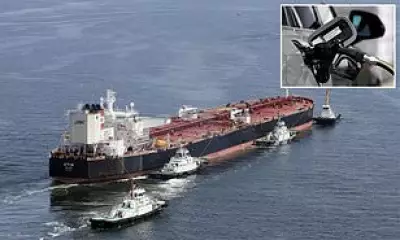
The conflict's impact extended to shipping routes, with Iran reportedly warning tankers on the Strait of Hormuz that no ships would be allowed to pass through. This critical trade artery handles about one-fifth of the world's oil supplies and seaborne gas. UK Maritime Trade Operations Centre officials confirmed that two vessels have been struck near this key waterway.
Military actions intensified across the region, with Israel launching strikes on Lebanon's capital Beirut after missiles were fired by militant group Hezbollah. These latest strikes followed US and Israeli attacks on targets across Iran on Sunday, part of an escalating military campaign that began after the killing of Supreme Leader Ayatollah Ali Khamenei.
Financial Markets React
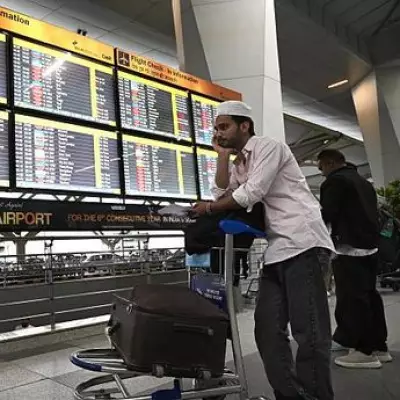
London's FTSE 100 index fell about 1.6%, dropping 171.65 points to 10,738.9 as trading was knocked by the growing conflict. Travel stocks were particularly hard hit, with cruise giant Carnival sliding 8%, airline firm IAG (parent of British Airways) dipping 7.6%, and Wizz Air falling 7.3%. Travel-focused retail groups SSP and WH Smith also recorded significant losses.
However, defence stocks saw gains, with BAE Systems lifting 7.4% to 2,268p. Oil and energy stocks strengthened as well, with Shell and BP rising 4.5% and 3.5% respectively. The pound dipped to its weakest level against the US dollar since December, down 0.77% at 1.338, partly due to investors pouring funds into the dollar as a safe haven currency.
Analyst Perspectives and Future Outlook
Despite the significant market movements, some analysts noted that reactions have been relatively contained so far. Chris Beauchamp, chief market analyst at IG, commented: "While we have seen a significant surge in oil prices since markets opened last night, the gains appear contained for now as we wait to see if shipping through Hormuz can continue at lower levels or will be blocked entirely. Oil and gas infrastructure in the region has not yet been extensively targeted, keeping oil well south of the $100 barrel range that many expected as a result of the weekend."

International stock markets also opened weaker, with Tokyo's Nikkei 225 falling 1.5% after Asian markets opened. The situation remains fluid, with energy markets closely watching whether Qatar will resume production and how the broader Middle East conflict develops in coming days.