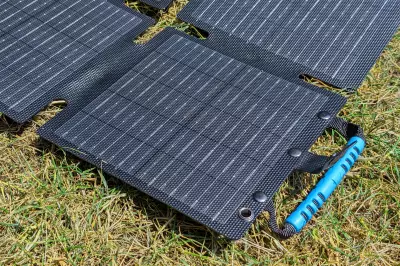
Plug-In Solar Panels: A Democratising Step for UK Energy Transition
For years, rooftop solar installations have been marketed as an exclusive home upgrade, accessible primarily to owner-occupiers with specific prerequisites: a suitable roof, substantial upfront capital, and the willingness to commit to a comprehensive installation. This traditional approach has effectively sidelined numerous households, including renters, flat owners, and those with limited outdoor space, from participating in the renewable energy movement.
The Emergence of Accessible Solar Technology
The recent introduction of plug-in solar panels represents a significant shift in the solar energy landscape. While retailers like Lidl selling these panels in high-street aisles might initially seem like a novelty, the underlying story is far more profound. Solar technology is undergoing a transformation in format, becoming more compact, affordable, and user-friendly. This evolution promises to extend solar energy access to millions who have historically been excluded from such conversations.
Jeff Meyer, an energy expert, emphasises that these plug-in systems do not equate to the financial savings of full rooftop arrays. Their output capacity remains limited, and expectations of dramatically reduced electricity bills should be tempered. They are not a substitute for comprehensive energy solutions like improved insulation or addressing heating costs. However, their cultural impact should not be underestimated.

Lowering Barriers to Entry
Plug-in solar panels redefine solar energy from a major renovation project to a straightforward consumer purchase. Unlike heat pumps, full solar installations, or home batteries—which typically involve quotes, professional installers, disruption, and significant upfront investment—plug-in options offer a smaller, cheaper, and lower-commitment alternative. This shift in perception is crucial; it makes renewable technology feel more familiar and attainable for ordinary households.
For individuals renting homes with balconies or owning flats with usable outdoor spaces, these systems provide a tangible opportunity to generate at least some of their own electricity. This lowers the entry barrier and presents self-generation as less exclusive, addressing a longstanding democratic deficit in the energy transition. Often, the technologies that reduce household bills require the most financial resources and permanence, paradoxically excluding those who would benefit most from lower costs.
Caveats and Realistic Expectations
Despite their potential, plug-in solar panels are not a universal solution. The UK must avoid overselling their capabilities. Not every property will have adequate outdoor space, sunlight exposure, or necessary permissions for installation. There is a risk that hype around these "cheap and easy" products could outpace practical reality, leading to disappointment when they fail to deliver expected results in unsuitable settings.
It is essential to view plug-in solar not as a one-size-fits-all answer, but as an additional option for homes previously devoid of solar opportunities. They represent a first step toward a more inclusive energy market, where smaller, simpler products coexist with full installations, empowering millions to engage with self-generation on a modest scale.
The Broader Significance
Ultimately, the true importance of plug-in solar panels lies in their potential to broaden access to renewable technology. They challenge the narrow vision of who the energy transition is for, inviting a more diverse range of households to participate. While their kilowatt-hour production may be modest, their role in democratising energy could prove equally significant in the long term, fostering wider public engagement with sustainable living.