

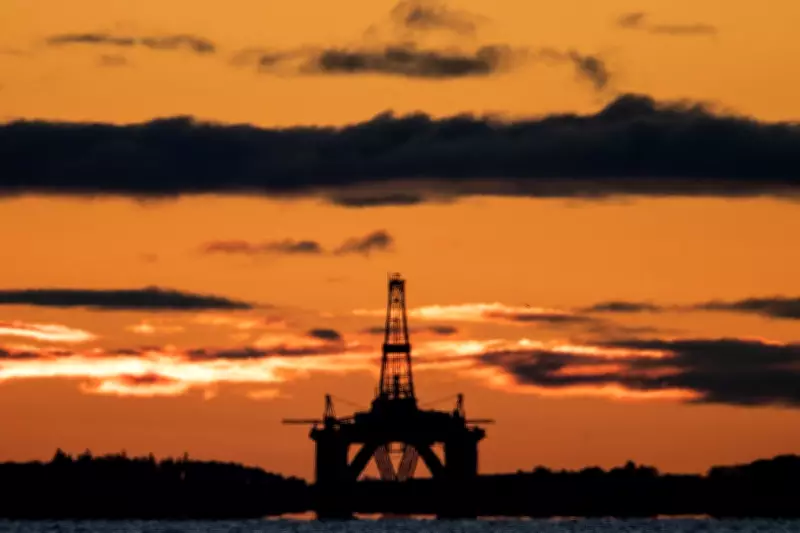
Global oil markets have been thrown into turmoil after US President Donald Trump declared his intention to implement a blockade of all Iranian ports, following the collapse of ceasefire negotiations mediated by Pakistan. This dramatic escalation has sent Brent crude oil prices soaring back above the critical threshold of 100 US dollars per barrel, with a sharp increase of more than 7% to 102.1 dollars in Monday morning trading.
Ceasefire Breakdown Sparks Energy Crisis Fears
The sudden price surge comes after hopes for a peaceful resolution were dashed over the weekend. Last week, oil prices had retreated below the psychological 100-dollar barrier when the United States and Iran agreed to a temporary two-week ceasefire deal. That agreement included the crucial reopening of the Strait of Hormuz shipping route, through which approximately one-fifth of the world's oil supply is transported.
President Trump's announcement marks a significant hardening of his position, though it represents a slight moderation from earlier threats to completely seal off the Strait of Hormuz. The US leader stated that the blockade of Iranian ports would commence immediately on Monday, directly blaming Tehran for the failure of peace talks.

International Reactions and Market Turbulence
Iran has responded with threats of retaliation against what it describes as provocative American actions, with both nations exchanging accusations regarding responsibility for the ceasefire collapse. Meanwhile, British Prime Minister Sir Keir Starmer has clarified that the United Kingdom will not participate in the US-led blockade operation.
In a related development, the UK Government has indicated its support for new licensing agreements in the North Sea, signaling an expansion of domestic oil and gas operations as global supply concerns mount.
Financial markets reacted sharply to the deteriorating geopolitical situation. The FTSE 100 Index fell by 0.5%, dropping 47.3 points to 10553.2 in early trading. Germany's Dax and France's Cac 40 both declined by more than 1% as hopes for a Middle East conflict resolution faded rapidly.
Analyst Perspectives on Continued Volatility
Kathleen Brooks, research director at trading platform XTB, provided sobering analysis of the situation. "The failure to reach a deal means that the Strait of Hormuz remains closed and could become even more dangerous if Iran follows through with its retaliatory threats," she warned.
Brooks added further context regarding market movements: "The crucial question now is whether oil prices will return to their pre-ceasefire highs around 112 dollars per barrel for Brent crude. Before this weekend's developments, global stocks had recovered most losses sustained since early March, with the S&P 500 merely 130 points away from its pre-conflict peak. However, the path of least resistance for global equities at the start of this week points toward further declines, and we anticipate rising volatility across all markets."
Transport Sector Bears Immediate Brunt
The aviation industry emerged as one of the hardest-hit sectors in London trading, with shares plummeting on concerns about deepening supply constraints and soaring costs for jet fuel. British Airways parent company International Consolidated Airlines Group (IAG) fell by 3% within the FTSE 100 index. Meanwhile, Wizz Air and easyJet dropped by 6% and 4% respectively in the FTSE 250, with Jet2 also declining by 3% as investors assessed the operational implications of sustained higher fuel prices.
This renewed energy crisis comes at a precarious time for global economies already grappling with inflationary pressures and supply chain disruptions. The blockade threat represents the most significant escalation in US-Iran tensions in recent years, with potential ramifications extending far beyond immediate oil price movements to broader geopolitical stability and economic security worldwide.






