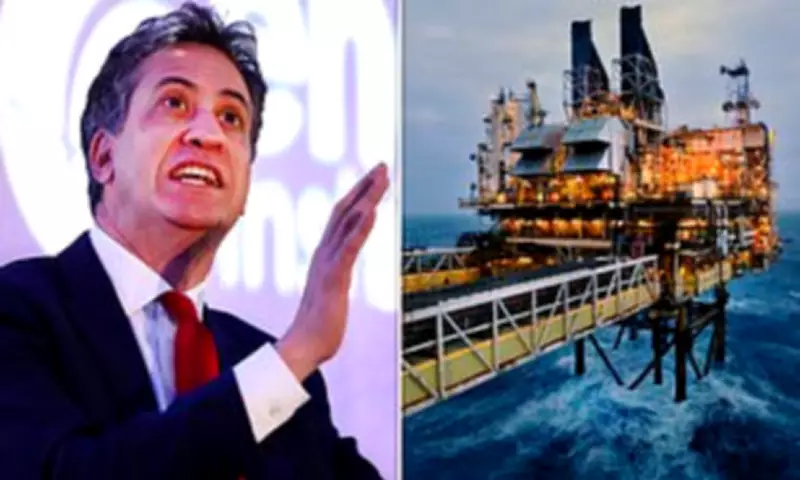
North Sea oil prices have skyrocketed to an unprecedented record high, intensifying political pressure on the Labour Party to abandon what critics label as Energy Secretary Ed Miliband's "mad ideology" and permit lucrative drilling operations. This dramatic price surge, driven by the ongoing conflict in Iran, highlights the UK's vast untapped resources that remain inaccessible due to current energy policies.
Record Prices and Economic Implications
Forties Blend, a key benchmark for immediate delivery of North Sea oil, soared to an all-time peak of nearly $147 per barrel on Thursday. Even prior to this recent spike, industry estimates from Offshore Energies UK valued the North Sea oil and gas sector at up to £385 billion for the UK economy. The price jump stems from supply disruptions in the Middle East, particularly through the Strait of Hormuz, a critical chokepoint for global oil and gas shipments.
Urgent Calls for Policy Reversal
Political and industry figures are urgently urging Mr Miliband to reverse course and endorse two major projects, Rosebank and Jackdaw, which hold combined oil and gas resources worth over £80 billion. Conservative leader Kemi Badenoch emphasised that drilling in the North Sea is not merely about energy security but also financial and national security, especially with oil prices reaching historic highs.

Energy analyst Andy Mayer from the Institute of Economic Affairs argued there is "no excuse" for Labour's inaction, noting that approving these projects could lead to production by year-end. He highlighted that Rosebank, discovered in 2004, could yield 69,000 barrels of oil daily at its peak, while Jackdaw, found in 2005, might supply around 6% of the UK's future gas demand, sufficient to heat 1.4 million homes.
Taxation and Economic Benefits
The UK government has implemented bans on new drilling and extended windfall levies, resulting in fossil-fuel firms facing a 78% tax rate on profits. Experts contend that rolling back these windfall taxes could revitalise the industry, generating jobs, economic growth, and an additional £25 billion in annual tax revenues. Tory energy spokesperson Claire Coutinho criticised Mr Miliband for turning his back on this revenue, which could be used to reduce household bills, and warned that current policies risk job losses and increased imports of dirtier, more expensive fuel.
Broader Industry and Think-Tank Support
Even the Tony Blair Institute has joined the chorus urging Mr Miliband to commence drilling. Institute energy expert Tone Langengen stated that during geopolitical stress, locally available production becomes more valuable, underscoring the importance of maintaining a domestic energy base. This view is echoed by pragmatic voices across sectors, including the renewables industry and the Chancellor, who see reopening the North Sea as a necessary response to the crisis.
However, opposition remains from climate activists committed to "leaving it in the ground," a stance critics argue could paradoxically increase global emissions through heightened fuel imports. The Department for Energy Security and Net Zero responded by noting actions to lower living costs, including reducing average energy bills by £117 this month and supporting de-escalation efforts in the Middle East.
Global Market Context
The conflict in the Middle East has severely choked off supplies, leaving vast quantities of oil stranded in the Persian Gulf. Brent crude, a global benchmark, has climbed from $72 per barrel before the war to nearly $120, with recent trading at $97. This crisis has triggered a scramble among refineries to secure new supplies, paying premiums for immediate delivery from regions like the North Sea, explaining why the Forties benchmark trades higher than Brent crude.
European airports have issued warnings of potential jet fuel shortages if the Strait of Hormuz does not reopen within three weeks, further amplifying the urgency for domestic energy production. As oil prices continue to surge, the debate over North Sea drilling intensifies, balancing economic opportunities against environmental concerns in a volatile global landscape.