As scorching heat waves sweep across the nation, millions of air conditioners hum to life simultaneously, placing immense strain on electrical grids and escalating the risk of power outages and soaring utility bills. To alleviate this pressure, power companies frequently ask customers to take a step many are reluctant to embrace: setting their air conditioners a few degrees higher. However, a new, renter-friendly pilot program in New York City is now testing a fundamentally different approach.
How the Battery System Works
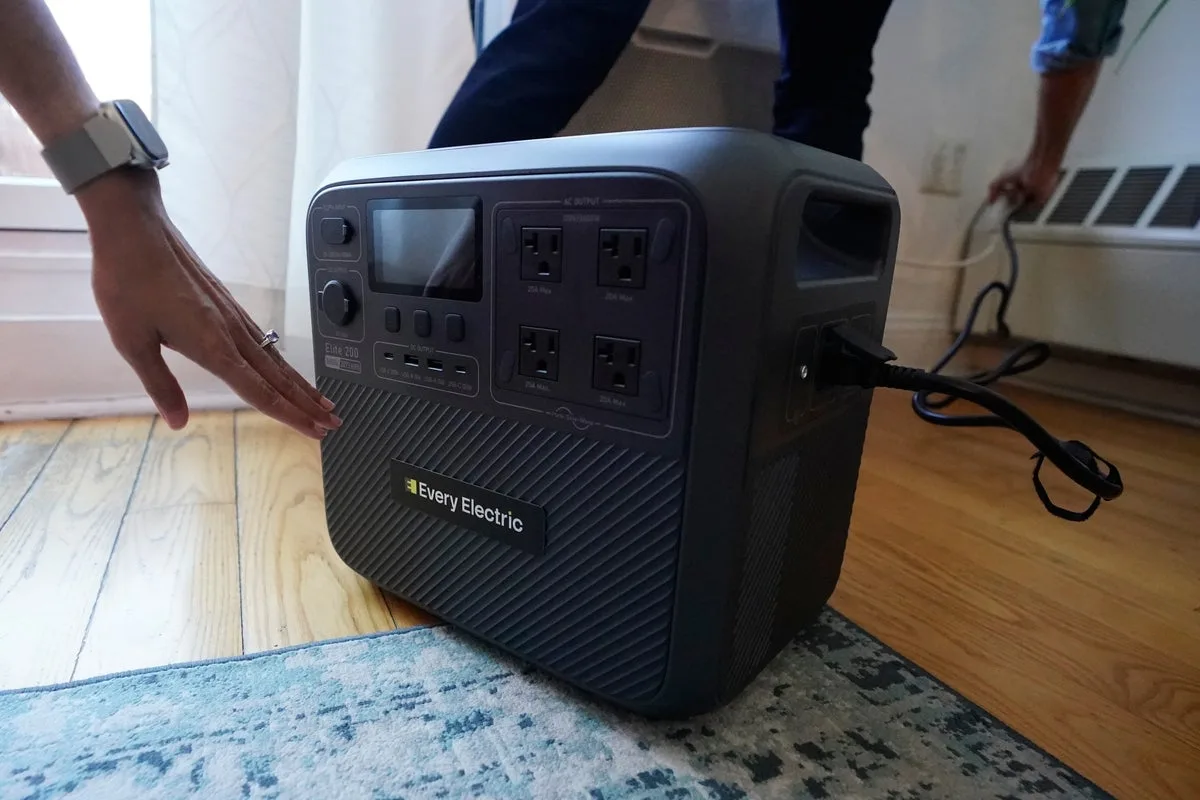
The initiative involves plug-in batteries designed to power air conditioning units offline during peak demand periods. This innovative system aims to alleviate pressure on the grid during its most stressed moments, all while ensuring residents remain cool. Andrew Wang, CEO of Every Electric, the company behind the pilot in partnership with Con Edison, described the devices as "basically a souped-up version of the power bank that you would use to charge your phone when you go out." The devices, about the size of a microwave, charge when electricity demand is low and then run window AC units for a few hours when demand spikes. This pilot program, expanding to more than 1,000 homes this summer, is part of Con Edison's broader demand response initiatives, which compensate customers for reducing or shifting electricity use to bolster grid stability.
The Need for Innovation
The need for such innovative solutions is underscored by the challenging economics of electricity during heat events. When demand for power surges dramatically, utilities are often forced to activate backup power plants that are not regularly in operation. These facilities are typically less efficient and more polluting than primary sources, explained Kevin Brehm, a manager at RMI, a nonprofit dedicated to researching energy systems and the transition to clean power. Over time, these persistent demand spikes can compel utilities to construct even more power plants, often fossil-fuel-based, to meet the escalating demand, with the substantial costs eventually passed on to consumers. Brehm highlighted the dual concern, stating, "There’s a question of emissions, and then there’s also a really important question around affordability." This explains why power companies often ask residents to conserve energy during the hottest days of the year and implement higher rates during peak hours to encourage reduced consumption. However, these strategies "can be hard to rely on because they don’t know exactly how consumers are going to behave," Brehm added. This is precisely where solutions like Every Electric’s can offer significant assistance.
Virtual Power Plants and Renters
Consequently, utilities and governments are increasingly exploring methods to manage escalating electricity demand as heat waves intensify and become more frequent. One promising avenue is the expansion of "virtual power plants" (VPPs), which coordinate numerous small, distributed energy resources to reduce grid strain. While many VPP programs, like California’s extensive initiative, focus on homeowners with solar panels who can send stored energy back to the grid, Every Electric’s program targets renters with window AC units. Though it doesn't export power, it reduces demand by utilizing stored battery power. Con Edison affirms that batteries can help mitigate peak demand, support renewable energy, and lessen the need for new infrastructure. Bianca Pasternack, a New York City renter participating in the program, praised its accessibility: "I can’t put solar panels on my roof. This is at least something that’s accessible and easy. It was very set-it-and-forget-it."
Expansion and Incentives
The Every Electric battery plugs directly into an AC unit and then into a wall outlet. A connected smartphone app intelligently detects low-demand periods, charging the battery during off-peak hours and then powering the AC during peak times, typically from 1 to 4 p.m. or 4 to 8 p.m. in the hottest months. Participants are incentivized with cash rebates, with some receiving the equivalent of a July electric bill, or a $100 gift card, as Pasternack experienced. The pilot is rapidly expanding, growing from approximately 200 kilowatts of flexible capacity last year to an anticipated 2 megawatts this summer, with plans to expand into other cities, according to Wang. This growth, while still smaller than California’s 200-megawatt program, signifies a crucial step.
Future Implications
Experts believe that if scaled effectively, solutions like Every Electric’s could significantly enhance power reliability and affordability. Brehm emphasized that such programs are integral to integrating consumer energy devices into the grid and recognizing the value they provide. He noted that widespread adoption hinges on ease of deployment and integration. Every Electric’s installation process, described as "plug-and-play" with minimal permissions required, addresses this challenge, offering a tangible path toward a more resilient and cost-effective energy future.