Middle East Conflict Unlikely to Immediately Affect UK Energy Bills, Experts Say
Households across the United Kingdom should not anticipate an immediate impact on their energy bills following the escalating crisis in the Middle East. However, energy analysts caution that sustained volatility in the region could lead to significant price hikes in the longer term, particularly as winter approaches.
Supply Risks and Market Volatility
Analysts at Cornwall Insight suggest that prolonged uncertainty regarding global energy supplies could complicate summer refilling efforts for gas storage, gradually pushing up prices for the coming winter. They noted, however, that there is "no suggestion of immediate system stress" for the UK's energy infrastructure at this time.
The tensions stem from Iran's warning to vessels to avoid the strategic Strait of Hormuz, a critical maritime chokepoint through which approximately 20 per cent of global oil and gas transits. This advisory follows retaliatory attacks on some commercial ships in response to US and Israeli military strikes that resulted in the death of Iran's supreme leader, Ayatollah Ali Khamenei.

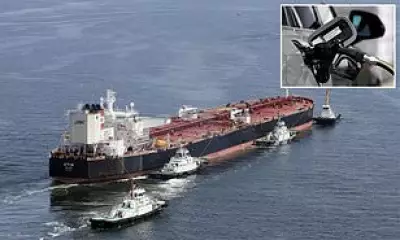
In response to the heightened risks, at least 150 tankers have now dropped anchor in open Gulf waters beyond the Strait of Hormuz, awaiting safer passage conditions. This logistical disruption has already triggered substantial market reactions.
Price Spikes and Production Halts
Britain's benchmark gas price, known as the National Balancing Point (NBP), leapt by 54 per cent on Monday alone. Meanwhile, Brent crude, the global benchmark oil price, increased by approximately 9 per cent to reach 79.40 US dollars per barrel.
Further complicating the global energy landscape, Qatar's state-owned energy company QatarEnergy has halted its production of liquefied natural gas (LNG) following Iranian attacks on some of its facilities. This production stoppage could have ripple effects across international markets.
Cornwall Insight noted that the UK is currently less reliant on Qatari LNG than during the post-Ukraine invasion energy crisis. Over the past year, Qatar supplied about 6.5 per cent of UK LNG imports, compared with approximately 69 per cent from the United States since 2023.
However, analysts warn this reduced dependence could lead to greater competition for LNG from other sources, potentially pushing up global prices as European nations scramble to secure alternative supplies.
Expert Analysis and Future Projections
Dr Craig Lowrey, principal consultant at Cornwall Insight, explained: "The UK's dependence on global gas markets means movements in international wholesale prices feed directly into domestic bills. The situation in the Middle East and the risk of disruption to liquefied natural gas shipments through the Strait of Hormuz pushed gas prices up yesterday and further again today."
He added: "For those customers on the price cap, the April to June price is now set, and therefore there should be no immediate impact on bills. Looking ahead, the cap is calculated using an average wholesale price over three months, and we are only at the very start of the July to September assessment period, so the long-term impact will depend on how long gas prices stay elevated and how long this period of volatility remains."
Other financial analysts have warned that prolonged disruptions to gas exports from Qatar and the United Arab Emirates risked a "repeat of 2022", when household energy bills rocketed to unprecedented levels during the previous energy crisis.
In a research note, investment bank Stifel indicated that the European gas price reaching 100 euros per megawatt hour would be sufficient to drive the UK's energy price cap to £2,500 per year. For context, the cap currently stands at £1,758 annually and is scheduled to decrease to £1,641 beginning April 1.

Preparedness Concerns and Public Anxiety
Jess Ralston, head of energy at the Energy and Climate Intelligence Unit (ECIU), expressed concern about the UK's vulnerability: "The Energy Crisis Commission warned that the UK remained dangerously underprepared for another energy crisis. Nobody knows exactly how the next few weeks will play out, but with homes and businesses still facing the debt and after-effects of the last gas crisis, people will understandably be concerned."
The situation remains fluid, with Iran having struck back at industrial and diplomatic targets across the Middle East, including drone attacks on the US embassy headquarters in Riyadh. Washington has subsequently warned its citizens to evacuate the entire region, further escalating geopolitical tensions that could impact energy markets for months to come.