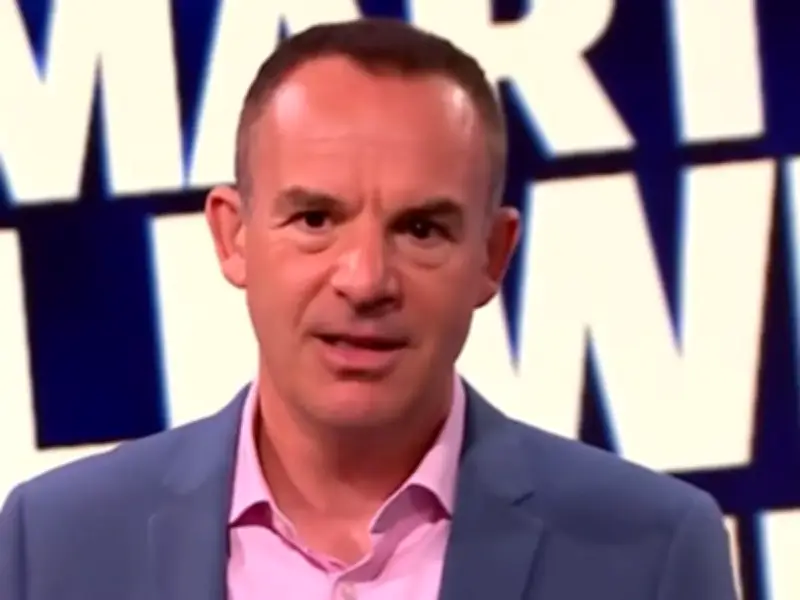
Martin Lewis has warned that UK households face an energy bill "nightmare" in January, with the price cap expected to rise by around 27 per cent, adding roughly £450 to the typical annual bill.
The money-saving expert was speaking outside No.11 Downing Street about the Budget delivered by Chancellor of the Exchequer John Healey. Measures aimed at tackling soaring energy costs included scrapping standing charges on gas bills and energy payments of £100 for up to 20 million households in council tax bands A to D. That followed the removal of VAT from domestic energy bills at the start of October.
Lewis cautioned that the respite could be short-lived as he predicted a sharp increase in the energy price cap set by Ofgem in January. Gas and electricity prices have risen in the wake of US-Israeli military action on Iran.
Price cap rise expected
"In January, we've got the energy price cap looking to go up 27 per cent," Lewis said. "The horror story is I'm currently expecting the energy price cap to go up 27 per cent in January."
"Now, if you were to do that on an annualised basis, that's about £450 on the typical bill. Of course, January to March, after that it could go down if things happen in the Middle East. So what we are pretty sure, over the January to March period, is about £100 on energy bills. So that is the immediate bill shock in January alone."
Energy regulator Ofgem sets the energy price cap every three months. It currently stands at £1,723 per year for a typical dual-fuel household paying by Direct Debit in England, Scotland, and Wales, running from October 1 to December 31, 2026. That represented a 4 per cent rise on the previous price cap, but the next cap is expected to rise sharply. The price cap does not limit how much you can be charged.
The standing charge varies depending on where you live. It is calculated based on how many people live in your region, how much energy is used in your region on average, the amount of energy the supplier needs to buy, and the cost of building and improving the energy network.
Reaction to the Budget
While many welcomed the measures, others said support was spread too thinly to make a major difference. The Resolution Foundation said measures aimed at easing household costs would not prevent energy bills from jumping above levels seen during the last energy shock.
Mr Healey set out his first Budget as Chancellor on Wednesday, attempting to provide "breathing space" for the public amid rising prices exacerbated by the Iran war.
Ruth Curtice, chief executive of the think tank, said: "Faced with a tough backdrop amid global economic turmoil, the Chancellor delivered a scattergun Budget that did little to address the sharp challenges facing Britain."
"Cost of living support is being spread far too thinly and will leave even those families receiving help facing higher energy bills than they did during the last energy price shock."
Mr Healey said the UK was being battered by a global economic storm, with the Budget watchdog slashing its forecast for gross domestic product growth next year.
Standing charges scrapped
The Budget also saw the scrapping of standing charges on gas bills, something Lewis has long campaigned for. The Government also confirmed it was looking to do the same on electricity bills.
Lewis continued: "It's £108 a year on gas; it's £200 a year on electricity. There are a lot more technical difficulties abolishing it on electricity, because on electricity is where we put the policy costs, you know, for things like the Warm Home Discount and other policies. So I think that is a longer structural change, but I suspect they will be consulting on that over the next year, trying to get rid of it. He's promised me he wants it to go, because they think standing charges unfair."
"No one is happy with the energy bill situation. I know, even though I'm talking about standing charges, which is big-picture good news for fairness, none of that's going to change the fact that energy bills are going up massively, that there are no cheap fixes available at the moment, and we're going to see really, really big, big hits coming in January."
"And I think they know that I always talk about consumers, but you're also talking about business. The costs for business for energy in the UK—not my area—are incredibly high, and again, that feeds through to the prices that we all pay, because if businesses have to pay more for energy, they have to charge us more for stuff."