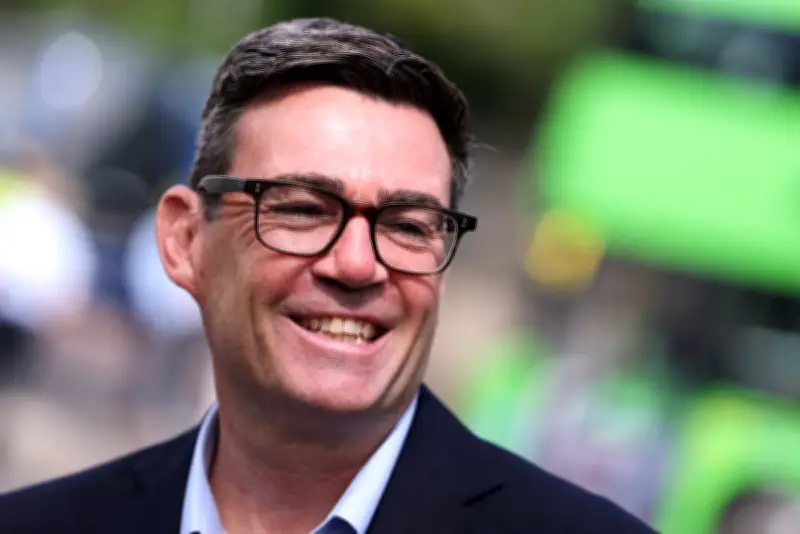
Labour has overtaken Reform UK in a new poll just days after Andy Burnham became Prime Minister. The More in Common survey suggests Labour has seen an immediate “Burnham bounce” after the former Mayor of Greater Manchester replaced Sir Keir Starmer on July 20.
Labour is up four points to 28%, Nigel Farage’s Reform party down two points to 24%, the Conservatives unchanged on 22%, the Liberal Democrats up one point to 12% and the Greens down three points to 8%, with the Scottish National Party unchanged on 2%.
The latest findings are from fieldwork, with interviews of more than 2,000 people, carried out between July 24 and 27, compared to a survey done between July 20 and 22.
Momentum on the Prime Minister’s side
Luke Tryl, UK director of More in Common, said: “It’s only been a week since he entered office, but it’s clear that momentum is on the Prime Minister’s side. After a jam-packed week of high-profile policy announcements and media appearances, the Labour Party has surged in our weekly poll.”
He added: “With all the caveats that it’s just one poll, Labour now leads for the first time since March of last year, and holds their highest vote share since the early months of this government in 2024. And with both Reform and the Green Party dropping to their lowest vote share in months, it seems that this early focus on the cost of living has appealed to voters that Labour has lost across left and right.”
Burnham’s policy push
Mr Burnham hit the ground running after entering No10 with a series of announcements to ease the cost of living, including axing VAT from electricity bills, a cap of £2 on bus fares outside of London, and reductions in business rates for pubs.
He has yet to nail down the funding for some of these moves but he has given a clear signal of how he plans to govern. He held his first meeting of the revived National Economic Council in his new No10 North in Manchester as he pushes ahead with plans for the “biggest devolution of power in modern times” which could see tens of thousands of jobs moved out of Whitehall.
Setting very high ambitions, he has also pledged to roll back 40 years of ‘neo-liberalism’ with the State taking a greater role, as well as vowing to deliver the largest council homes building programme in the post-war period.
At the start of his second week in office, he pledged that UK support for Ukraine “remains unwavering” ahead of welcoming Volodymyr Zelensky in Downing Street on Monday.
Challenges ahead
Earlier, the new PM ruled out “crude cuts” to benefits in a BBC Panorama interview. But he stressed the need to “get really serious” about reducing the welfare bill. He was expected to set out his policies on youth unemployment and welfare in the coming days as part of a series of interventions on longer-term problems, having already vowed to address funding for adult social care.
Mr Burnham is expected to spend billions more of public money to boost England’s regions. He has also signalled that he may hike taxes on the better off, possibly with a new property levy which would hit London hardest. The additional revenue could be used to reduce tax on the less well off, possibly by raising the £12,570 threshold at which people start paying income tax, or to fund some of his other plans.
Mr Burnham faces having to find tens of billions of pounds in an autumn Budget to meet defence spending commitments and to pay for his blueprint for Britain.