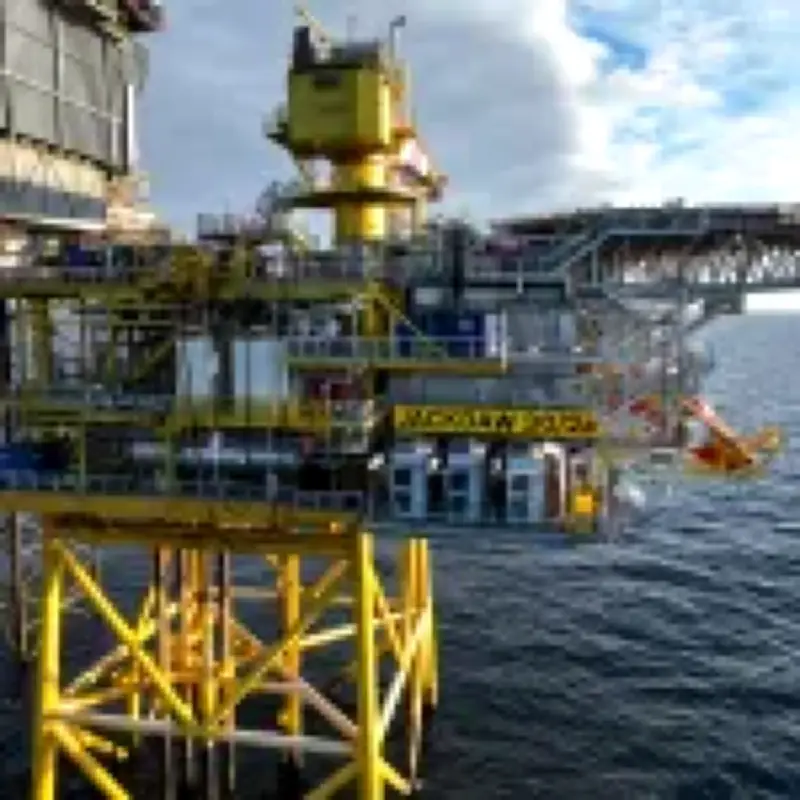
The government has officially approved the Jackdaw gas field in the North Sea, a decision that has been expected for some time. The move has drawn mixed reactions, with trade unions expressing support, climate campaigners voicing despair, and some opposition politicians criticising the delay in reaching the decision.
Energy Secretary Miatta Fahnbulleh, who succeeded Ed Miliband after Andy Burnham became Prime Minister, insists the approval will not affect the UK's 'sprint' towards net zero. However, questions remain over what it will mean for households facing rising energy bills. According to the Department of Energy Security and Net Zero, gas from the field will be supplied to British homes and businesses by the end of this month.
What is Jackdaw and who owns it?
Jackdaw is a gas field in the North Sea, approximately 150 miles west of Aberdeen. It is often discussed alongside the Rosebank oil field, as both large projects were backed by the Conservatives before being blocked by a court ruling. The companies behind the ventures had to provide additional information about their predicted climate impact before resubmitting their applications.
Jackdaw is generally seen as less controversial than Rosebank because it will supply gas for British homes, whereas Rosebank would produce oil for the global market. Despite this, environmental campaigners have criticised the project, saying the extracted gas will 'supercharge' the climate crisis.
Jackdaw is owned and operated by Adura, a joint venture between Shell and Norwegian state oil company Equinor. Adura boss Neil McCulloch said the decision 'provides certainty to the businesses and skilled workers already delivering the project'. He hopes approval will also be granted for Rosebank, as Adura plans to develop that field alongside Ithaca Energy.
How will the Jackdaw decision affect my bills?
Energy Secretary Miatta Fahnbulleh was careful to manage expectations, stating that this move will not bring down energy bills. She told LBC: 'That was not a consideration in the decision because it won't mean cheaper bills.'
The cost of gas from Jackdaw is determined by international prices, which have surged in recent years due to Russia's war in Ukraine and disruption in the Gulf linked to the war in Iran. This is why Fahnbulleh and her predecessor Ed Miliband have argued for more nuclear and renewables, as such 'homegrown' energy is not affected by global events, potentially reducing costs.
Chancellor John Healey announced today that tax receipts from North Sea oil and gas will go into a new fund to 'invest in renewable and low carbon energy projects and support the green transition'. Fahnbulleh added: 'We absolutely must drive bigger reforms that can get bills down for good, and that is about clean, homegrown energy here that can drive down the cost. But it's also about reforming the energy market so it works for consumers, and that we are driving costs down for good.'
What are people saying about the Jackdaw decision?
Reactions to the decision are sharply divided. Conservative shadow energy secretary Andrew Bowie said Labour 'had to be dragged kicking and screaming' into granting approval, adding that 'nobody should mistake one gas field for a change of heart'. He said: 'This should be the start, not the end. Labour must approve Rosebank, end the ban on licences, and scrap the Energy Profits Levy.'
Octopus Energy boss Greg Jackson called the move 'good energy policy', arguing: 'Jackdaw will replace 20 ships a year of imported gas, with cleaner British gas that pays tax here and sustains jobs for longer.' The leaders of the Unite and GMB trade unions also signalled strong support for the decision.
However, Greenpeace UK's head of politics Ami McCarthy said it showed the 'toxic grip fossil fuel lobbyists still hold over our energy policy'. She said: 'What Jackdaw is guaranteed to do is generate record profits for Shell and Equinor while supercharging the climate chaos hitting families here and abroad.' Green Party leader Zack Polanski called the move 'a victory for Shell over the people', saying it shows Labour has 'abandoned all credibility in the fight against climate change'. He added: 'The energy secretary has herself said it will make no difference to energy bills, the health secretary has admitted the summer heatwave added to pressure on the NHS, and the industry's own assessment is that it will create only 27 jobs.'