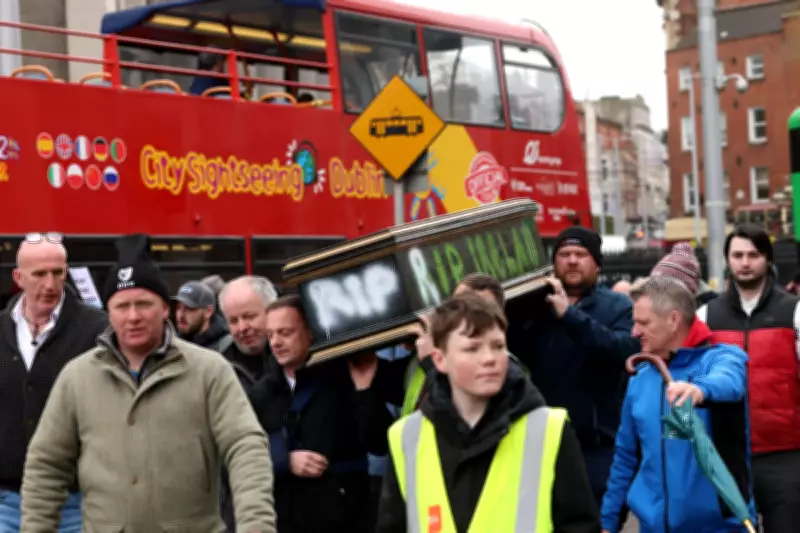
The National Emergency Coordination Group has issued a stark warning that the number of fuel stations without supplies in Ireland could escalate to 500 by Friday, as ongoing protests by hauliers and agricultural contractors continue to disrupt critical infrastructure. Authorities are urging the public to purchase only the fuel they need to alleviate mounting supply issues.
Government Ministers Engage in Crisis Talks
A meeting between Government ministers and representative bodies from the haulage and farming industries persisted on Friday, aiming to address the escalating situation. However, protesters, including spokesman John Dallon, were denied entry to the discussions at the Department of Agriculture, sparking further tensions. Dallon expressed frustration, stating that protesters had been told by TDs they could attend, only to be turned away upon arrival.
Protests Expand Across the Country
What began on Tuesday as slow-moving convoys on motorways and restricted access to Dublin's busiest streets has now evolved into blockades at fuel depots that supply half of Ireland. Key sites affected include the oil refinery in Whitegate, Co Cork, where Gardai were involved in a stand-off with protesters, as well as depots in Galway City and Foynes, Co Limerick.

These disruptions have raised alarms about panic-buying at forecourts, with some stations already depleted, and potential impacts on emergency services and deliveries of essential supplies for animal welfare on farms.
Taoiseach Issues Dire Warning
Taoiseach Micheal Martin has cautioned that Ireland is on the "precipice of turning oil away from the country" as protests stretch into a fourth day. He highlighted the risk of losing oil shipments, such as a tanker off the coast of Galway, if it cannot dock due to the blockades. "It is unconscionable, it's illogical, it is difficult to comprehend," Martin told RTE, emphasizing the severity of the situation in the midst of a global oil supply crunch.
Emergency Services Under Pressure
The NECG, which convenes various Government departments and state agencies, met on Friday to assess the crisis. They reported that fuel supplies for emergency response vehicles are "under increasing pressure," with fire services halting non-essential activities and serious concerns mounting over the National Ambulance Service's operations.
In a statement, the NECG urged the public to only buy necessary fuel and warned against storing fuel at home due to significant safety risks. They noted that more than 100 fuel stations are currently out of supply, with the potential for this number to rise to 500, out of approximately 1,500 nationwide.
International Shipping Concerns
The coordination group also highlighted growing unease among international shipping companies about offloading stock at Irish ports, with delays impacting their operations. This adds to the broader economic implications of the protests, which Government leaders have condemned as "wrong" and akin to holding the country "ransom."
Government Response and Proposed Measures
Minister of State Niall Collins indicated that the Government is developing a package of measures to tackle inflation, but implementation hinges on the end of port blockades. Enterprise Minister Peter Burke suggested that an intervention to reduce inflation and lower grocery prices could be announced on Friday, targeting support for vulnerable consumers.
Transport Minister Darragh O'Brien expressed "extreme concern" over fuel distribution issues, particularly after learning about curtailments in fire and emergency services. He called for de-escalation to avoid heavy-handed responses, emphasizing the need for immediate action.
Military on Standby
The Irish army remains on standby to assist Gardai in removing blockades at critical infrastructure, including fuel depots, underscoring the gravity of the situation. Meanwhile, Ger Hyland, president of the Irish Road Haulage Association, has offered to act as an "honest broker" between protesters and the Government, having contacted them through intermediaries to convey concerns.

Fine Gael TD Peter Roche voiced frustration over the Government's handling of the protests, noting that he believed protest spokespeople would be allowed into meetings based on conversations with senior officials, but was told it would violate parliamentary guidelines.
As the crisis unfolds, protesters vow to continue until their demands are met, with Dallon asserting, "They'll continue until we get a result." The situation remains fluid, with all eyes on Government efforts to resolve the standoff and restore fuel supplies across Ireland.