

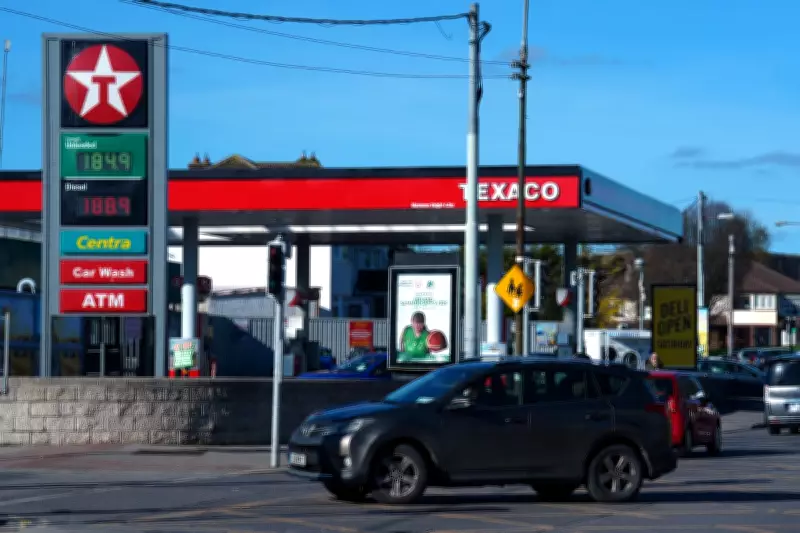
Motorists across Ireland are experiencing severe delays this morning as widespread protests against escalating fuel prices have commenced, leading to significant traffic chaos on key roadways. An Garda Siochana has issued urgent warnings to the public about slow-moving convoys that are impacting several major motorways, including the M7 and M4 in County Kildare, the M7 in County Limerick, the M8 in County Offaly, the M3 in County Meath, and the M6 in County Galway.
Gardai Issue Traffic Disruption Alert
On Monday, Gardai cautioned that the protests could result in "significant" traffic disruption, and they have advised drivers to "plan their journeys accordingly." The police force has had "limited interaction" with the protest organisers, as much of the planning is occurring on social media platforms and messaging apps. Consequently, An Garda Siochana stated they are not in a position to provide accurate or detailed advice to the general public at this time.
Protest Details and Organisation
Social media posts indicate that convoys of vehicles, including HGVs, agricultural machinery, and plant vehicles, are gathering at various locations nationwide before travelling along major travel routes. The plan involves some convoys remaining in regional areas while others converge in Dublin city centre. Gardai have clarified that they have no role in permitting or authorising public gatherings or protests, and no permit is required to organise such demonstrations in Ireland.

Global Fuel Price Surge
The protests are driven by sharp increases in fuel costs, with Fuels for Ireland reporting that global wholesale prices have risen dramatically. Between last Friday and Thursday night, kerosene prices increased by 74%, diesel by 48%, and petrol by 15%. This surge is linked to global oil market volatility, as the price of Brent crude oil climbed by around 1.5% to 111.4 US dollars a barrel in early trading on Tuesday.
International Factors Influencing Prices
Oil prices have been pushed higher due to investor caution ahead of a deadline set by US President Donald Trump for Iran to agree to reopen the Strait of Hormuz. Trump has threatened to launch a major attack on Iranian infrastructure if a ceasefire deal is not reached by 1am UK time on Wednesday. The price of Brent crude is now approximately 53% higher than before the conflict began in late February, leading to steep rises in petrol and diesel costs globally.
Market Reactions and Diplomatic Hopes
Global financial markets have been tentative in response to the deadline, with traders still hopeful for a diplomatic breakthrough despite little progress in recent peace talks. In London, the FTSE 100 opened slightly higher but quickly turned negative, down 0.1% at 10,426.05 points shortly before 9am. Meanwhile, the German Dax index fell by 0.2%, and the French Cac 40 rose by 0.4% in early trading.
The ongoing protests underscore the broader economic impact of rising fuel prices, affecting both daily commuters and the transportation sector. As the situation develops, authorities continue to monitor the disruptions and urge public caution on the roads.






