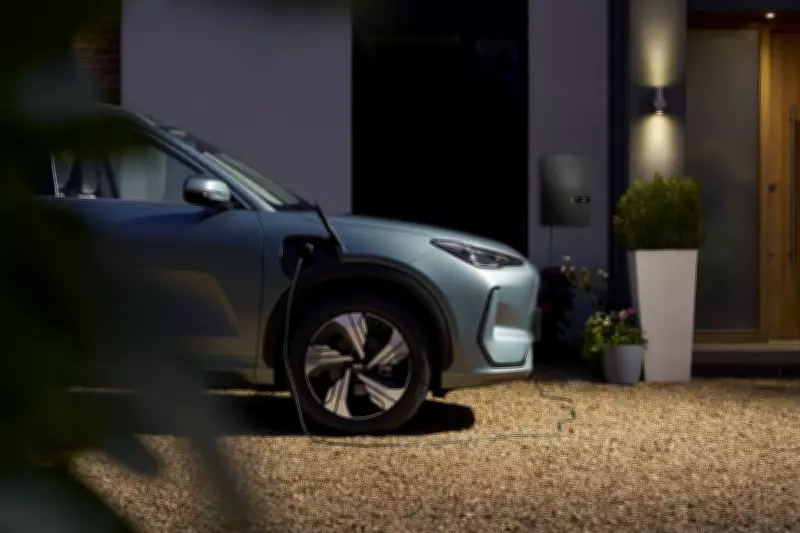
Complete Guide to EV Home Charging Costs, Installation and Speed
One of the primary considerations when contemplating a switch to an electric vehicle is whether you can conveniently charge it at your residence. With the EV market expanding rapidly—sales surged by nearly 24 percent last year—understanding home charging is crucial. Once mastered, many drivers wonder why they didn't transition to an EV sooner. Home charging eliminates fuel odours and petrol spills, offering the convenience of a fully charged battery each morning at a significantly reduced cost.
How Much Do EVs Cost to Charge at Home?
Charging an electric vehicle at home can be remarkably economical. Many smart home charging tariffs enable a full charge for just a few pounds, substantially cheaper than refuelling with petrol or diesel and more affordable than utilising public chargers. The key to cost-effective home charging lies in securing a low-rate energy tariff, ideally offering charging from approximately 7p per kilowatt-hour. If your current energy supplier lacks such EV-friendly tariffs, switching providers can yield substantial savings.
On an optimal tariff, you could pay under £2 for every 100 miles driven. In contrast, covering the same distance in a petrol car might cost around £14. This stark difference underscores the financial benefits of home charging, making EV ownership increasingly attractive for budget-conscious motorists.

Are EV Chargers Expensive to Install?
Installing a new EV charger typically incurs an additional cost beyond the charger's price. For a relatively straightforward installation, budgeting approximately £300 is advisable. However, this investment is long-term; once installed, a home charger does not require replacement with each vehicle change. This permanence adds to its value, providing ongoing convenience and savings.
How Long Do EVs Take to Charge?
Home charging is generally slower than public charging, with speed measured in kilowatts. Most mid-market electric vehicles support maximum charge rates between 100kW and 200kW. When connected to a compatible charger, batteries can replenish from 20 to 80 percent in about 20 to 40 minutes.
Home chargers, or wallboxes, typically operate at 3.6kW, 7kW, or 11kW, depending on the charger's capability and your home's electrical system. Three-phase wiring might allow for a 22kW charger, though this is uncommon in UK households. For instance, a fast-charging EV like the latest Porsche Taycan can achieve up to 320kW at public chargers, enabling a 10 to 80 percent charge in just 18 minutes. However, using a 7kW home wallbox extends this to 12 hours for a full charge, or 22 hours with a 3.6kW charger.
Using a standard three-pin domestic socket—possible with most EVs—the Taycan would require over 30 hours for a full charge, suitable only for emergencies. Similarly, a Tesla Model 3 takes about 15 to 20 hours to charge fully with a 3.6kW home charger, or eight to 12 hours with a 7kW charger. While these times may seem lengthy, regular overnight top-ups during cheap electricity periods ensure a full battery at a fraction of the cost, aligning with typical usage patterns.
Are EVs Expensive to Charge?
Public chargers can be considerably more expensive than home charging, often priced between 60p and 90p per kilowatt-hour. For example, charging a Volvo EX30 with a 69 kWh battery at 89p per kWh costs £61.41, providing a real-world range of 200 to 250 miles. This can make EV motoring pricier than using fossil fuels, though increasing EV sales may foster competition and drive prices down.
Some charge networks offer monthly subscriptions to reduce costs. For instance, Ionity's rapid chargers cost 89p per kWh, but a £10.50 monthly fee lowers this to 46p per kWh. Cheaper alternatives include street-side lamp post chargers, available from 40p per kWh, with the lowest rates typically between midnight and 7am. Charging the Volvo EX30 during these off-peak hours reduces a full charge to around £28.
The public charging infrastructure is expanding rapidly, with more on-street chargers, installations in shopping centres and gyms, and upgrades across motorway networks. Bespoke charging hubs, resembling fuel stations with multiple fast chargers, are also emerging nationwide.

Best EV Chargers for Your Home
When selecting a home EV charger, numerous models are available, varying in features, size, and design. A 7kW charger is ideal, as lower-powered options may struggle to provide an adequate overnight charge. Budget between £600 and £700 for a reliable charger, with premium brands like Andersen EV offering entry-level designer models under £700. Hypervolt and Ohme are also well-regarded for their quality and performance.
Cheapest EV Chargers to Install at Home
The most affordable EV chargers start around £600, but savings are possible through energy suppliers or when purchasing a new EV. Many car manufacturers partner with major providers, sometimes including a charger as part of the deal, which can reduce upfront costs.
Can I Charge an EV with Solar Panels?
Yes, solar panels can charge an EV by feeding energy into your home's electrical system. While charging speeds may be slower, combining solar panels with a wallbox charger is entirely feasible, enhancing sustainability and reducing reliance on grid electricity.
Can I Charge an EV with Home Batteries?
Integrating solar panels with a home battery system offers an optimal solution. Solar energy charges the batteries during the day, allowing stored power to be used in the evening or for overnight EV charging, maximising efficiency and cost savings.
Are EV Charger Grants Available in the UK?
Several grants are available in the UK to offset EV charger costs. A £350 grant is offered for homeowners or tenants with off-street parking in flats or other residential properties. Additionally, a £350 grant applies for properties with on-street parking requiring cross-pavement solutions like charging gullies.
The Workplace Charging Scheme provides up to £350 per socket, with a maximum of 40 sockets across all sites, available to businesses, charities, and public sector organisations. Further grants support landlords, small and medium-sized businesses, and educational establishments, promoting wider EV adoption across various sectors.