

Cuba's Renewable Energy Vision: A Path to Independence from US Blockade
A groundbreaking analysis by the Common Wealth thinktank suggests that Cuba could permanently overcome the United States' crippling energy blockade with a strategic investment of just $8 billion in renewable energy sources. The report, part of the Transition Security Project (TSP), argues that this transition should be funded by the international community as a form of reparative climate finance, positioning Cuba as a pioneering model for sustainable energy in the Caribbean region.
Breaking Free from Fossil Fuel Dependence
According to the TSP analysis, an $8 billion investment would enable Cuba to generate 93.4% of its electricity from renewables, effectively ending its reliance on imported fossil fuels. For a more ambitious $19.2 billion, the country could achieve a fully renewable grid, becoming the first in the Caribbean to do so. Even a smaller $5 billion rollout would slash fossil fuel dependence to just 20% of electricity generation. The report highlights that electricity costs would drop significantly, from 14.3 cents per kWh in the current baseline to as low as 6.5 cents with the $8 billion investment, making energy more affordable for Cuba's 10 million citizens.
The Impact of the US Energy Blockade
Cuba has been grappling with severe energy shortages due to a US-imposed blockade, intensified since January when Donald Trump's executive order threatened tariffs on countries selling oil to the island. This has led to just one oil shipment from Russia, causing the national grid to collapse by March. The resulting blackouts have crippled hospitals, transport, and industry, with Trump boasting about exerting pressure on the communist-led government. Kevin Cashman, a TSP researcher, stated, "The US's energy dominance strategy seeks to entrench dependence on fossil fuels, but cheap solar and battery storage weaken this approach. For Cuba, a green transition would reduce US leverage and provide a shining example to the world."

Renewable Energy Mix and Implementation
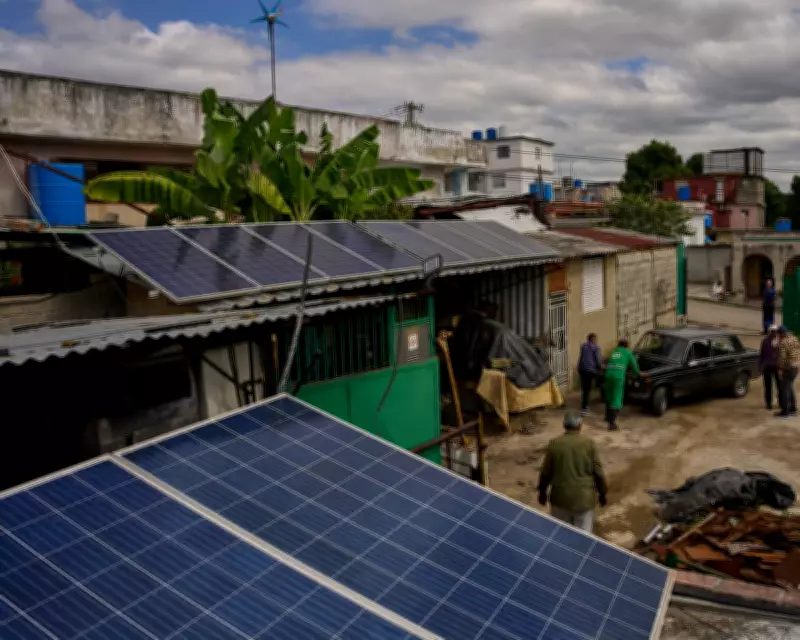
Under the most ambitious scenario, solar power would supply 75% of Cuba's electricity, complemented by 20% from wind and the remainder from hydropower and bioenergy. Cheaper alternatives would rely more on bioenergy and wind. The transition mirrors Cuba's past resilience, such as its rapid shift to agroecology after the Soviet Union's collapse. Recently, with Chinese support, Cuba has already integrated over 1,000MW of solar capacity into its grid, demonstrating feasibility.
Financing and Global Implications
The report advocates for international funding, framing it as reparative climate finance due to historical injustices. It argues that Cuba could repay investments through energy savings, while setting a precedent for rapid transitions under external constraints. This initiative not only aims to secure energy independence but also to inspire neighbouring countries in the Caribbean and beyond to embrace renewable solutions, challenging US foreign policy strategies that prioritise fossil fuel dominance.






