

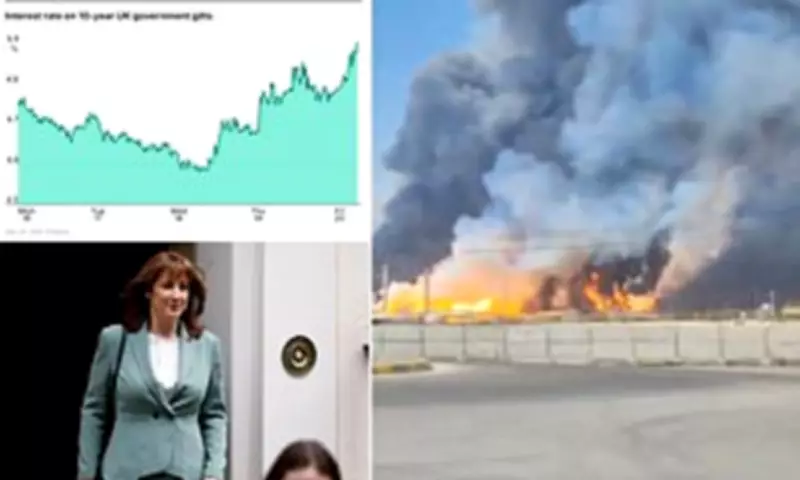
Brits are being urged to work from home and reduce oven usage as the Middle East crisis intensifies, with mounting concerns over global supply chains prompting drastic energy-saving advice. The International Energy Agency has issued stark recommendations to cut down on car use and opt for air fryers for cooking, amid fears of a new wave of inflation dubbed 'Trumpflation' stemming from the Iran conflict.
Energy Crisis and Inflation Fears
Households are starting to feel the impact of rising oil and gas prices, with the crisis pushing the UK Government's borrowing costs to their highest levels since 2008. This has raised doubts over whether Chancellor Rachel Reeves can afford to help families cope with the looming financial pain, similar to measures taken after Russia's invasion of Ukraine in 2022. The Tories have accused Reeves of 'maxxing out the nation's credit card' with 'runaway welfare spending', as February's public sector borrowing hit a record high outside of the Covid pandemic.
Global Supply Chain Disruptions
Iran's foreign minister has fuelled concerns about direct reprisals against the UK, stating that assistance to US-Israeli strikes is viewed as 'aggression'. The Strait of Hormuz, which handles a fifth of global oil supplies, has been effectively shut by Iran since the war began, steadily driving up oil prices. A sharp rise to nearly $118 per barrel occurred on Thursday after Iran threatened 'full-scale economic war' and struck Qatar's main liquefied natural gas facility, causing 'extensive further damage'. QatarEnergy's chief executive estimated repairs could take three to five years.

Impact on Consumers and Economy
Drivers in the UK are already experiencing higher fuel prices at pumps, and experts predict energy bills could increase by more than a fifth when the cap is adjusted in July. The International Energy Agency has urged measures such as car sharing and avoiding air travel to alleviate what it calls 'the largest supply disruption in the history of the global oil market'. Their proposals focus on road transport, which accounts for around 45% of global oil demand, suggesting working from home and lowering motorway speed limits by at least 10 kilometres per hour to reduce fuel consumption.
Bank of England Warnings and Mortgage Concerns
The Bank of England warned that the growing Middle East conflict could trigger spiralling inflation and a surge in unemployment, with any 'protracted' shock potentially forcing interest rate hikes. Markets are betting on three base-rate increases of a quarter point, which could add approximately £100 per month to repayments on a £250,000 mortgage. Governor Andrew Bailey noted that war in the Middle East has pushed up global energy prices, visible at petrol pumps and likely to feed into higher household bills if sustained.
Aviation and Energy Market Strains
Aviation chiefs have warned of a summer of price rises and cancellations due to a global jet fuel shortage. Many of the cheapest mortgage deals have been withdrawn recently, and most energy deals offering rates below the price cap were pulled by last night. Analysts had predicted two more interest rate cuts this year, but these expectations have reversed as experts warn of crippling 'Trumpflation' impacting the global economy.
IEA's Energy-Saving Recommendations
The International Energy Agency's advice includes a ten-point plan to save energy:
- Work from home where possible
- Reduce highway speed limits by at least 10 km/h
- Encourage public transport
- Alternate private car access to roads in large cities on different days
- Increase car sharing and adopt efficient driving practices
- Efficient driving for road commercial vehicles and delivery of goods
- Divert LPG use from transport
- Avoid air travel where alternative options exist
- Where possible, switch to other modern cooking solutions
- Leverage flexibility with petrochemical feedstocks and implement short-term efficiency and maintenance measures
These measures aim to reduce gas use, with suggestions like 'encouraging electric cooking and other modern options' to mitigate the crisis's effects on households and the broader economy.






