

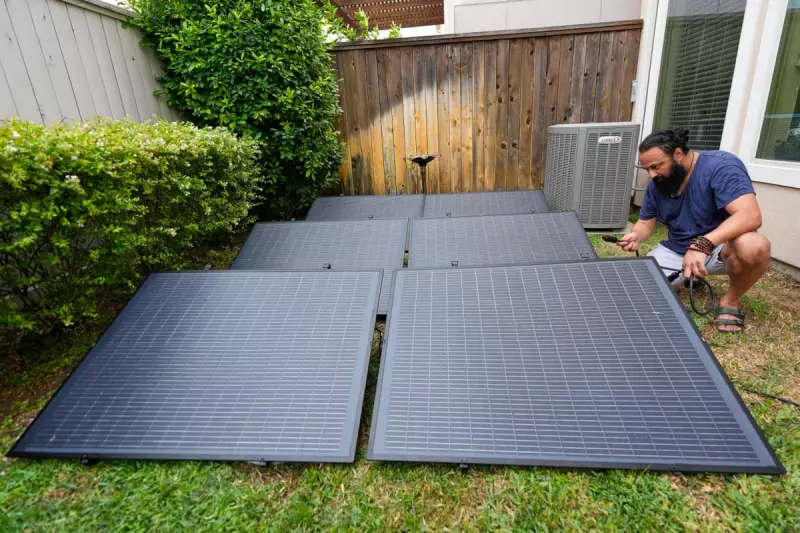
A quiet energy revolution is brewing across American balconies and patios, as simple plug-in solar panels promise to democratise renewable power for millions of households previously excluded from the solar economy.
The Regulatory Breakthrough
Utah made history earlier this year by becoming the first US state to pass legislation explicitly allowing residents to purchase and install small, portable solar panels that connect directly into standard wall sockets. This landmark move has sparked a domino effect, with lawmakers in New York, Pennsylvania, Vermont, Maryland and New Hampshire preparing similar bills.
New York state senator Liz Krueger, who is sponsoring balcony solar legislation, emphasised the technology's transformative potential. "Plug-in solar is a powerful tool to deliver enhanced energy independence and affordability to millions of New Yorkers who are currently shut out of the solar economy," she said. Krueger believes her proposed legal tweak will prove "a gamechanger for renters, low-income New Yorkers, and many others who can't install rooftop solar".

How Balcony Solar Works
These compact systems function similarly to traditional solar panels but on a much smaller scale. The panels capture sunlight and feed clean energy through an inverter into any standard wall socket. Unlike conventional solar installations, they require no professional fitting and can be secured with simple zip-ties.
Price points vary significantly, with basic models costing around $300 in markets like Germany where the technology is already mainstream. More sophisticated versions incorporating battery storage for night-time use range from $1,500 upwards. This investment can power essential household appliances including refrigerators, dishwashers, washing machines and Wi-Fi routers completely free of grid electricity.
Kevin Chou, executive director of non-profit advocacy group Bright Saver, noted the growing momentum: "There's now so much interest in this. The federal administration has been so negative to clean energy that people have thought 'OK what can we do at the state level?' and this has been one of those things."
Overcoming Regulatory Hurdles
The primary obstacle to balcony solar adoption in the United States has been state regulatory frameworks that typically mandate formal interconnection agreements with utility companies for any grid feedback, plus professional installation and inspection requirements.
Utah Republican legislator Raymond Ward recognised how minor legal adjustments could create major opportunities. After reading about balcony solar's success in Europe, he drafted legislation creating an exemption from interconnection agreements for systems generating 1.2 kilowatts or less. "The state law said that if you put any power back on the grid, even one electron, you need a contract with the utility, which is just crazy," Ward observed.
His proposal faced no opposition, and he confidently predicts: "I fully expect 10 other legislatures in 2026 will run a bill like this, and more and more people will become interested in this. It will definitely happen."
While balcony solar won't single-handedly solve America's energy challenges – Chou acknowledges it "could maybe knock 5% off emissions" – it represents an accessible step forward. "This isn't a silver bullet or anything," he said, "but it is an easy thing to do, it's convenient and it can save people money. At the moment, there aren't many wins happening for the climate and this can be one."






