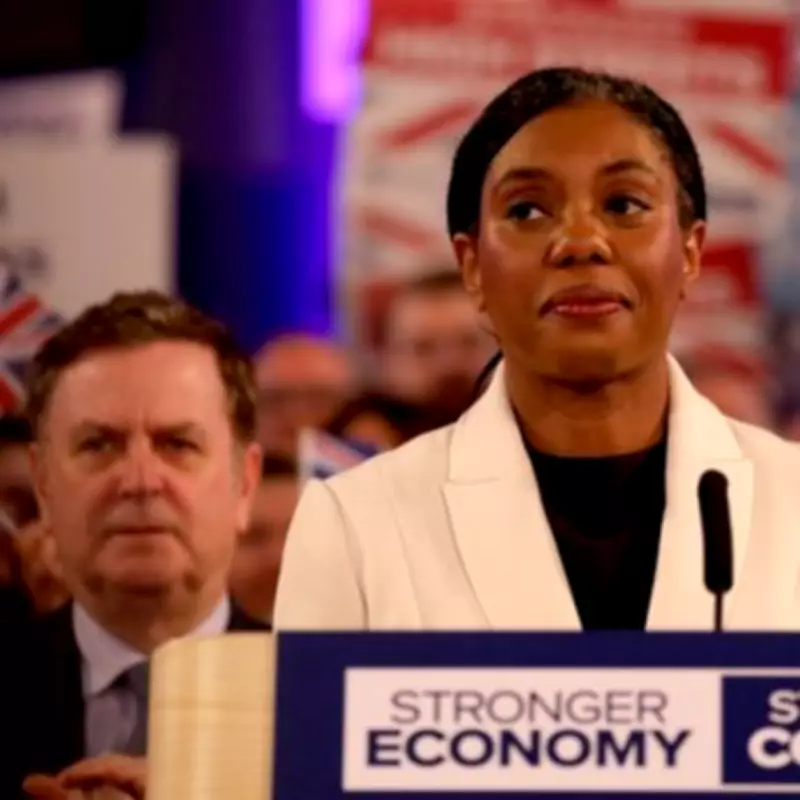
Kemi Badenoch's 'Get Britain Drilling' Campaign Sparks Controversy and Criticism
Tory leader Kemi Badenoch has been accused of promoting a "dangerous fantasy" with her newly launched "Get Britain Drilling" campaign, which calls for maximising the UK's oil and gas reserves. The initiative, unveiled ahead of a planned visit to an oil rig off Aberdeen, has drawn sharp criticism from political opponents and environmental campaigners alike.
Energy Security Concerns Amid Global Price Spikes
The campaign launch comes against a backdrop of soaring energy prices triggered by geopolitical tensions, particularly Iran's blockade of the Strait of Hormuz. This strategic chokepoint disruption has caused drastic increases in global oil prices, exacerbating existing energy security concerns. Critics point out that Badenoch had initially supported military intervention in the Middle East conflict before reversing her position a week later, adding to the controversy surrounding her energy policy approach.
Three-Point Plan for Fossil Fuel Expansion
Badenoch's campaign outlines a three-point strategy to boost domestic fossil fuel production:

- Ending the moratorium on new oil and gas licences
- Scrapping the windfall tax on energy company profits
- Providing increased financial support for the fossil fuel industry
However, this approach has been met with widespread scepticism from energy experts and political opponents who argue it represents a misguided attempt to address Britain's energy challenges.
Political Opposition and Environmental Criticism
Labour's Energy Minister, Michael Shanks MP, delivered particularly scathing criticism, stating: "Kemi Badenoch wanted to plunge Britain head first into war without a second's thought about the consequences. She has proven herself completely unfit for high office throughout this crisis." He further accused the Conservatives of having "completely failed to deliver energy security" during their 14 years in power, leaving families struggling with rocketing energy bills.
Environmental campaigners joined the chorus of disapproval, with Tessa Khan, executive director of Uplift, warning that the Conservative plan would "do nothing to lower bills" while endangering both security and the economy. Khan pointed to research indicating that hundreds of North Sea licences granted under previous governments had produced just 36 days' worth of gas, leading her to characterise Badenoch's approach as "peddling a dangerous fantasy."
Broader Energy Policy Context
The controversy unfolds as Energy Secretary Ed Miliband has vowed to "fight" to keep energy bills down and warned energy companies against exploiting customers. Meanwhile, Labour has positioned itself as advocating for investment in clean, homegrown power as a long-term solution to Britain's energy challenges, contrasting sharply with Badenoch's fossil fuel-focused approach.
Critics argue that the declining productivity of North Sea reserves makes Badenoch's drilling emphasis particularly problematic, suggesting it represents "vapid, political game playing at the expense of ordinary people" rather than a genuine solution to Britain's energy security needs. The debate highlights fundamental divisions in British energy policy as the country grapples with balancing immediate energy needs against long-term sustainability goals.