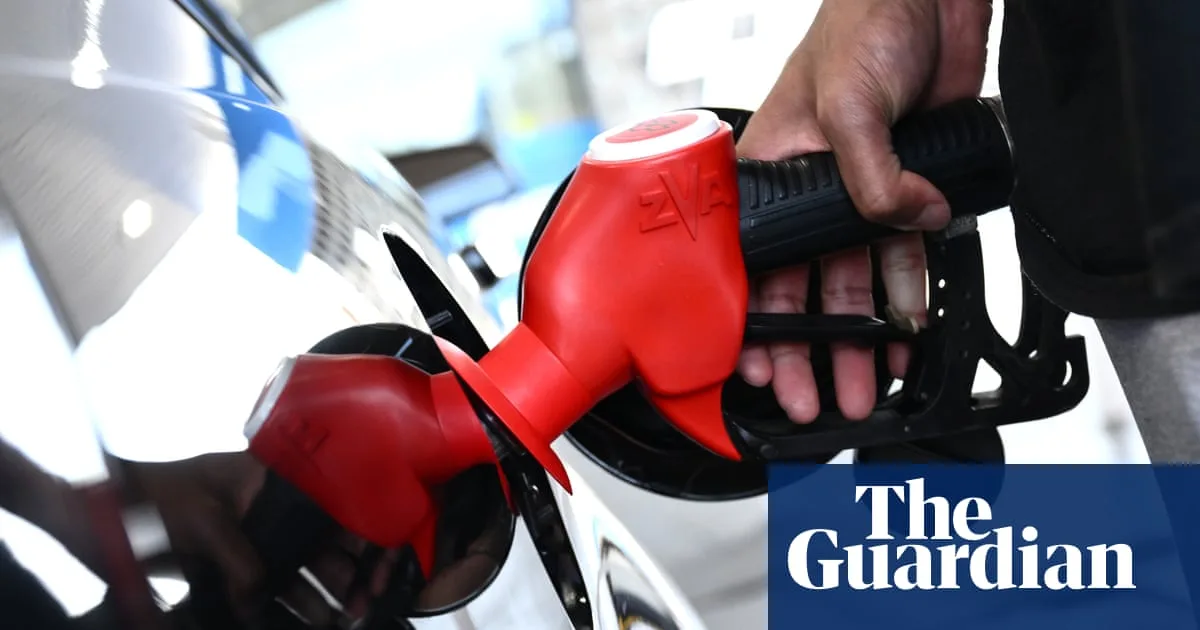
The Australian government considered plans for retail fuel rationing early in the global fuel crisis, according to documents obtained by Guardian Australia under freedom of information laws. The contingency, described as a 'worst-case scenario', would have imposed a daily purchase limit per vehicle at service stations.
Documents from the Department of Climate Change, Energy, the Environment and Water (DCCEEW) show that one option was a 'maximum transaction value per vehicle per day' rule, restricting how much fuel a single vehicle could buy in a 24-hour period. The plans were drawn up between 21 February and 17 March, covering the early stages of the Iran war after US-Israel strikes began on 28 February.
The International Energy Agency warned on Friday that oil markets would enter the 'red zone' by August as stocks dwindle amid a Middle East export shortage. Despite the preparations, the minister for climate change and energy, Chris Bowen, and the prime minister, Anthony Albanese, publicly ruled out the need for rationing at the height of the crisis. Bowen described the plan, which dates back to 2006, as 'just a guide'.
National Oil Supply Emergency Committee (Nosec) meetings in March discussed rationing details, including messaging to avoid public panic. One participant raised the need to 'consider what demand rationing might look like'. The committee resolved that DCCEEW would develop contingency plans for rationing under a future liquid fuel emergency declaration.
The government has since bolstered stocks, securing 600 million litres of diesel and 100 million litres of jet fuel from Singapore, China, Brunei and other nations, alongside a $10 billion fuel security package. However, the documents suggest authorities remain concerned about potential supply disruptions, with other countries already limiting purchases and urging citizens to reduce travel.