

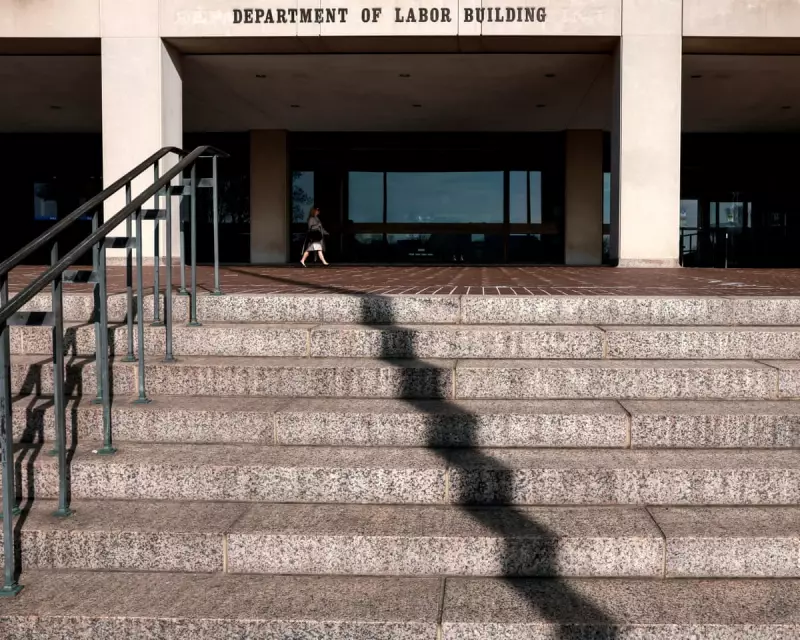
Senior figures in the American labour movement have launched a fierce condemnation of the Trump administration, accusing it of a "rhetorical shift towards white supremacy" following controversial social media activity by a key federal agency.
Nazi Slogan Echo Sparks Outrage
The controversy centres on posts from the official accounts of the US Department of Labor. One video, captioned "remember who you are, American", featured the phrase: "One Homeland. One People. One Heritage." Observers on social media platform X, and its AI tool Grok, were quick to note its stark similarity to the infamous Nazi slogan "Ein Volk, ein Reich, ein Führer" ("one people, one realm, one leader").
Christopher Hayes, a labour historian and professor at Rutgers University, told The Guardian the comparison was alarming. "The similarity to that Nazi slogan is bad," he stated, expressing deep concern over "the motivation behind it, the message, the sentiment and desired outcome."

Unions Condemn 'Fascist Propaganda'
Union leaders representing millions of American workers have voiced their shock and anger. Jimmy Williams Jr., General President of the International Union of Painters and Allied Trades, asserted that the labour department had repeatedly imitated "far-right and fascist imagery" in its online communications, adding: "When people tell you who they are, believe them."
Puneet Maharaj, Executive Director of National Nurses United, the largest nurses' union in the US, was unequivocal. "It is no surprise that a fascist regime would post fascist propaganda on a fascist social media network like X," she said, "but it remains concerning to see the DOL making posts that serve a fascist, white supremacist agenda."
In response to the criticism, a Department of Labor spokesperson said, "The social media campaign was created to celebrate American workers and the American Dream," but declined to comment on the specific rhetoric used.
AI Imagery and 'Americanism' Fuel Broader Fears
Historians point to a pattern beyond a single slogan. Under the Trump administration, the department has published AI-generated artwork depicting exclusively white male workers. Other posts frequently tout "Americanism", decry "globalism", and promote contested claims that all US job gains have gone to "native born" Americans.
Professor Hayes drew a direct parallel with historical propaganda. "The whole point is to demonize the foreign worker... It's the same thing the Nazis did," he explained, noting how such messaging erases "the other" to create a narrow, exclusionary vision of national identity.
Maharaj framed the posts as "part of a broader rhetorical shift towards white supremacy that many federal departments and agencies are undergoing under the Trump administration." Williams Jr. warned of a "very clear through-line" between this imagery and real-world violence, citing the recent killing of Renee Good by an ICE agent in Minneapolis.
Internal Disquiet and Damaged Credibility
The agency's new direction has also caused significant consternation within its own ranks. One current employee, unauthorised to speak publicly, described the social media activity as "radical and ideological," fearing it undermines trust and the department's core mission to protect workers.
"Political tone on official channels creates discomfort for career staff and weakens credibility with workers and employers," the employee said. "I wish the Department of Labor would remember who they are and what they do."
Former officials echoed these concerns. One anonymous ex-staffer, who is Jewish, said the rhetoric "harkens back to a whites-only era," identifying the decrying of "globalism" as an antisemitic dog whistle. Another lamented that the department's social media, once a source of expert policy information, was now peddling "AI slop developed by a 23-year-old, with no discernible insights on work or workers."

The episode highlights profound tensions over the use of official government channels and the direction of US labour policy under the current administration, raising alarm far beyond Washington DC.





