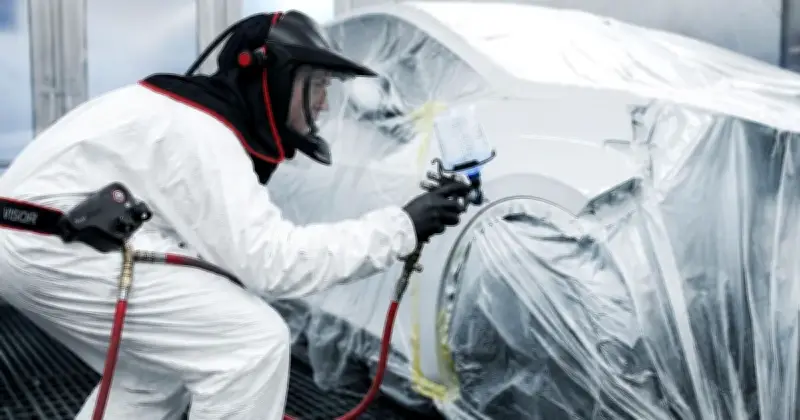
Jana Siber, chief executive of Steer Automotive Group, argues that young people should consider skilled trades over traditional university paths, citing the resilience and demand for such roles in the face of technological change.
The overlooked value of skilled trades
In an opinion piece, Siber reflects on her own early career advice, which emphasized university as the primary route to success. However, after years in businesses with highly skilled workforces, she has concluded that many careers once considered secure are being reshaped by technology, while overlooked trades have become some of the most resilient opportunities.
She points out that artificial intelligence is displacing entry-level desk work such as administration and data processing, rather than skilled physical work. In contrast, vehicle repair remains essential, as cars always need fixing and cannot be repaired remotely.
Alarming shortages in vehicle repair
Siber highlights that only 12% of vehicle paint technicians in the UK are under 25, describing it as a "demographic cliff." Research from the Institute of the Motor Industry (IMI) shows the sector loses about 4,700 skilled people annually to retirement and other industries, attracting only around 3,000 replacements. In paint alone, over 800 leave each year while only 400 arrive.
Despite a 28% rise in advertised pay for paint technicians over two years, jobs remain unfilled. The IMI concludes that employers are raising wages instead of expanding training, which is not working. More than 70% of repair employers report skills shortages.
The future is already here
The work involves removing dents, calibrating radar and camera systems, bonding modern materials, and using manufacturer diagnostic software. Only 11,518 technicians in the UK hold a qualification in driver assistance systems, about four in every hundred. More than a quarter of cars on the road already have this technology, and the IMI forecasts a need for around 205,000 such technicians by 2030.
Siber contrasts the costs of university—over £9,790 a year, three years, and average debt of £47,900—with apprenticeships that pay from day one and provide lasting qualifications. Despite this, apprenticeship uptake in vehicle damage repair continues to fall.
A call to reconsider career advice
Siber acknowledges university has value, as she holds degrees herself, but argues that presenting it as the only route is damaging. She encourages those missing university grades to look at trades, which offer training, pay, and long-term security. She notes that her company has merged training programmes into one academy, with around 300 apprentices, roughly one in fifteen employees.
She concludes: "We have spent a generation telling young people that the future is something you reach through a lecture theatre. For a great many of them, the future is a set of doors we forgot to mention were open."