

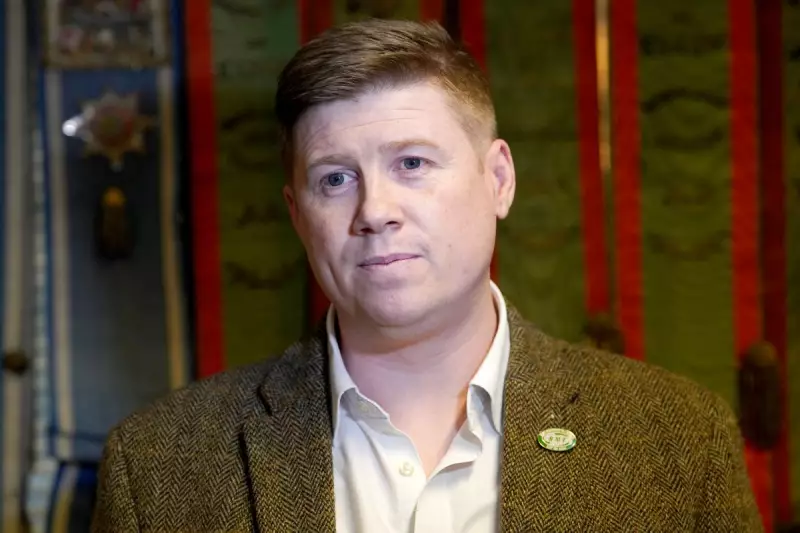
The general secretary of a major UK rail union has been compelled to publicly deny supporting Russia's full-scale invasion of Ukraine, following the emergence of footage from a 2015 visit to the contested Donbas region.
Controversial Footage from a 'Humanitarian Convoy'
Eddie Dempsey, who leads the National Union of Rail, Maritime and Transport Workers (RMT), was pictured during the trip holding a red Communist Party flag and standing before a statue of Lenin. The footage, which Dempsey has characterised as part of a 'humanitarian convoy', also shows him alongside individuals singing pro-Russia chants.
During the visit, which took place in 2015, Dempsey wore a T-shirt featuring the coat of arms of Novorossiya. This is a historical term for a 19th-century Russian imperial province that encompassed parts of southern and eastern Ukraine, and which has been adopted by pro-Russian separatists.

Union's Firm Rejection of Invasion Support
In response to the circulation of this footage, a spokesperson for the RMT issued a strong statement on Friday, 16 January 2026. The spokesperson clarified that Dempsey's trip was motivated by the 2014 fire at the House of Trade Unions in Odessa, a tragic event during Ukraine's Maidan revolution.
The statement was unequivocal, insisting Dempsey has 'at no time supported Russia's invasion of Ukraine' and has repeatedly called for a peaceful resolution to the conflict. The union emphasised the humanitarian nature of the 2015 visit.
Political Motions and Leadership Stance
Under Dempsey's leadership, the RMT's political stance on the war has drawn scrutiny. Last year, the union passed a motion advocating for the UK government to cease sending military aid to Ukraine.
The motion accused Britain of playing a 'belligerent role in international relations' by providing weaponry to Ukrainian forces defending against the Russian assault. This position has placed the prominent transport union at odds with the broader UK political consensus on supporting Ukraine.
The emergence of the 2015 footage has intensified questions about the union's and its leader's historical associations, forcing a public defence of their current stance against the Russian invasion that began in February 2022.






