Residents Launch Legal Battle to Save Clockwork Orange Estate from Demolition
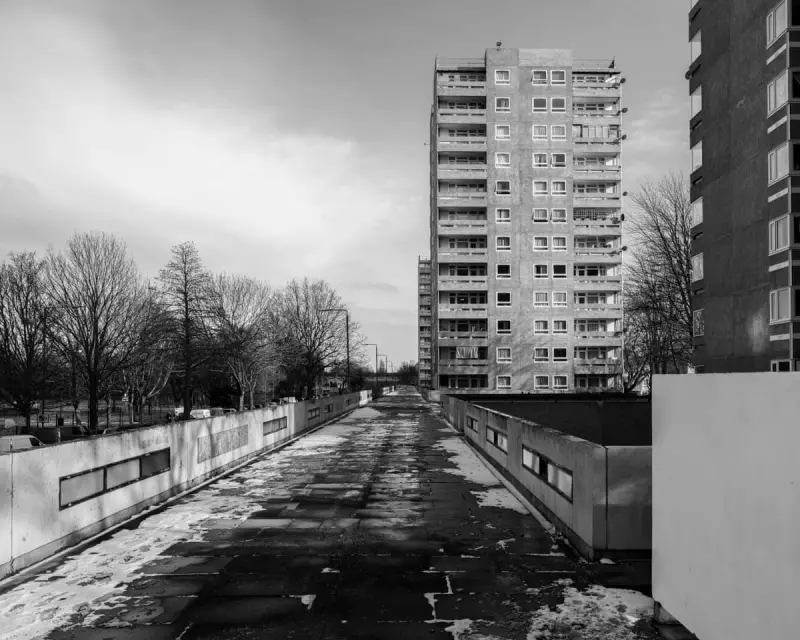
A significant legal challenge has been initiated to prevent the demolition of the iconic 1960s Brutalist Lesnes estate in south-east London, which served as the dystopian backdrop for several scenes in Stanley Kubrick's seminal film A Clockwork Orange. The action targets Bexley council and the Peabody housing association, who are overseeing the proposed redevelopment project.
Climate Concerns at the Heart of the Dispute
The legal case, spearheaded by resident Adam Turk, argues that the council and Peabody have fundamentally underestimated the greenhouse gas emissions that would result from demolishing the estate and constructing up to 1,950 new homes. This development, approved by the council on 23 December, is seen by residents as a direct threat to the UK's legally binding commitment to achieve net zero emissions by 2050.
Lawyers representing the residents contend that the environmental assessment was conducted against an illustrative masterplan, rather than the legally required "reasonable worst-case scenario." This, they argue, fails to provide an accurate or transparent account of the project's true climate impact.

A Wider Tension Across London
This dispute highlights a growing national conflict between environmental protection and large-scale urban regeneration initiatives. Across the capital, more than 130 housing estates are currently earmarked for demolition, raising serious questions about the cumulative carbon footprint of such projects.
Saskia O'Hara, a legal caseworker at the Public Interest Law Centre, which is representing the residents, stated: "These projects generate substantial greenhouse gas emissions, calling into question our stated commitment to achieving net zero by 2050. This case exemplifies the point at which the displacement of established communities coincides with irreversible environmental harm."
Community and Heritage Under Threat
Originally hailed by Greater London Council architects as "a town of tomorrow," residents acknowledge the estate later fell into disrepair. However, they firmly believe the existing structures could be refurbished rather than completely razed. The proposed demolition is viewed not just as an environmental issue, but as a threat to a long-established community, with some residents having lived there for up to four decades.
Adam Turk explained his motivation: "I'm challenging the redevelopment because I don't believe it's in the interest or consideration of the residents. The environmental impact placed on residents, such as myself, will undoubtedly cause health problems for us."
Economic Pressures and Official Responses
The push for redevelopment has been partly driven by rising land values in the area, following the opening of the Elizabeth line in 2022, which significantly reduced journey times into central London.
In response to the legal action, a spokesperson for Peabody said: "We're investing in communities in and around South Thamesmead, supporting people, improving public areas and providing much-needed new homes. The planned redevelopment will help us expand this work and create an even better place for local people to live. We will address any legal inquiries that may come up."
Bexley council has been approached for comment on the ongoing legal proceedings.