Historic Kentucky Cathedral Known as 'America's Notre Dame' Undergoes Major Facade Restoration
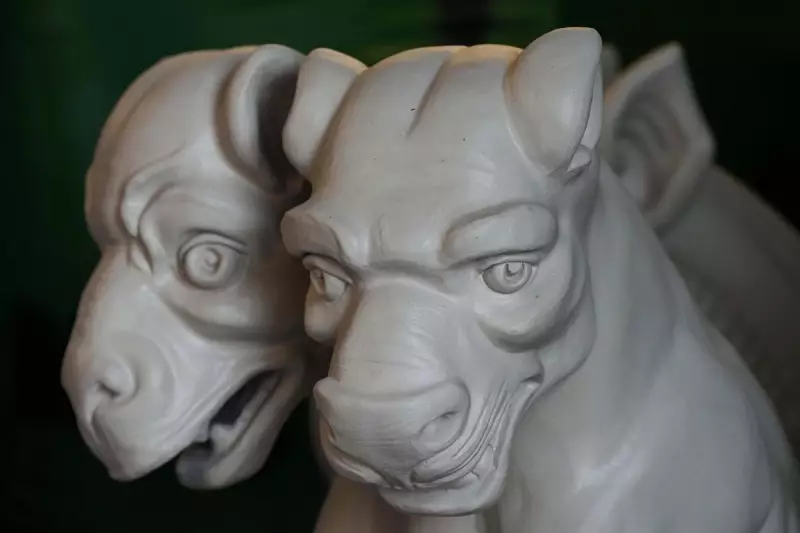
Workers have been installing new terra cotta gargoyles on the facade of the Catholic Cathedral Basilica of the Assumption in Covington, Kentucky, as they approach the completion of a significant two-year renovation project. The cathedral, often referred to as 'America's Notre Dame', is receiving meticulous repairs to ensure its Gothic splendour endures for future generations.
Preserving a Century-Old Legacy
Gargoyles have watched over this small Kentucky city for more than a century from their lofty perches on the cathedral. The new renovation will ensure they maintain their posts for years to come on the carefully restored facade of the towering stone sanctuary. Unlike the Paris landmark, which recently underwent massive renovation due to a devastating fire, the Covington cathedral required rehabilitation because of the slow deterioration of old stone, metal, and terra cotta after 125 years of exposure to the elements in its Ohio River city across from Cincinnati.
"We consider ourselves blessed to be able to ensure the cathedral is taken care of for coming generations," said Assumption’s rector, the Very Rev. Ryan Maher.

Art and Science of Restoration
Workers have been painstakingly repairing and replacing tons of Indiana limestone. The new gargoyles are replicas based on meticulous scans of the 32 worn originals. Workers aim to complete the two-year restoration by March. The finishing touch will be the installation of 26 new chimeras along the rooftop. These grotesque creatures, similar to gargoyles, are exact replicas of their weathered predecessors.
"It’s hard to believe that you’re able to replicate a piece that was built a hundred years ago by men that are no longer with us," said Brian Walter, executive vice president of Trisco Systems, the prime contractor for the restoration.
Restoration expert Walter emphasised that the work is both an art and a science passed down through generations. Workers have faced numerous challenges throughout the project: hoisting and fitting heavy stones into the façade while operating cranes above a busy street in varying weather conditions. They have been patching and fixing what they can and replacing other parts entirely.
Architectural Ambition in a Small City
The cathedral opened in 1901, following a multiyear construction campaign by the Belgian-born Bishop Camillus Paul Maes, head of the Diocese of Covington and an admirer of the French Gothic style. While the exterior is modeled on Notre Dame, it has adaptations. It is just under half of the Paris cathedral’s size, lacking the original’s twin towers and featuring a narrower but still imposing façade. The high-vaulted interior, bathed in light from large stained-glass windows, is modeled on another landmark Paris cathedral, Saint-Denis.
The ambition was striking, cathedral historian Stephen Enzweiler noted. The city then had just over 40,000 people, similar to its population today. "At the time, no one had ever heard of Covington," Enzweiler said. Maes wanted a sanctuary large enough to accommodate the rapidly growing immigrant Catholic population and grand enough to fulfil the medieval vision of a cathedral that would represent heaven on earth.
Gothic Revival and Modern Significance
The cathedral was part of a larger Gothic revival happening around the turn of the century that also saw the emergence of such landmark cathedrals as St. Patrick’s and St. John the Divine in New York. "This is a smaller version of that revival of French Gothic in America, done at a very high level in a little town at the time, of surprisingly high quality," said Duncan Stroik, an architect and professor of architecture at the University of Notre Dame.
Ironically, some of that Gothic revival wasn’t quite as medieval as it may seem. The movement drew strong influence from the mid-19th century renovation of the Paris cathedral after the popular novel, The Hunchback of Notre Dame, called attention to its deterioration. Unlike the gargoyles on Notre Dame, which double as rainspouts, the Covington sanctuary's fantastical creatures are purely decorative.

Community Support and Future Vision
The renovation price tag is $7.8 million, most of which has been raised. More than 2,000 donors contributed, along with foundations, Maher said. "It was kind of an easy sell, because of what the cathedral means to not only our parishioners but to the whole community," he explained.
The goal is to maintain the cathedral as a sanctuary for years to come. "When everything is upside down, this is a place where people can experience the calm of the Lord," Maher concluded, highlighting the enduring spiritual and architectural significance of this Kentucky landmark.