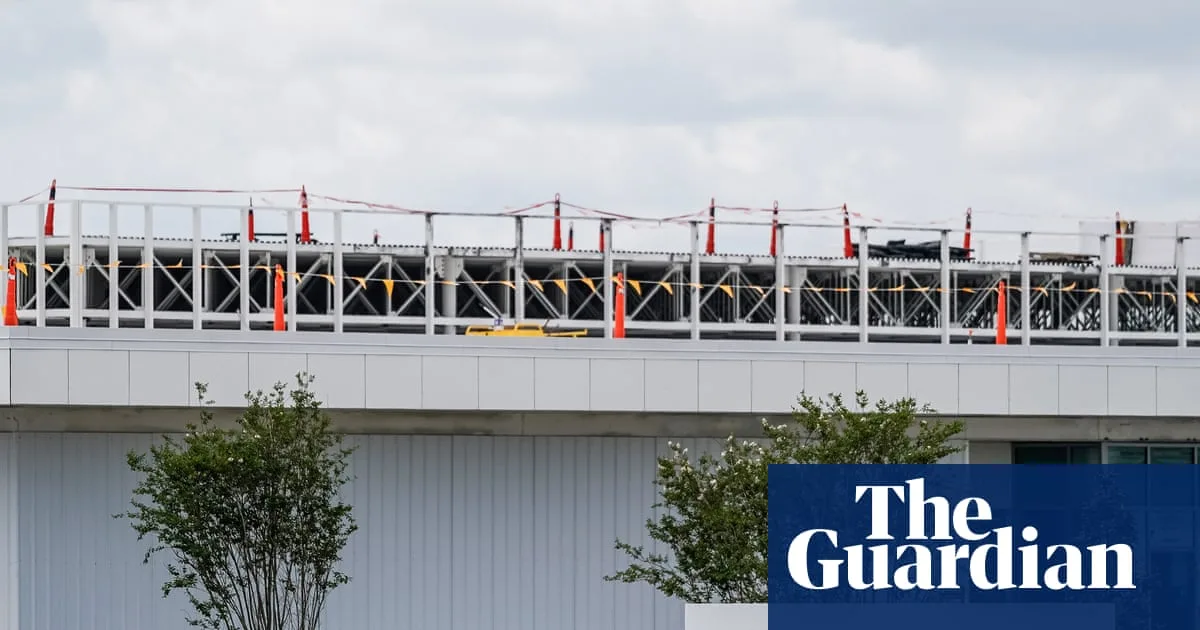
South Korea’s president has ordered “all-out efforts” to assist hundreds of its citizens arrested during a US Immigration and Customs Enforcement (Ice) raid at a factory under construction in Georgia. The facility, a joint venture between LG Energy Solution (LGES) and Hyundai Motor, is intended to produce batteries for electric vehicles.
The operation, described by the US Department of Homeland Security (DHS) as the largest single-site enforcement action in its history, resulted in about 475 arrests. Among those detained were 47 employees of LGES, which subsequently suspended business travel to the US and recalled staff currently there. South Korea’s foreign minister, Cho Hyun, said a taskforce had been established and that he would travel to Washington if necessary.
The raid targeted workers who DHS officials said were barred from working in the US after entering illegally or overstaying visas, following a months-long investigation. Multiple federal agencies, including Ice, the FBI and the DEA, conducted the operation, which was “judicially authorised”, according to an agent. Those arrested are being held at an Ice detention facility in Folkston, Georgia.
Hyundai Motor stated that none of those detained were directly employed by the company, which said it complies with all laws and regulations. The automaker added that production of electric vehicles at its nearby plant was unaffected. The battery factory, a $4.3bn venture announced in 2023, was due to begin operations by the end of this year and is part of Hyundai’s broader $12.6bn investment in Georgia.
The arrests come amid heightened tensions between Washington and Seoul over trade and investment, with South Korea having pledged $150bn in US investments last month. The raid underscores the disruptive impact of the Trump administration’s immigration crackdown on businesses, even as the White House seeks to attract foreign investment. Georgia’s Republican governor, Brian Kemp, had previously hailed the project as a major economic boost for the state.