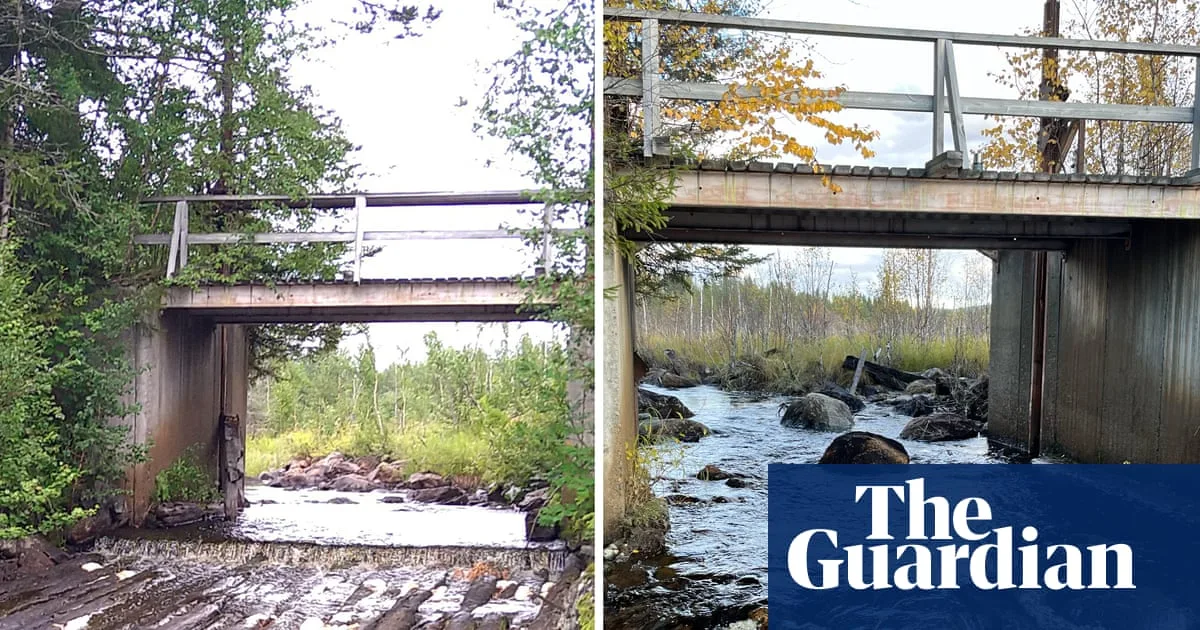
A record 602 river barriers were dismantled across Europe last year, according to a new report from Dam Removal Europe. The figure marks an 11% increase from the previous year and a sixfold rise since the first official count in 2020. The removals included weirs, culverts, sluices and dams, reconnecting 2,324 miles of rivers.
Sweden led the way with 173 removals, followed by Finland with 143 and Spain with 109. The UK removed 35 barriers. Iceland and North Macedonia dismantled barriers for the first time, including a dilapidated dam on the River Melsá in Iceland that had long blocked fish migration. Hamish Moir, a river engineer from Scottish firm CBEC, described seeing the river restored to its natural state as “really rewarding”.
The EU aims to restore 15,500 miles of rivers to their natural state by 2030. Chris Baker, director of the European branch of Wetlands International, said: “For centuries, Europe treated rivers as engines for economic growth – damming them for mills and hydropower, straightening them for navigation, and burying them beneath cities. We built our prosperity by fragmenting our rivers, but the ecological price has been enormous.”
More than three-quarters of the barriers removed were less than 2 metres tall and relatively cheap and easy to dismantle. The damming of rivers has contributed to a 75% decline in Europe’s freshwater migratory fish population since 1970. However, researchers caution that barrier removals may also allow invasive species to spread. Ellen Dolan, a biologist at Queen’s University Belfast, said: “With careful preparation, monitoring and long-term management, these risks can be minimised.”
More than a million barriers fragment Europe’s waterways, with tens of thousands thought to be obsolete. The EU’s nature restoration law, which came into force in 2024, explicitly calls for their removal. In the US, 100 dams were dismantled last year, while China has removed hundreds of dams on the Yangtze River in recent years.