Wildfire Survivors Confront Tax Threat on Compensation Payouts
Thousands of survivors of the devastating 2025 Eaton Fire in Altadena, California, are now confronting a new financial hurdle: potential taxes on their settlement payouts. These individuals, who have accepted upfront settlements from the utility accused of causing the blaze, may see significant portions of their compensation eroded by income taxes unless urgent congressional action is taken.
Financial Limbo for Fire-Affected Households
The situation has left many survivors in a state of uncertainty, forcing them to make difficult decisions about rebuilding their lives. Bree Jensen, communications director for the Eaton Fire Long-Term Recovery Group, described the community's reaction as "terrifying disbelief" when informed about the tax implications. This sentiment is echoed by an anonymous Altadena homeowner, who anticipates a 37% tax bite on her expected $700,000 settlement, compelling her family to opt for cheaper materials and forego solar installations in their rebuild.
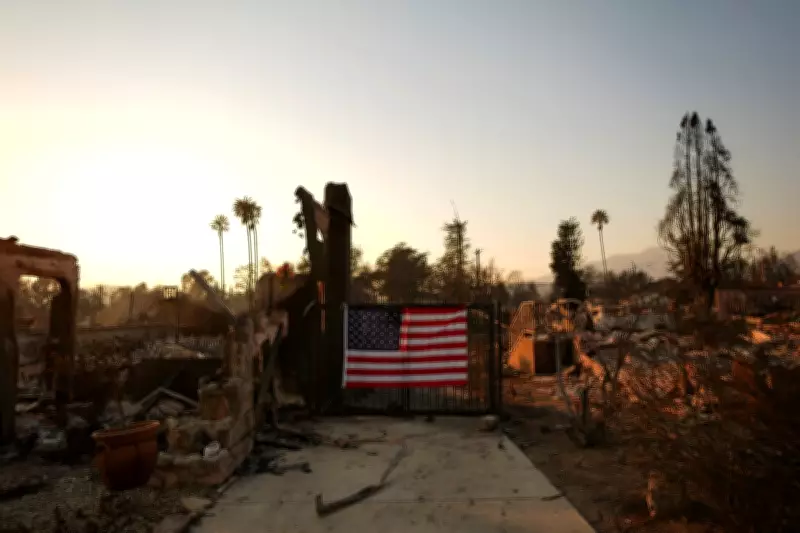
Compensation from utility settlements has become a critical lifeline for households devastated by wildfires, especially as construction costs soar and insurance becomes increasingly unaffordable. Doug Boxer, an attorney representing thousands of Californians in cases against utilities, emphasized that these payouts are often "the difference between towns getting rebuilt and not getting rebuilt." The Eaton Fire alone destroyed 9,000 structures and claimed 19 lives, with Southern California Edison acknowledging its equipment may have sparked the catastrophe.

Congressional Gridlock Delays Vital Tax Relief
At the heart of the issue is an expired tax exemption for wildfire-related compensation, which lapsed at the end of 2025. While Congress has previously enacted short-term relief measures, legislative gaps have periodically exposed survivors to tax liabilities. A bipartisan House bill, approved unanimously by the Ways and Means Committee last month, aims to extend tax relief for payments related to federally declared wildfire disasters from 2015 through 2026.
However, the timeline for a full House vote and Senate action remains uncertain, leaving survivors in financial purgatory. Florida Representative Greg Steube, a Republican co-sponsor of the legislation, expressed confidence in its eventual passage but acknowledged "the exact timeline remains uncertain." This legislative stagnation occurs against a backdrop of congressional debates over other pressing issues, such as the Iran war and Department of Homeland Security funding, raising concerns that disaster tax relief may be deprioritized.
Broader Impacts Across Multiple States
The tax dilemma extends beyond California, affecting wildfire survivors in Colorado, Hawaii, and Oregon. In Maui, residents awaiting payments from a $4 billion settlement with Hawaiian Electric face similar challenges, with only about 180 homes rebuilt out of 2,200 destroyed in Lahaina. Maui County Mayor Richard Bissen has appealed to lawmakers for "certainty" through tax relief, highlighting the urgent need for clarity.
In Colorado, Jenn Kaaoush, a town council member in Superior and survivor of the 2021 Marshall Fire, warned of cascading consequences. She noted that counting settlement payouts as income could disqualify survivors from essential government benefits for food, healthcare, or veterans' support, creating "second- and third-order impacts on their life that will do harm." Jennifer Gray Thompson, executive director of the survivor advocacy nonprofit After The Fire, added that while taxes can be deferred or amended, issues with government programs like college financial aid are much harder to resolve retroactively.
The Path Forward for Survivors
As survivors navigate this complex landscape, the emotional and financial toll continues to mount. Many, like the anonymous Altadena resident who lost his home, feel they are "continually facing new obstacles to returning home," with potential taxation adding "more pain and suffering." With over 2,800 households already applying for compensation programs and thousands more joining lawsuits, the urgency for congressional action is palpable.

Gray Thompson underscored the broader imperative, stating, "As these disasters come in quick succession, we are going to have to adapt on all levels, and our tax code will have to adapt along with it." For now, wildfire survivors across multiple states remain in a holding pattern, hoping that lawmakers will swiftly pass the necessary relief to ensure their hard-won compensation truly aids in rebuilding their lives and communities.