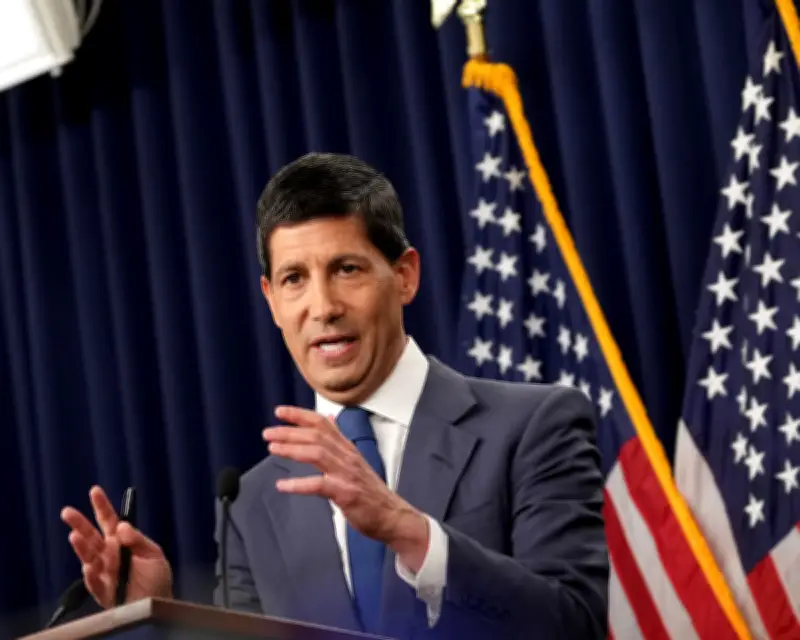
US government borrowing costs surged to their highest level since 2007 after the Federal Reserve voted to keep its key interest rate unchanged, raising concerns that the central bank may not move quickly enough to combat rising inflation. The yield on the 30-year US Treasury bond rose 14 basis points to nearly 5.24%, a 19-year high, following the Fed's decision to maintain its main rate between 3.5% and 3.75% for the fifth consecutive meeting.
Fed Chair Pledges Commitment to Inflation Fight
Kevin Warsh, the Fed chair, said the bank would “not waver” in its commitment to tackling rising prices. He noted that a prolonged period of high inflation had led some Americans to believe the central bank had an “implicit target” above its 2% goal. “There is no soft implicit target: not on this committee’s watch,” Warsh said. “There’s only a target and it’s 2%. This Fed will not waver … Our credibility rests on performing our duties and delivering on our responsibilities.”
Market Reaction and Investor Concerns
The decision to hold rates spooked investors worried about the US economy's ability to handle inflation triggered by Donald Trump's war in Iran. US inflation had cooled to 3.5% in June after a brief ceasefire between Washington and Tehran, but hostilities have resumed, pushing oil prices higher again.
Economist Questions Fed's Decision
Felix Schmidt, a senior economist at Berenberg, said Warsh had not “conclusively answered the question of why the Fed did not hike.” Schmidt noted that the Fed chair implied a near-term rate rise might not be necessary because of the rise in bond yields, which have already increased borrowing costs across the economy. “Perhaps Warsh hopes that higher capital market interest rates will help fight inflation in the short term, while the US central bank under new leadership decides on its approach,” Schmidt said.
Before the Fed’s meeting, financial markets had priced in a 30% chance of a rate rise, and nearly a 100% chance of an increase in September. After the decision, traders put the chance of a September rate rise at about 57%, according to CME Group’s FedWatch tool.
US stocks fell sharply on Wednesday. The S&P 500 closed down 1.5%, the Dow Jones industrial average fell 2.2%, and the Nasdaq dropped 1.7%.