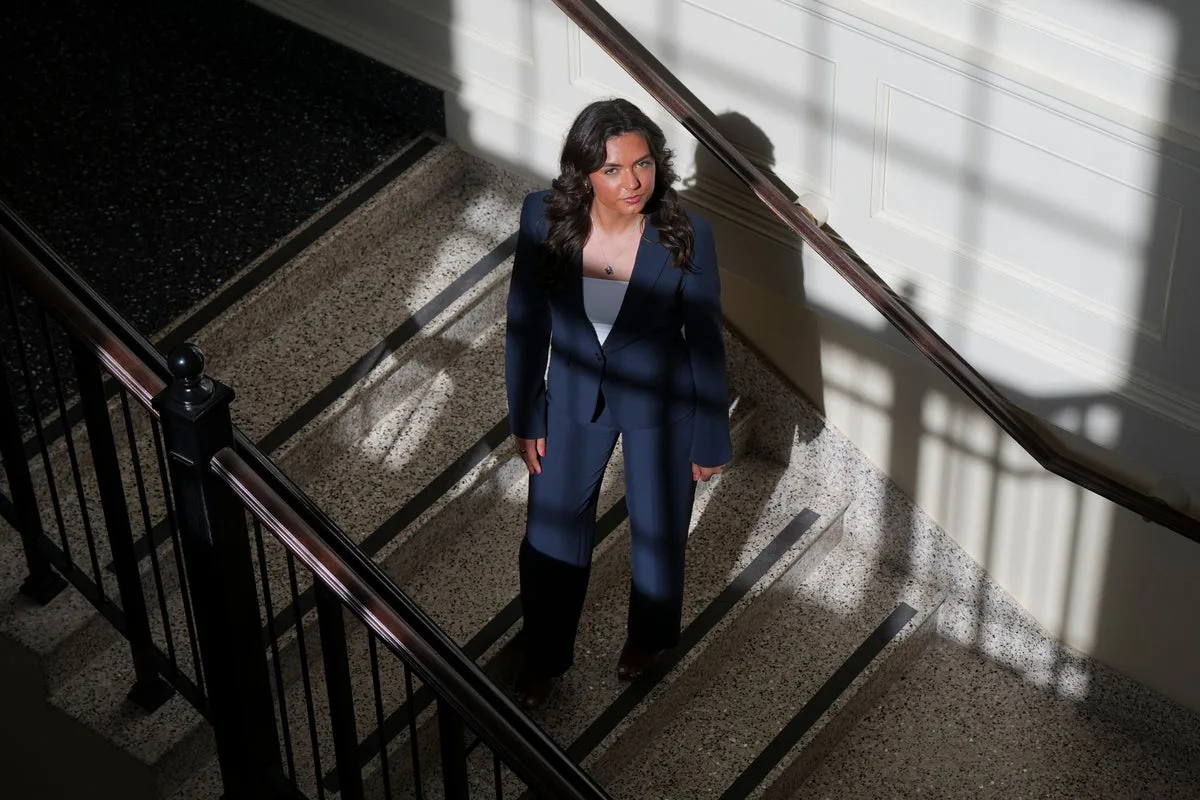
College students are increasingly changing majors in response to the rise of artificial intelligence, fearing that entry-level jobs may be automated. Josephine Timperman, a 20-year-old at Miami University in Ohio, switched from business analytics to marketing after realising that skills like statistical analysis and coding can now be easily automated. 'Everyone has a fear that entry-level jobs will be taken by AI,' she said, adding that her new focus is on building critical thinking and interpersonal skills.
A 2025 poll by the Institute of Politics at the Harvard Kennedy School found that about 70% of college students see AI as a threat to their job prospects. Recent Gallup polling also indicates increasing concern among US workers about being replaced by new technologies. The uncertainty is most pronounced among students pursuing degrees in technology and vocational fields, who feel they must develop AI expertise but also fear being replaced by it.
Courtney Brown, vice president at the education nonprofit Lumina, noted that while students often change majors, the fact that so many cite AI as the reason is 'startling'. She added that students are navigating this shift without clear guidance from advisers, professors or parents. A recent Gallup poll of Gen Z adults found that 48% believe the risks of AI in the workforce outweigh the benefits.
The challenge was highlighted at a panel discussion at Stanford University, where university leaders debated the future of higher education. Brown University President Christina Paxson said, 'We need to think really hard about what students need to learn to be successful in the job market in 10, 20, 30 years. And none of us know.' She suggested that communication and critical thought – the fundamentals of a liberal education – may be more important than learning to code.
Some students are adapting by pursuing further education. Ben Aybar, 22, a computer science graduate from the University of Chicago, applied for about 50 software engineering jobs without success. He now works part-time in AI consulting while studying for a master’s degree. 'People who know how to use AI will be very valuable,' he said, noting new jobs emerging that require AI skills.