DWP Minister Provides Update on State Pension Forecast Blunder
A Department for Work and Pensions (DWP) minister has delivered a significant update regarding a major state pension error, confirming that hundreds of thousands of individuals have been affected by inaccurate forecasts. The issue, which has persisted for years, has left many retirees believing they would receive higher payments than they are actually entitled to.
Inaccurate Predictions and Contracting-Out Issues
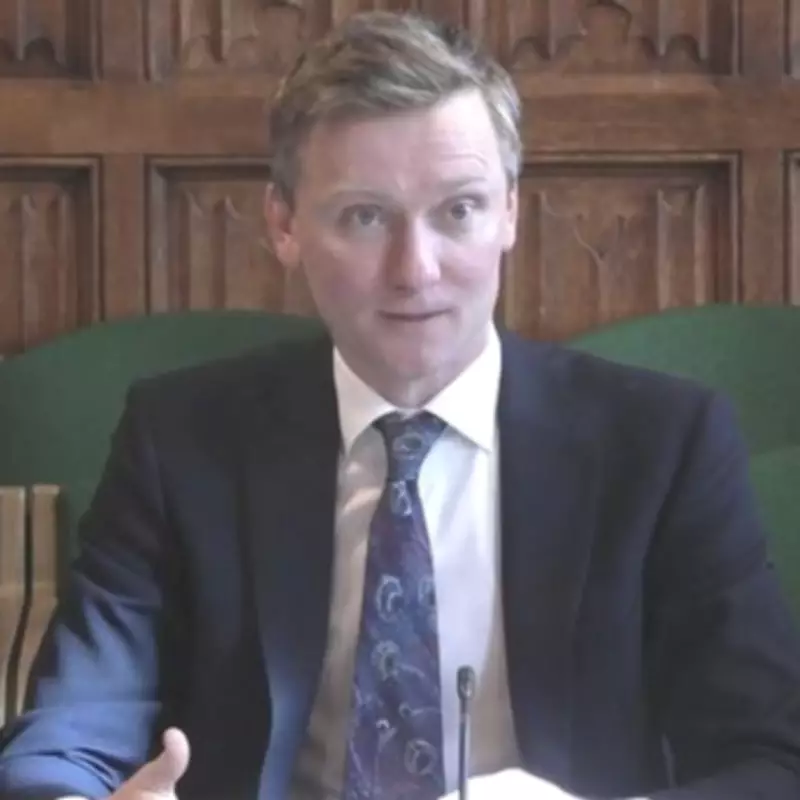
State pension payments are set to increase by 4.8 per cent from April 6, in line with the triple lock mechanism, raising the full new state pension to £241.30 per week or £12,548 annually. However, a fault in the Government's online state pension forecast tool has led to countless people receiving overly optimistic projections. DWP minister Torsten Bell addressed the Work and Pensions Committee, explaining that the problem stems from forecasts not accounting for deductions where individuals were contracted out before 2016.
Mr Bell clarified that the error primarily affects customers who were contracted out, meaning they received the earnings-related portion of their state pension through private pension systems instead. He stated, "The system that was providing state pension forecasts - admittedly, with caveats - provided forecasts that did not take into account that contracting out had taken place in all cases." The minister acknowledged he could not provide an exact number of impacted individuals, as it depends on usage of the forecast model.

Scope of the Error and Affected Demographics
Despite the uncertainty, Mr Bell outlined that the issue largely involves people who contracted out between 2016 and 2021. It is estimated that as many as 800,000 people may have received inflated forecasts, with some incorrectly informed they would receive the full state pension. Ministers were first alerted to the problem in 2017, but comprehensive fixes were not implemented until four years later.
The error has now been resolved for those reaching state pension age before April 2029. However, HMRC has indicated that individuals reaching state pension age beyond this date could still be affected, coinciding with the phased increase in state pension age from 66 starting in April 2026 to 67 by April 2028.
Measures Taken to Rectify the Situation
Mr Bell detailed the steps taken to address the forecast inaccuracies. He explained, "First, the previous Government stopped providing forecasts and encouraged people to ring instead, when they were worried that people might be affected by this some time ago. And then secondly, we have now put in place permanent fixes that mean that people are getting forecasts that take into account their contracting-out status." These measures aim to ensure that future state pension predictions are accurate and reflective of individuals' actual entitlements.
The DWP continues to monitor the situation, emphasizing the importance of reliable information for retirement planning, given that state pension payments form a vital component of many people's income in later life.