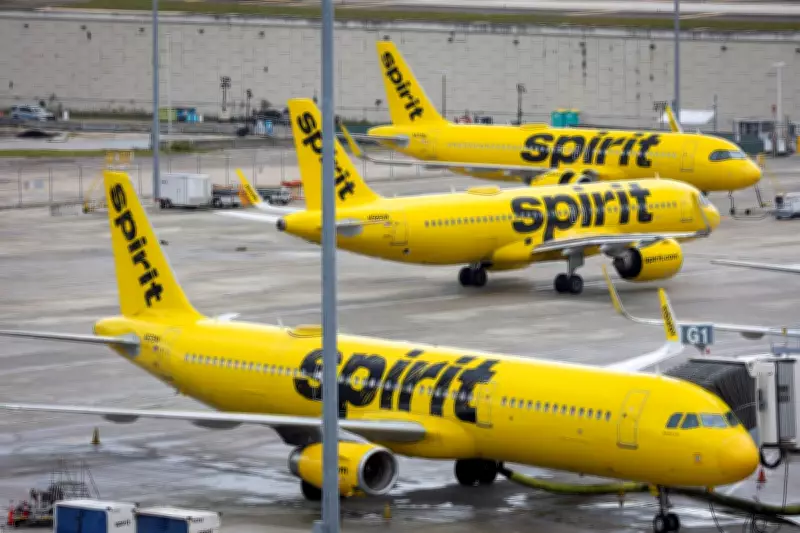
Spirit Airlines, the largest budget carrier in the United States, is teetering on the brink of liquidation as it navigates bankruptcy court proceedings. The Trump administration is reportedly considering a federal bailout or even a government purchase of the struggling airline, raising questions about the future of low-cost air travel and competition in the industry.
What led to Spirit Airlines' financial crisis?
Spirit Airlines has faced a perfect storm of challenges in recent years. The carrier, known for its ultra-low base fares and costly add-ons, served over 60 destinations across the US, Latin America, and the Caribbean before downsizing its fleet as part of bankruptcy restructuring. A federal judge blocked JetBlue's proposed $3.8 billion acquisition of Spirit in 2024 on antitrust grounds, ruling that the merger would reduce competition and harm consumers. The airline declared bankruptcy in November 2024 and filed for a second time in August 2025, accumulating approximately $7.4 billion in debt.
Soaring jet fuel prices have compounded these woes. Since the onset of the war in Iran, prices for heavier oils used in aviation have surged at least 40%, squeezing Spirit's already tight margins.

Why is the White House considering intervention?
If Spirit liquidates, it would mark the first major US carrier to do so since the 2008 recession, a scenario the White House is keen to avoid amid consumer anxiety over the economy and high prices. President Donald Trump has publicly expressed support for saving the airline, citing its 14,000 jobs. Speaking to CNBC, Trump stated, "I'd love somebody to buy Spirit... It's 14,000 jobs, and maybe the federal government should help that one out." White House spokesperson Kush Desai blamed the Biden administration's blockade of the JetBlue merger for Spirit's weakened position, adding that the administration is monitoring the situation.
What form could federal assistance take?
The Trump administration has floated two options: a $500 million loan or a direct government acquisition of the airline. Trump suggested the government could later sell the airline at a profit when oil prices decline, saying, "They have some good aircraft, some good assets, and when the price of oil goes down, we'd sell it for a profit." This would be the first major airline bailout since the pandemic-era loans to major carriers.
How are other airlines faring?
Other budget carriers, including Frontier and Avelo, are also seeking federal assistance, requesting $2.5 billion to cover higher jet fuel costs, according to the Wall Street Journal. Major carriers like Delta and United have been less severely impacted, though they have scaled back growth plans. Delta CEO Ed Bastian noted room to raise prices without affecting demand, while United CEO Scott Kirby proposed a merger with American Airlines to enhance international competitiveness. Trump dismissed that idea, saying, "I don't like having them merge."
What would a bailout mean for travelers?
A federal loan would allow Spirit to continue operations in reduced capacity as it restructures debt. A government purchase of a private airline would be unprecedented, with unclear implications for consumers. The worst-case scenario—liquidation—could strand tens of thousands of passengers in the short term and reduce competition in an already consolidated industry. Currently, four major airlines control three-quarters of the market, and less competition often leads to higher fares.
Experts caution that a bailout alone won't address systemic issues. William McGee, senior fellow for aviation at the American Economic Liberties Project, stated, "Bailing out or buying out Spirit won't solve the long-term, systemic competition and stability problems with the airline industry. The current state of mergers, bankruptcies, bailouts and lack of competition need to be addressed by introducing sensible new forms of regulation. Anything less is bound to fail."