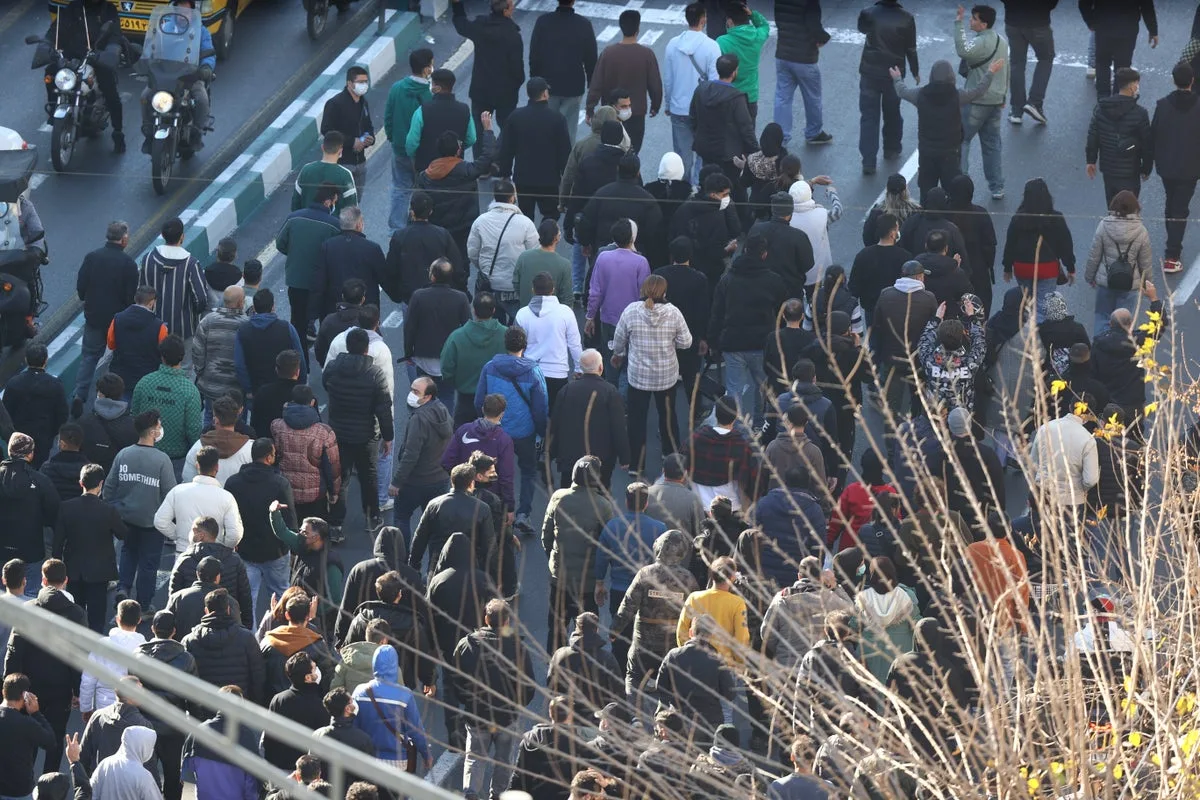
At least seven people have been killed as violent protests sparked by Iran's ailing economy spread into rural provinces, authorities said on Thursday. The fatalities, which include both security forces and protesters, occurred in four cities across the country, largely home to Iran's Lur ethnic group.
The demonstrations are the biggest in Iran since 2022, following the death of Mahsa Amini, but have yet to reach the same intensity. The worst violence appeared to strike Azna in Lorestan province, where online videos showed objects ablaze and gunfire echoing. The semiofficial Fars news agency reported three deaths there, while state-run media did not fully acknowledge the unrest.
In Lordegan, Chaharmahal and Bakhtiari province, Fars reported two deaths, citing an anonymous official. The Washington-based Abdorrahman Boroumand Centre for Human Rights in Iran identified the dead as demonstrators and shared an image of a police officer wielding a shotgun. In Fuladshahr, Isfahan province, activist groups attributed the death of a man to police opening fire on demonstrators.
A separate demonstration on Wednesday night in Kouhdasht, Lorestan, led to the death of a 21-year-old volunteer in the paramilitary Basij force, according to the state-run IRNA news agency. The Student News Network, believed close to the Basij, blamed demonstrators, citing a deputy governor who said the volunteer was martyred while defending public order. Thirteen others were injured, and 20 people were arrested, with calm restored to the city.
The protests are driven by economic pressures, including inflation and currency fluctuations, said Saeed Pourali, a deputy governor in Lorestan province. Iran's rial has rapidly depreciated, with $1 now costing some 1.4 million rials. Reformist President Masoud Pezeshkian has acknowledged limited options to address the unrest, while state television reported the arrest of seven people, including five described as monarchists and two linked to European-based groups.