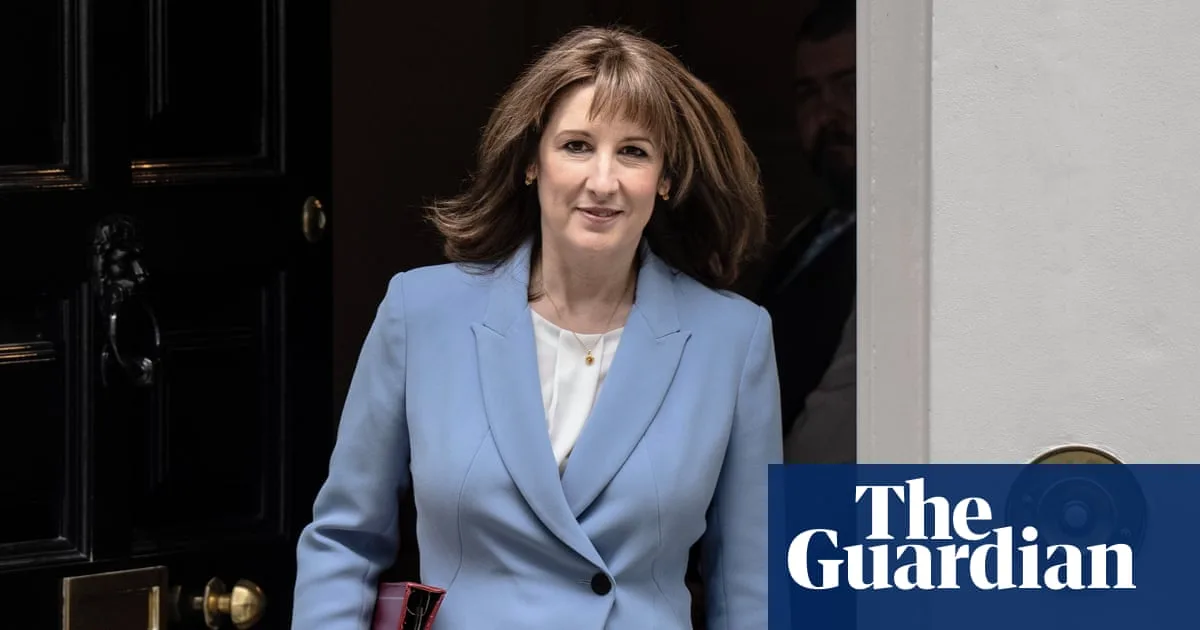
Chancellor Rachel Reeves has delivered a spring statement pledging economic growth, despite the Office for Budget Responsibility downgrading its forecast for UK expansion this year. The speech comes just weeks after the Bank of England also revised its growth rating downwards, highlighting ongoing challenges for the British economy.
Revised Growth Forecasts and Fiscal Outlook
The Office for Budget Responsibility indicated that gross domestic product will increase by 1.1% in 2026, down from the 1.4% it forecast in November. However, the watchdog upgraded its projections for 2027 and 2028 from 1.5% to 1.6%, suggesting a medium-term recovery. Chancellor Reeves told MPs that the OBR has "adjusted the profile of GDP so that it grows slightly slower in 2026 and faster in 2027 and 2028."
She emphasized that borrowing is set to fall by nearly £18 billion compared to autumn estimates, with public sector net borrowing expected to decline from 4.3% this year to 3.6% next year, before reaching 1.8% in 2029-30. "This year we are set to borrow less than the G7 average, something the Tories never achieved in 14 years," Reeves declared in the Commons.
Opposition Criticism and Political Clashes
Shadow chancellor Sir Mel Stride branded the spring statement a "surrender statement," accusing the Government of giving up on the British people. He launched a scathing attack, stating: "What utter complacency, a Chancellor in denial. She speaks of stability, what planet is the Chancellor on? She has lurched from putting up taxes to destroying growth, to destroying headroom, to coming back to putting up more taxes, more growth destroyed."
Reeves countered by asserting that the Conservatives and Reform UK are "united in their intention to plunge nearly half a million children back into poverty" through policies like reinstating the two-child benefit cap. "If you import failed Tory politicians you get failed Tory policies too," she argued. "Labour and only Labour has the right economic plan for families and for our country."
Think Tank Analysis and Policy Recommendations
The Institute for Public Policy Research said the spring statement has "bought the Government time" which it must now use effectively. Harry Quilter-Pinner, executive director at the think tank, noted: "The spring statement delivered what many expected: a slight adjustment to the economic forecast, not a major fiscal reset. With less than 100 days since the last event, there were no dramatic revisions."
He warned that lower net migration poses a medium-term risk to public finances, while renewed conflict in the Middle East could push up energy prices and add inflationary strain. The IPPR urged broadening industrial strategy beyond energy into defence and advanced manufacturing sectors to build economic momentum.
Chancellor's Confidence and Economic Strategy
Rachel Reeves expressed confidence that the Government can outperform economic forecasts, despite opposition from Conservative, Reform UK, Liberal Democrat and Green Party rivals. "In the face of global uncertainty, we beat the forecast last year. In the year ahead, the choices that we are making give me confidence that we will beat them again," she told Parliament.
The Chancellor outlined several measures coming into effect, including:
- Discounts on business energy costs
- Trade deals with India, the US and the EU
- Reforms to support entrepreneurs
- Investments in infrastructure
- Skills funding for further education
- Additional planning reforms
Defence Spending and Global Challenges
Reeves emphasized that her economic plan "is even more important in a world that in the last few days has become yet more uncertain," referencing unfolding conflict in Iran and the Middle East. She highlighted defence investments including £650 million committed in January to upgrade Typhoon fighter jets, a new Royal Navy frigate launched from Rosyth, and a £1 billion helicopter deal with Leonardo.
"I am in no doubt about Britain's ability to navigate the challenges we face," Reeves asserted. "The plan that I have been driving forward since the election is the right one – stability in our public finances, investment in our infrastructure including our Armed Forces, and reform for Britain's economy."
The Chancellor concluded by stating the Government has "restored economic stability" and pledged to leave families "better off," with unemployment expected to peak later this year before falling to 4.1% by the forecast period's end.