

Oil Price Volatility: How Brent Crude's Drop Impacts UK Household Finances
The price of Brent crude oil, a global benchmark for petroleum pricing, has experienced significant fluctuations this week. After surging toward $120 per barrel on Monday, it retreated to approximately $90 by Wednesday. This decline reflects growing optimism that the conflict in Iran may not extend into a prolonged war. However, despite this recent dip, oil prices remain nearly 29 percent higher than levels observed before the initial military strikes began. This substantial increase continues to pose serious implications for household finances across the United Kingdom.
Understanding Brent Crude and Its Economic Significance
Brent crude serves as the primary reference price for oil contracts worldwide, regardless of the commodity's actual origin. Extracted from the North Sea, its value fluctuates in response to global supply and demand dynamics for petroleum products collectively, not merely its specific variety. Rising oil costs inevitably drive energy bills upward, but their impact extends far beyond domestic heating expenses. Elevated fuel prices affect manufacturing processes, transportation networks, food production, and virtually every sector of the economy.
The duration of elevated oil prices plays a crucial role in economic absorption capacity. Prolonged high prices become increasingly difficult to mitigate, making it more likely that these costs will be passed directly to consumers through higher prices for goods and services. Consequently, resolving the Middle East situation represents the critical limiting factor determining how high household bills might ultimately climb.

US Energy Secretary Chris Wright commented earlier this week, "You never know exactly the timeframe of this, but, in the worst case, this is a weeks not a months thing." However, he cautioned that extended conflict increases the probability that prices will remain elevated even after hostilities cease.
Immediate Effects on Fuel and Energy Costs
Secretary Wright specifically addressed petrol prices at American fueling stations, but similar principles apply within the United Kingdom if the Iran situation stabilizes promptly. Nevertheless, consumers should recognize that price adjustments typically occur with a noticeable lag. The current challenge involves not only immediate supply disruptions but also storage limitations that prompt oil-producing nations to reduce output. Once production resumes, ramping back to normal levels requires considerable time, creating interim scarcity that sustains higher prices even when transportation networks become operational again.
Iran has dramatically slashed its oil production, currently operating at merely one-quarter of its pre-conflict capacity. Kathleen Brooks, Research Director at XTB, observed, "This is roughly 3 percent of global oil supply lost in a single event. Shockingly, this is worse than the oil supply situation after Russia attacked Ukraine."
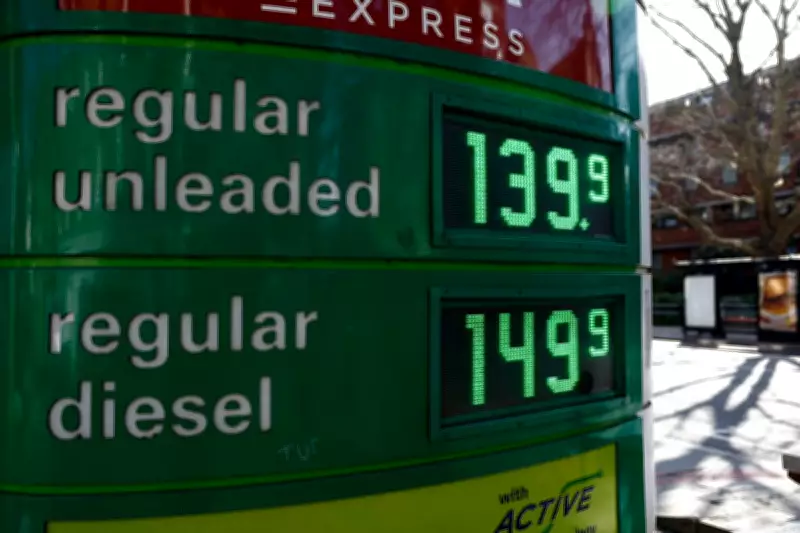
In practical terms, UK petrol prices have risen between 4p and 8p per liter since Middle East tensions reignited, reaching their highest point in nearly twenty months. Meanwhile, heating oil costs have already doubled, placing additional strain on household budgets.
Broader Economic Consequences: Inflation and Interest Rates
As Barclays analysts noted on Monday, "persistence, not the peak" represents the crucial factor when evaluating high oil prices and economic stability. Official data from the Office for National Statistics naturally operates with a one-month lag, meaning the full impact of current developments won't be measurable until subsequent reports. However, the fundamental relationship remains clear: increased costs for energy, raw materials, or labor inevitably translate into higher consumer prices, which constitutes inflation.
The magnitude of inflationary pressure stemming from Middle East instability represents the key concern. UK inflation had been following a downward trajectory over the past year, but current developments threaten to derail anticipated progress toward the Bank of England's 2 percent target, which some analysts predicted would be achieved by early spring. Should prices begin surging again, the Bank's primary tool for controlling inflation involves raising interest rates.

Higher borrowing costs typically reduce spending and credit demand among businesses and households, thereby decreasing demand for certain products and services and helping restrain further price increases. However, the UK's fragile economic conditions and rising unemployment complicate this approach, as increased interest rates could exacerbate existing weaknesses.
Direct Household Impacts: Mortgages and Savings
Interest rate changes produce two significant consequences for most households: debt servicing costs and savings returns. Rate increases mean borrowers pay more on variable-rate debts, including both short-term loans and longer-term mortgages. Mortgage products available on the market don't directly mirror Bank of England base rate movements; instead, they adjust in anticipation of future changes through mechanisms known as swap rates.
Consequently, mortgage rates had been trending downward recently, but renewed threats of potential interest rate hikes have pushed swap rates slightly upward. In response, several lenders have increased rates on new fixed-term mortgage products. Institutions including NatWest, TSB, HSBC, Nationwide, Santander, the Co-operative Bank, and Skipton Building Society have implemented such adjustments within the past week.
Conversely, higher interest rates benefit savers through improved returns. Numerous banks and building societies have modestly increased savings account interest rates or introduced competitive new products for easy-access accounts, Individual Savings Accounts (ISAs), and fixed-term bonds over recent days. These developments provide cash holders with enhanced options for achieving inflation-beating returns on their deposits.
Financial Markets and Long-Term Investments
While inflation and interest rates face upward pressure, stock markets typically respond inversely. The FTSE 100 index declined again on Monday morning, having fallen more than 5 percent throughout last week following Middle East turmoil. However, market sentiment showed improvement by Tuesday, with Asian stocks rebounding and European indices, including the FTSE 100, gaining over 1.5 percent. Volatility persists, however, with the FTSE 100, France's CAC 40, Germany's DAX, and Spain's Ibex 35 all trading lower on Wednesday, while Asian markets displayed mixed performance overnight.
For investors monitoring ISAs or pension portfolios, experts advise against panic-driven decisions to sell funds or shares during market downturns. Unless approaching retirement age, market fluctuations represent a normal, albeit sometimes concerning, aspect of long-term investing. Selling at reduced price points can lock in losses that might otherwise recover over extended periods through natural market corrections.





