The FTSE 100 closed sharply lower on Friday, dropping 1.7% as high-level discussions between the United States and China failed to yield significant progress on the Middle East conflict, compounding concerns over domestic political instability.
The blue-chip index ended the session down 177.56 points at 10,195.37, while the FTSE 250 fell 231.93 points (1.0%) to 22,596.14, and the AIM All-Share declined 8.23 points (1.0%) to 808.89. Over the week, the FTSE 100 lost 0.4%, the FTSE 250 shed 1.1%, and the AIM All-Share declined 0.6%.
US-China Talks Disappoint
Investors were left disappointed after talks between US President Donald Trump and Chinese leader Xi Jinping failed to deliver major breakthroughs on the Middle East war or trade relations. Susannah Streeter, chief investment strategist at Wealth Club, described the meeting as “big on warm words and symbolism but not outcomes.” She added that with diplomatic efforts aimed at resolving the Middle East conflict in limbo, fresh uncertainty has flooded into markets.
The White House stated that the leaders agreed the Strait of Hormuz must remain open to support the free flow of energy. However, investors had hoped for more concrete progress towards reopening the crucial strait, where oil tanker traffic has nearly halted since the outbreak of the war, sending energy prices soaring.
Oil Prices Rise
The lack of progress pushed oil prices higher. Brent crude for July delivery traded at $108.83 a barrel on Friday, up from $104.92 at the time of the London equities close on Thursday.
European and US Markets Slide
In Europe, the CAC 40 in Paris ended down 1.6%, and the DAX 40 in Frankfurt slid 2.1%. In New York, the Dow Jones Industrial Average fell 0.9%, the S&P 500 dropped 1.0%, and the Nasdaq Composite declined 1.2%.
Political Uncertainty Weighs on UK Assets
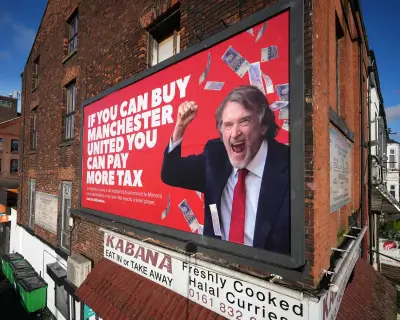
Sentiment in London was further knocked by renewed worries about political instability. Andy Burnham, Mayor of Greater Manchester, pledged to fight for a return to Westminster, where he is likely to launch a leadership challenge to Prime Minister Sir Keir Starmer. Streeter noted that Burnham’s big hurdle is winning a by-election, and the leadership race looks set to be long and cumbersome. “Another bout of political infighting, with yet another Prime Ministerial shuffle under way, is hardly a good look for a country which needs to portray stability to attract investment,” she said.
The double whammy of Middle East and Westminster uncertainty saw UK government borrowing costs soar and the pound sink. The yield on 10-year gilts traded at 5.17%, compared with 5.00% the previous day. ING warned that the biggest risk is investors questioning the UK’s longer-term fiscal discipline, adding that a rise towards 5.30% is possible in the near term.
The pound fell against the dollar to $1.3319 on Friday afternoon from $1.3480 on Thursday. Against the euro, sterling eased to €1.1462 from €1.1549. The euro traded lower against the greenback at $1.1622, while the dollar strengthened against the yen to ¥158.68.
The yield on the US 10-year Treasury widened to 4.58% from 4.46%, and the 30-year yield rose to 5.12% from 5.01%.
Company News: Hiscox and Magnum
On a quiet day for corporate news, reports of potential bids drove price movements for Hiscox and Magnum Ice Cream. Bermuda-based insurer Hiscox topped the FTSE 100 leaderboard, rising 12%, after Insurance Post reported that Canada’s Intact Financial Corp was exploring a potential bid to build out its commercial lines business.
Magnum Ice Cream jumped 9.4% after Reuters named Blackstone and Clayton, Dubilier & Rice among several private equity firms in the early stages of exploring bids for the owner of Cornetto and Ben & Jerry’s, which was spun out of Unilever less than six months ago. However, JPMorgan analysts cautioned that a deal may not be straightforward due to tax considerations. Since the separation was a tax-free de-merger, Magnum has agreed to refrain from actions that could create a tax liability, including restrictions on certain acquisition, merger, or sale transactions for two years. JPMorgan described the likelihood of a takeover as “remote” given these constraints.
Miners and Utilities Fall
Among blue-chip losers, miners sank amid falling metals prices. Fresnillo fell 10%, Antofagasta dropped 11%, and Anglo American declined 5.7%. Gold traded at $4,544.53 an ounce, down from $4,688.75, while silver fell 8.5% and copper declined around 5.0%.
Political uncertainty and rising gilt yields weighed on utilities, with Severn Trent down 8.0%, SSE down 7.7%, and United Utilities down 7.5%.
Biggest Risers and Fallers
The biggest risers on the FTSE 100 were Hiscox (up 202p to 1,841p), 3i Group (up 98p to 2,210p), JD Sports Fashion (up 1.76p to 72.02p), Relx (up 58p to 2,423p), and BP (up 11.5p to 552.2p). The biggest fallers were Airtel Africa (down 39.8p to 328.4p), Antofagasta (down 457p to 3,810p), Fresnillo (down 372p to 3,335p), Severn Trent (down 252p to 2,882p), and National Grid (down 102.5p to 1,188p).
Outlook for Monday
Monday’s global economic calendar includes Chinese industrial production, retail sales, and unemployment data, followed by Swiss GDP data. The UK corporate calendar features full-year results from airline Ryanair and self-storage operator Big Yellow.