

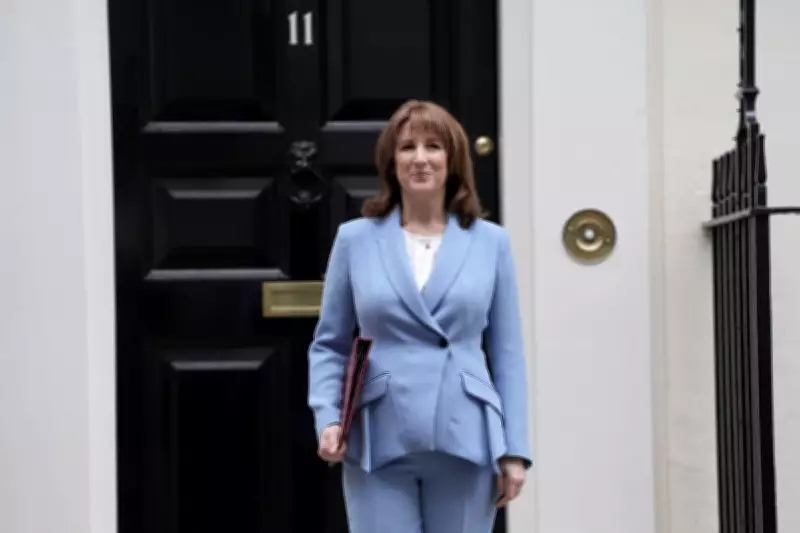
The Office for Budget Responsibility (OBR) has significantly downgraded its growth forecast for the UK economy in 2026, presenting a challenging backdrop for Chancellor Rachel Reeves as she delivered her spring statement to Parliament. The independent fiscal watchdog now predicts gross domestic product (GDP) will increase by just 1.1% this year, a sharp reduction from the 1.4% growth it anticipated in November.
Chancellor Defends Economic Strategy Amid Uncertainty
Addressing MPs in the House of Commons, Chancellor Reeves maintained that her government possesses "the right economic plan" for the nation, even as geopolitical tensions in the Middle East cast a shadow over global economic stability. "This Government has the right economic plan for our country, a plan that is even more important in a world that in the last few days has become yet more uncertain," she stated, referencing the ongoing conflict involving Iran.
Reeves pointed to several positive indicators within the OBR's updated forecasts, noting that inflation has decreased, borrowing is down, and living standards are rising. "The new forecasts from the Office for Budget Responsibility confirm that our plan is the right one – inflation is down, borrowing is down, living standards are up and the economy is growing," she asserted.

Mixed Forecasts and Future Projections
While the 2026 forecast represents a notable downgrade, the OBR offered more optimistic projections for subsequent years. The watchdog upgraded its growth forecasts for 2027 and 2028 from 1.5% to 1.6%, suggesting a gradual recovery trajectory. The Chancellor emphasised that average growth across the next five years remains "largely unchanged" despite this year's adjustment, attributing part of the revision to reduced net migration levels.
However, Reeves acknowledged ongoing economic challenges, stating, "But I am not yet satisfied with these forecasts," and recognising that "the economy is not yet working for everyone."
Employment and Borrowing Outlook
The spring statement outlined several key fiscal projections:
- Unemployment is expected to peak later in 2026 before declining annually throughout the forecast period, reaching 4.1% by the end – lower than at the start of the Parliament.
- Public sector net borrowing is projected to decrease by nearly £18 billion compared to autumn estimates.
- Borrowing as a percentage of GDP is forecast to fall from 4.3% this year to 3.6% next year, then to 2.9%, 2.5%, and 1.8% in 2029-30.
Notably, the Chancellor's statement contained no new tax or spending measures, consistent with her commitment to deliver only one annual budget. This approach reflects a focus on fiscal stability amid economic headwinds and international uncertainty.






