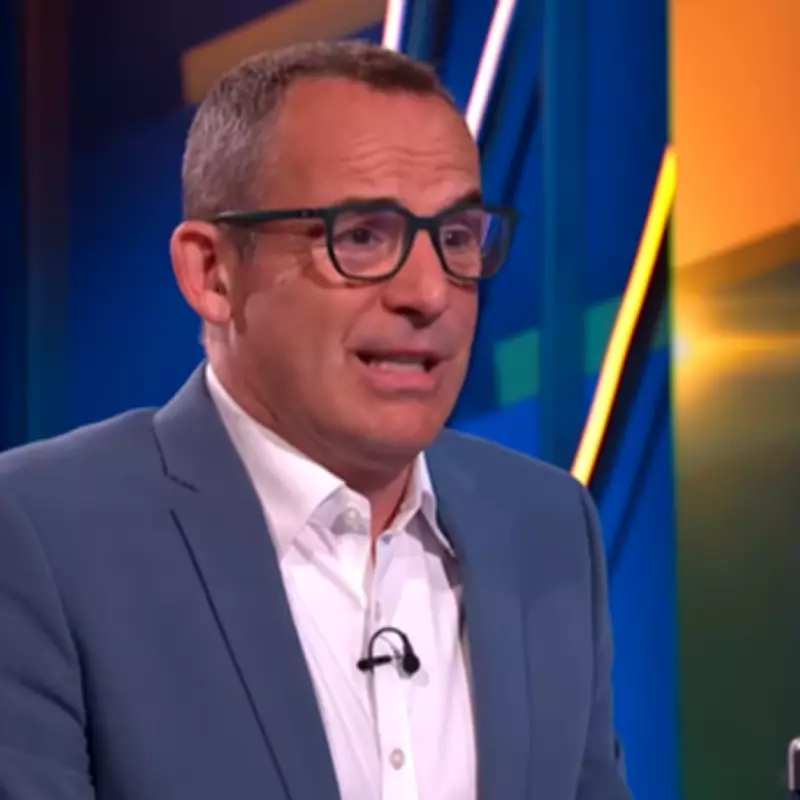
Personal finance expert Martin Lewis has issued a crucial reminder for customers of major UK energy suppliers, including Octopus Energy, OVO Energy, British Gas, EDF Energy, and ScottishPower. Speaking on his YouTube channel, the ITV and BBC guru highlighted that approximately 60% of households paying by direct debit should take immediate action to check their account balances.
The '6-Week Rule' Explained
Lewis explained that May is the ideal time to review energy credit levels. He noted that an estimated 16 million households (57% of all UK homes) have built up credit in their energy accounts, typically indicating they pay by direct debit. However, timing is critical—checking at the wrong time could lead to higher future payments.
“If you pay your energy bills by monthly direct debit, this is the perfect time to check whether you are in too much credit,” Lewis said. “Energy firms are sitting on over £3 billion of our cash, and you can get it back.”

He elaborated: “At the beginning of May, we are at the bottom of the curve in the energy direct debit cycle. This means you should have the minimum amount of credit. So go and have a look what credit you’re in.”
How to Claim Your Money Back
Before checking, Lewis advised customers to ensure they have submitted an up-to-date meter reading or have a smart meter doing this automatically. “Assuming your direct debit is about right, if you have any more than a month and a half’s worth of direct debits, that’s too much,” he said.
Using an example, Lewis illustrated: “Suppose your direct debit is £200 a month. If you have £600, a month and a half worth is £300. So I would be getting in touch with them saying, ‘Why am I so much in credit? Please can you give me back the £300 of my money that you’re sitting on?’”
Price Cap Warning and Fixing Advice
In a separate segment on ITV’s This Morning, Lewis urged customers on standard variable tariffs—often called the ‘price cap’—to consider switching to a fixed deal. He expressed surprise that many people were unaware they were on the price cap, which applies to default tariffs when no action is taken after a fix ends.
“The price cap is a pants cap,” Lewis stated. “If you’re on it, get off it.” He explained that the cap, set by Ofgem every three months, limits unit rates and standing charges but does not cap total bills. The April cap saw a 6.7% decrease, but predictions for July indicate a potential rise of 12-14% due to wholesale energy costs influenced by the Middle East conflict.
However, Lewis noted that fixed tariffs are now cheaper than the current price cap. “Two weeks ago, you could not get a fix cheaper than the cap. Right now, the cheapest fix is 6% less than the April cap,” he said. “With a fix, you lock in your rate, and we’re pretty sure the cap is going up in July. So it’s a good time to fix.”
He added that while the October cap is uncertain, current predictions suggest it may remain similar to the July level. “That’s crystal ball gazing,” he cautioned.