Andy Burnham's likely premiership poses a direct threat to London's infrastructure and economic standing, with the capital's decaying bridges symbolising a broader neglect. In April 2019, Hammersmith Bridge closed indefinitely to all vehicular traffic after cracks were discovered. The following year, the New York Times ran a front-page story headlined: “London Bridges Really Are Falling Down.” Today, vehicles remain banned, and the prohibition may become permanent. Albert Bridge has banned vehicles until 2027 for repairs, and Broadmead Road Bridge in Redbridge has been closed to motor traffic for years. Other bridges face similar issues, highlighting a creaking transport network struggling to cope with a growing city.
Burnham's Northern Focus Threatens London
As Burnham prepares to take power, his emphasis on the North and Manchester risks weakening London. The New York Times article prompted Boris Johnson's government to form a “task force” for Hammersmith Bridge's reopening, but it failed. Johnson understood that London is the UK's global image and investment magnet. Decaying bridges signal a lack of ambition, unlike New York, London's arch-rival. Johnson's “levelling up” agenda implied “levelling down” for London due to tight finances. Locals speculated that if the bridge were in Wakefield, Johnson would have funded its refurbishment immediately.
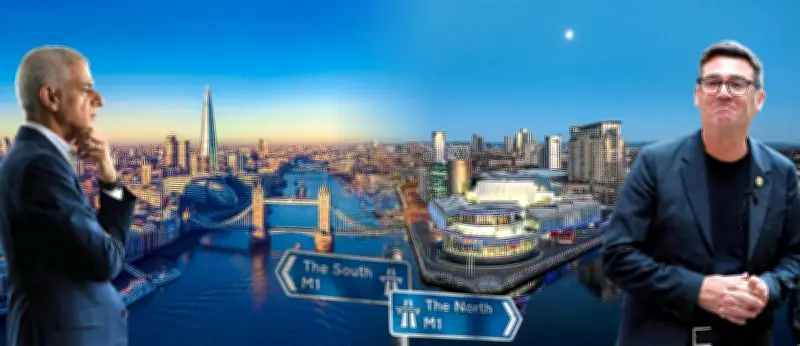
With Burnham, nothing has changed except his stronger pro-North evangelism and tighter public finances. He has already indicated plans to reside part-time in Warrington and establish a Number 10 base in Manchester, effectively knocking London. This is akin to the King not living at Buckingham Palace—the landmark is diminished. London, under Burnham, faces similar devaluation.
London's Economic Role at Stake
London is more than a ceremonial site; it is a dynamic business centre, a magnet for investors, and a global hub for finance, law, and other industries. It is a springboard to Europe and the destination of choice for key investment decision-makers. Burnham plays with this at his peril. Financial centres like Milan and Paris vie for London's crown, but Manchester is not among them. Every boost to the North downplays the South, which is economic suicide for a UK desperate for inward investment. Burnham should encourage the City and London, not denigrate them.
His inner circle includes Northern “red” MPs and advisers, but Lord O'Neill and Andy Haldane, both Northerners, may struggle to tone down the pro-North rhetoric. The City must push back. Burnham is likely to target the wealthiest—individuals through mansion or wealth levies, and profitable businesses like banks headquartered in the City. London will face unprecedented pressure to pay and forego funding.
Sadiq Khan Must Defend London
Sir Sadiq Khan, elected to champion London, must act. He has said he will work with Burnham but challenge him when necessary. Khan stated: “I’ve worked with him in the Cabinet, in the Shadow Cabinet, as a Metro Mayor and even on the football pitch. He can see the difference we can make working together. My message is the same one that I gave to David Cameron, to Theresa May, to Boris Johnson, to Liz Truss, to Rishi Sunak and to Keir Starmer — when London succeeds, the rest of the country succeeds. I will work with you when it’s in our capital city’s interest, but I will challenge you when it’s not in our city’s interests. We contribute four out of every £10 in taxes raised by the Government. We could contribute even more if there’s more devolution of powers and resources.”
Khan also called for Hammersmith Bridge to reopen “sooner rather than later” and deemed its long-term closure “not reasonable or acceptable at all.” But his words had little effect. Where taking from London to give to the North is concerned, Burnham must listen. Khan must defend London robustly, even if it means a head-to-head with a Labour colleague. Revisit the New York Times. Look at London’s bridges.