

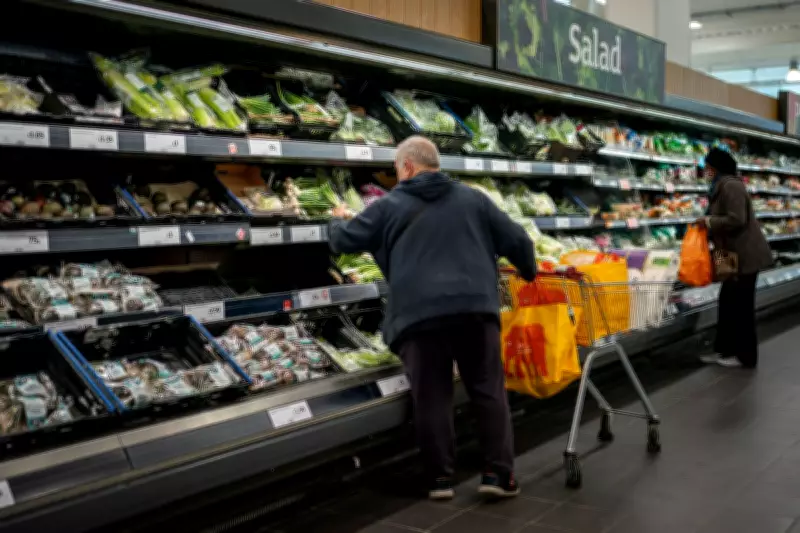
Iran Conflict Could Trigger 8% Food Price Surge, Warn Grocery Experts
Households across the United Kingdom could confront a dramatic escalation in food price inflation, potentially surpassing 8% within months, if ongoing disruptions from the Iran war persist. Industry specialists from the Institute of Grocery Distribution (IGD) have issued this stark warning, indicating that the Middle Eastern conflict might more than double current food inflation rates by the approaching summer season.
Forecast Scenarios Paint Concerning Picture
Fresh projections released by the IGD reveal that food inflation, presently standing at 3.6%, could briefly exceed 8% by June 2026. This sharp increase is anticipated under a most severe but short-lived energy shock scenario, directly linked to the geopolitical tensions. The predicted acceleration follows a prolonged period of rising food and beverage costs for British consumers, with retail food prices now approximately 38% higher than pre-pandemic levels.
The energy price surges following Russia's invasion of Ukraine have significantly contributed to these increases over recent years. In the IGD's highest impact scenario, a short-lived but severe spike in food prices would occur, leading to an average annual food inflation rate of around 6.4% throughout 2026. This development would add more than £150 to the typical household's yearly grocery expenditure, intensifying pressure on family budgets already bracing for a summer rise in energy bills.

Energy Intensive Production Vulnerable to Shocks
Food manufacturing remains highly energy intensive, rendering it particularly susceptible to abrupt fluctuations in oil and gas prices, as observed in recent weeks. The latest modelling from the IGD indicates that even a middle scenario, featuring a more moderate energy shock, would still elevate average food inflation to approximately 4.8% for 2026. A baseline scenario, assuming no Middle East conflict, would result in food inflation averaging 3.8% for the year.
James Walton, chief economist at IGD, commented on the situation, stating: "Even in the best case scenario, the conflict in the Middle East is likely to prolong the timeline for recovery from the cost-of-living crisis." He further addressed concerns about corporate profits, noting that persistently high food prices have fueled assumptions of excess gains for food businesses.
Thin Margins Limit Capacity to Absorb Global Shocks
Walton elaborated: "Our analysis shows that the evidence points in the opposite direction: margins for basic food and drink remain exceptionally thin, and in many cases have fallen in recent years." He emphasized that when profit margins are this constrained, businesses possess limited ability to absorb global disruptions, invest in resilience, or safeguard supply chains.
Over time, this precarious financial position heightens the risk of weaker product availability and greater price volatility in the marketplace. The ongoing conflict underscores the interconnected nature of global energy markets and domestic food affordability, presenting continued challenges for consumers and industry stakeholders alike.






