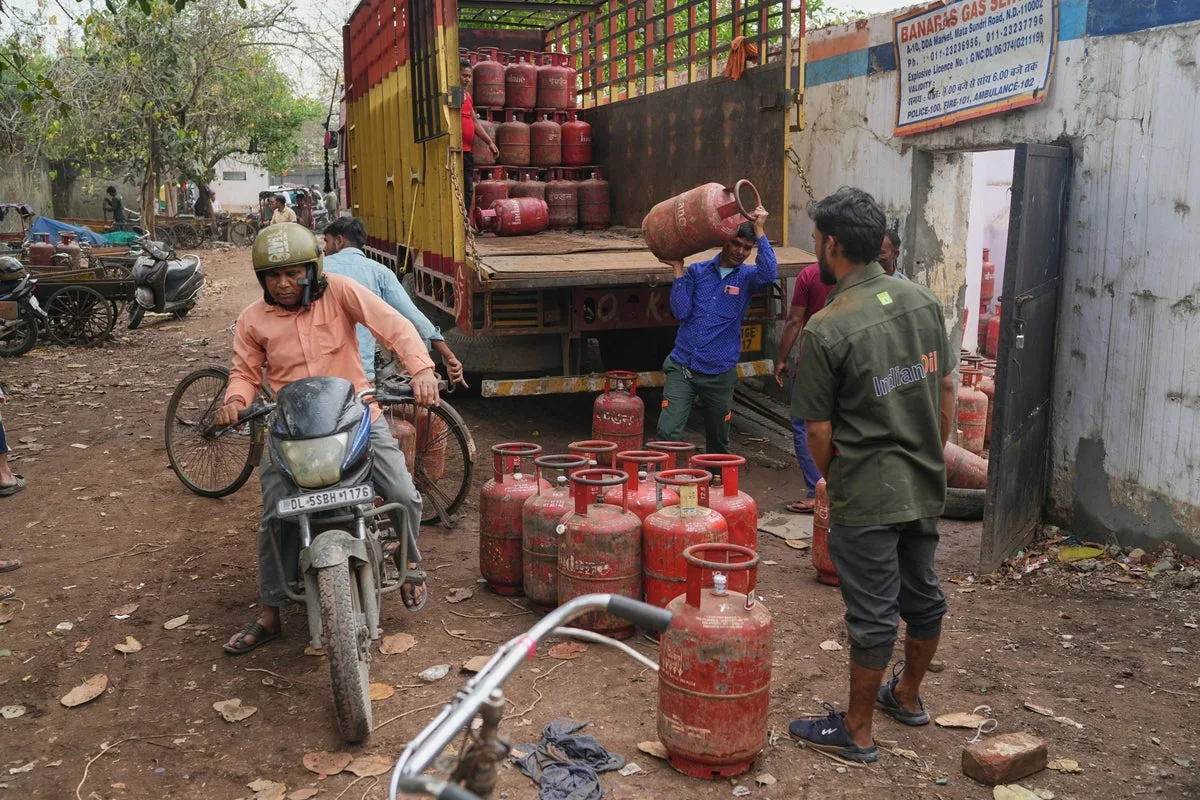
The Iran war's disruption of shipping through the Strait of Hormuz has driven up energy costs across Asia, prompting governments to accelerate biofuel programmes. In New Delhi, taxi driver Ravi Ranjan said he now pays three times as much for cooking fuel, with a cylinder of LPG costing 3,000 rupees ($31) on the black market, compared with 1,000 rupees before the crisis. In Chennai, advertising executive Sushmita Sankar reported rising petrol and cooking fuel expenses, adding that the ethanol-blended petrol now standard at fuel stations has worsened her car's mileage.
India, which imports nearly 90% of its crude oil, has proposed allowing vehicles to run on 85% or even 100% ethanol. The government has also banned all sugar exports until at least September to secure local supply and ensure enough raw material for higher ethanol blends. Most fuel pumps already sell a 20% ethanol blend, a target achieved in 2025, five years ahead of schedule. Policymakers are now considering raising the blend to 27% by 2030, while the transport ministry's proposal for flex-fuel vehicles signals a push toward far higher concentrations.
"Moving toward higher ethanol blends reflects the government's long-term vision for energy security, lower emissions, and reduced dependence on imported crude oil," said Chandra Kumar Jain, president of the Grain Ethanol Manufacturers Association. According to the Institute for Energy Economics and Financial Analysis, the 20% blend led to a 2.5% reduction in India's crude oil imports in 2025. However, IEEFA's Charith Konda cautioned that the rapid pace of blending creates policy uncertainty and confusion among automakers.
Southeast Asian nations are also turning to biofuels. Indonesia and Malaysia are pushing policies to increase fuel mixing with palm oil-based substitutes, though experts warn this could drive agricultural expansion and deforestation. Environmental specialists note that producing grains like corn and rice for ethanol may compete with food and livestock needs, while drivers remain concerned about mileage.
Despite the war-driven urgency, higher fuel blends could take years to reach Asian roads due to the need for new supply chains, research into blends, and vehicle compatibility testing. Prime Minister Narendra Modi has urged citizens to make "nationally responsible choices" such as using public transport and carpooling. India has diversified its oil sources and introduced biofuel measures, but energy experts say these steps have only cushioned the shock. Meanwhile, the country's electricity grid, which runs mostly on coal and renewables, has continued to function.