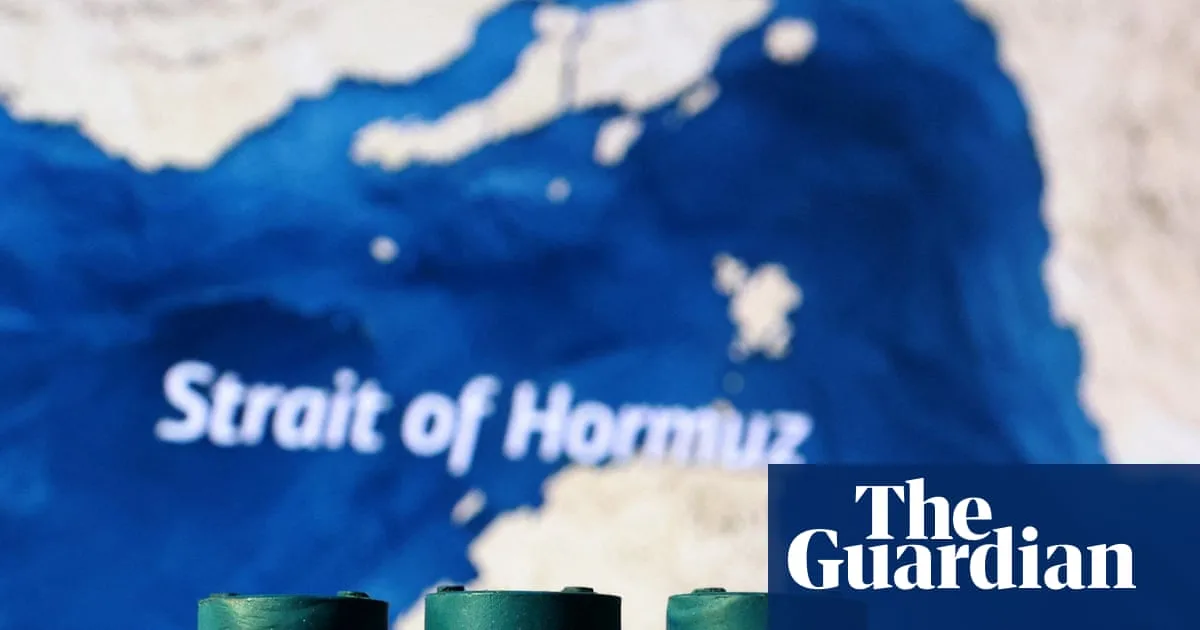
Europe could face a shortage of energy and fuel as soon as next month without a reopening of the Strait of Hormuz, Shell’s chief executive has warned. Wael Sawan said the crisis, now in its fourth week, had already affected supplies of jet fuel, with diesel and petrol likely to come under pressure next.
Speaking at an oil industry conference in Texas, Sawan noted that South Asia was first to feel the brunt, followed by southeast Asia, northeast Asia, and then Europe as April approaches. Oil prices dipped to about $100 a barrel on Wednesday from highs of $114 earlier in the week, following reports of a US peace plan to Iran, but the situation remains precarious.
Germany’s economy minister, Katherina Reiche, echoed the warning, stating that energy supply scarcity could occur in late April or May if the conflict continues. She added that Germany’s decision to phase out nuclear energy was a huge mistake and that greater imports of gas via tankers would be part of the solution.
The looming threat could lead to a prolonged global recession if oil hits $150 a barrel, according to Larry Fink, CEO of BlackRock. In an interview with the BBC, Fink outlined two scenarios: one where oil prices return to pre-crisis levels of $70 a barrel, and another where prices reach record highs, causing a “stark and steep recession”.
A British government spokesperson said: “The UK has diverse and resilient energy supply. We continue to work with partners on the international situation.”